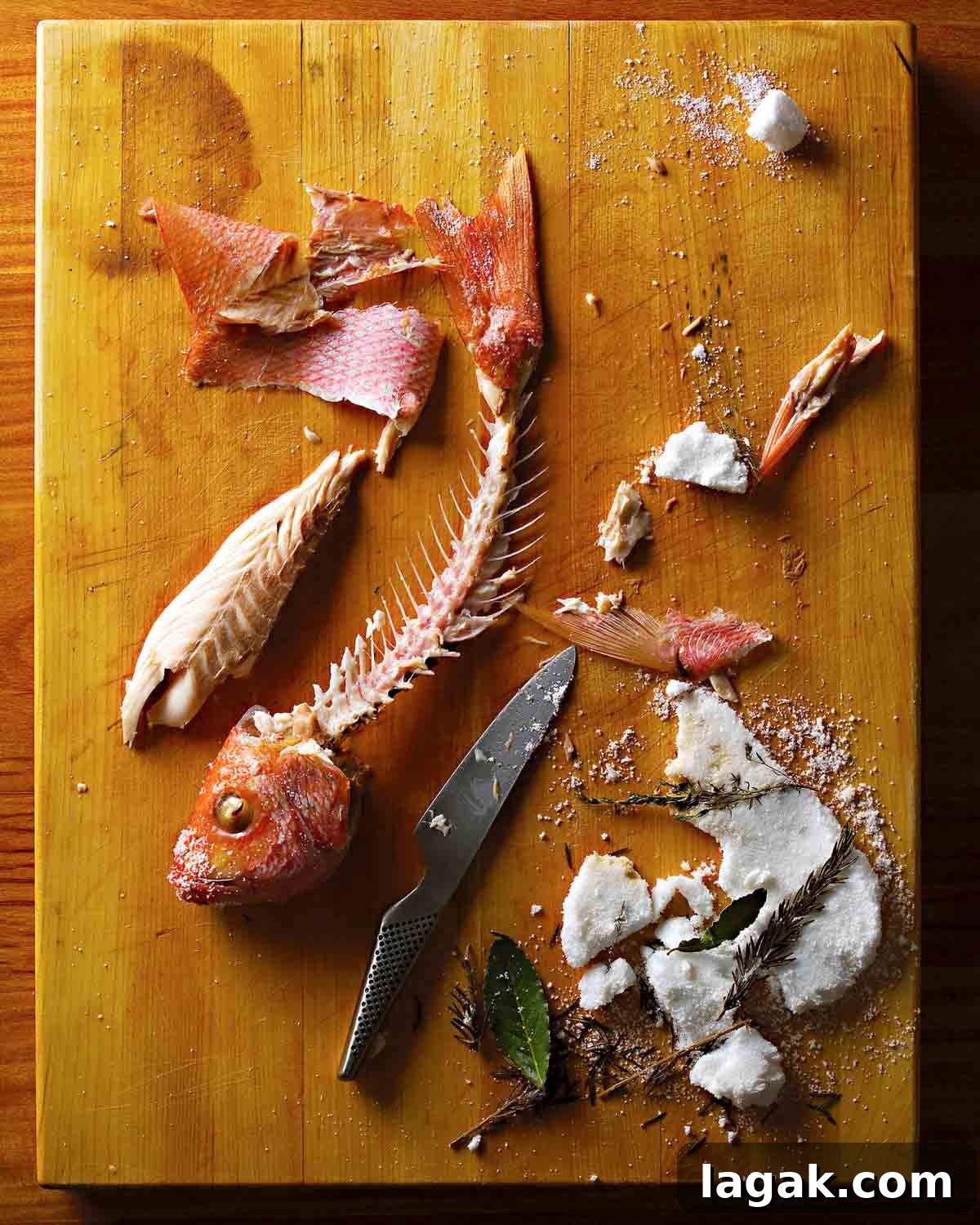
This salt-baked red snapper is prepared by encasing a whole fish in a salt crust and baking it, a simple technique that delivers moist, tender results every time. Below is a clear, polished version of the recipe and directions for making it at home.
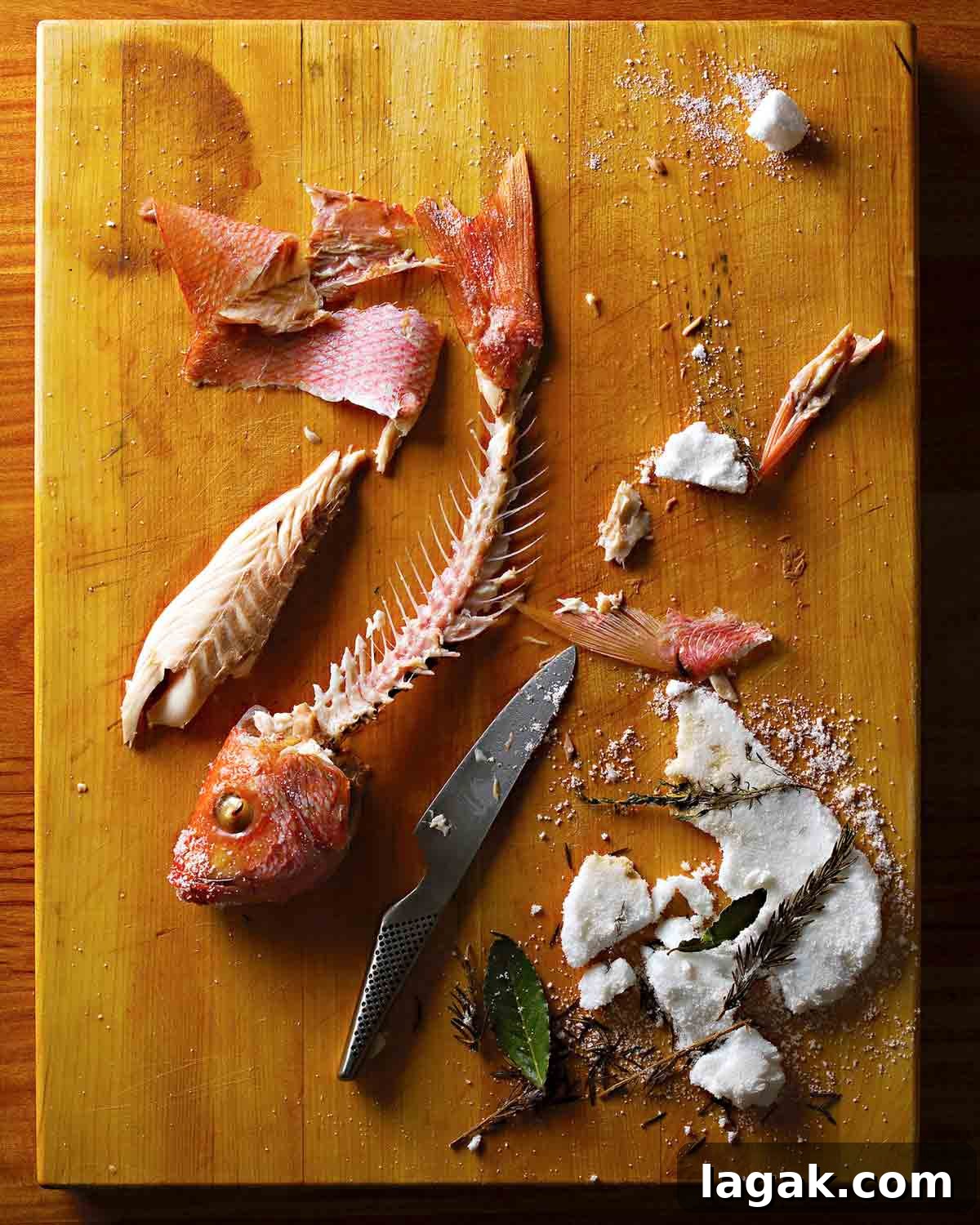
Called lubina a la sal in Spain, salt-baked fish is one of the simplest and most impressive ways to cook a whole fish. The salt crust creates an insulating shell that steams the fish gently so the flesh stays soft and moist without becoming salty. Often seen in restaurants, this technique is straightforward to replicate at home. After a few tries you’ll learn the best balance of oven temperature, cooking time, and fish weight for perfect results. —José Andrés
Salt-Baked Red Snapper
David Leite
Ingredients
- 3 pounds coarse sea salt, plus more for serving
- 3 tablespoons cold water
- 4 bay leaves
- 6 rosemary sprigs
- 10 thyme sprigs
- 1 (2 1/2-pound) whole red snapper, gutted but not scaled
- 2 tablespoons extra-virgin olive oil, preferably Spanish, if desired
Instructions
- Preheat the oven to 375°F (190°C). Position the rack in the middle of the oven.
- In a large bowl, mix the salt with the cold water until the salt is slightly damp and clumps together. Coarsely chop 2 bay leaves, 3 rosemary sprigs, and 5 thyme sprigs, then stir the chopped herbs into the salt.
- Spread half of the salt mixture on a rimmed baking sheet to form a bed. Place the snapper on top. Tuck the remaining whole herb sprigs into the fish cavity, then cover the fish completely with the remaining salt mixture, packing it firmly around the fish to form a sealed crust.
- Bake for 30 minutes. If your fish is larger than 2 1/2 pounds, add roughly 5 minutes per extra pound. Remove from the oven and let the fish rest for 5 minutes. Tip: to be precise, insert an instant-read thermometer through the crust into the center of the fish; the target internal temperature is 145°F (63°C).
- Crack open the salt crust along one side with a fork and spoon. The top half of the crust will lift off or crumble away. Remove the hardened salt and discard any large chunks.
- Gently peel away and discard the skin using a fork. Cut just below the head through to the bone, then angle your knife and slice along the spine to lift one fillet off in a single piece if possible. Transfer the fillet to a platter and repeat on the other side. The flesh should flake easily and be opaque throughout. Alternatively, you can bring the baking sheet to the table and let guests serve themselves directly.
- Taste a small piece and, if desired, finish with a light drizzle of extra-virgin olive oil and a pinch of additional salt. Serve immediately.

Adapted From
Made in Spain
Nutrition
Nutrition information is automatically calculated and should be used as an approximation.
Tried this recipe?
Mention @leitesculinaria or tag #leitesculinaria!
Recipe Testers’ Reviews
This recipe passed a rigorous blind testing process and earned the Leite’s Culinaria stamp of approval. Here are a few tester impressions.

Sarina Mohanty
Delicious: flaky, herb-infused, and moist. Salt-baked fish is always impressive. If your oven runs cool or your fish is larger than the suggested weight, add a few extra minutes. Be careful removing the top crust—it can shatter if it’s thin. Expect to make this again and again.

Jenna Helwig
Though the salt quantity and whole fish can seem intimidating, the method is straightforward and forgiving. The finished fish tasted sweet and moist. Note: one 2 1/2-pound fish may not feed four adults—plan portions accordingly.

Chiyo Ueyama
The salt crust doesn’t make the fish overly salty but locks in moisture and makes a striking presentation. I distributed aromatics between the cavity and the crust for balanced flavor and found the recommended salt and time worked well for a fish just under 2 1/2 pounds.

Linda Pacchiano
Quick and outstanding results. I recommend using this method for other whole fish like branzino, orata, or bass. Chop the herbs and mix them with the salt so they incorporate without causing the crust to crack. Scales can help protect the fish from absorbing salt; finish with a drizzle of Spanish olive oil if you like.
Tip: Use an instant thermometer inserted through the crust; about 140–145°F indicates perfectly done fish.