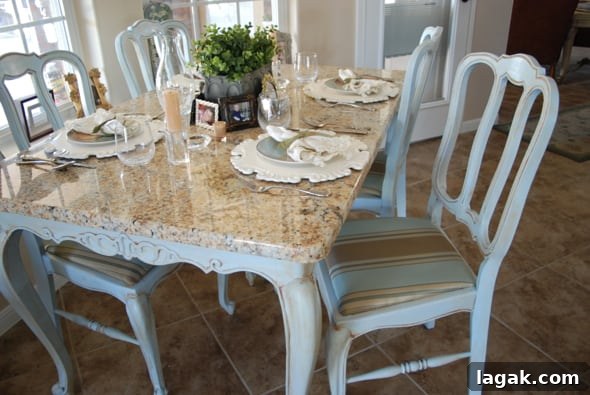
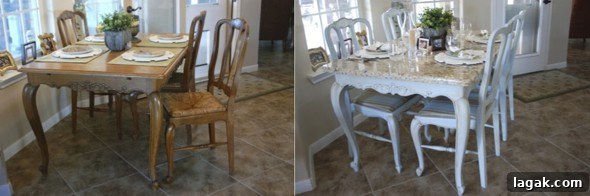
 When we move around the world, I don’t always get to choose the kitchen. Sometimes I’m lucky to find granite counters, but more often the surfaces are laminate or tile. Since we rent from one duty station to the next, replacing countertops isn’t an option. So I made my own portable granite work surface—a granite-topped table that functions like a counter.
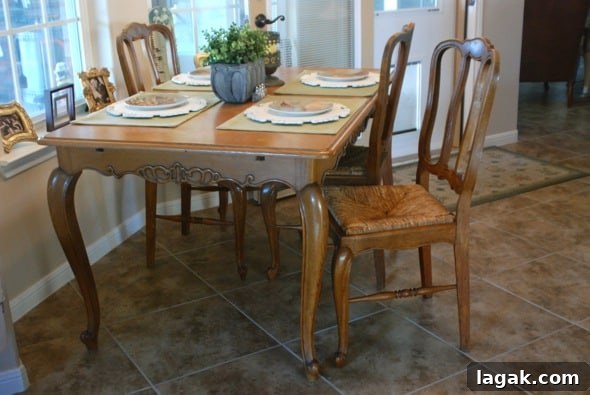 I purchased a lovely Louis XV-style table from the 1950s at a secondhand shop in Belgium called Troc. I spent many weekends browsing Trocs throughout Belgium and France, searching for the right pieces. The day before our shipment back to the U.S., I found this table with six chairs, a china hutch and a credenza for 125 euros—about $150 at the time. My husband picked it up for me in downtown Brussels while I worked. I knew exactly how I wanted to refinish the table, and about a year later it was finished.
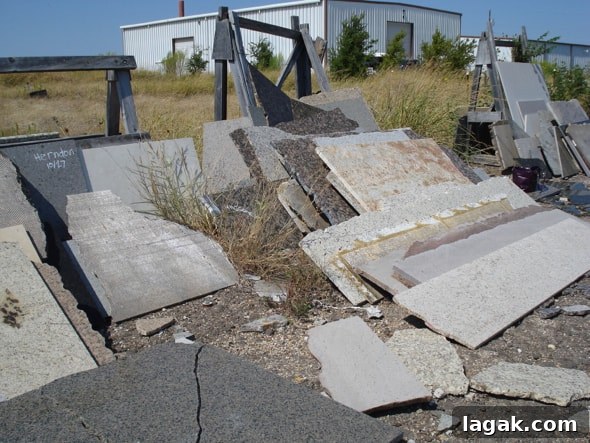 Since I bought the set inexpensively, I had room in the budget to invest in a granite top. Granite usually sells for $35–$100 per square foot, but remnant pieces—leftovers from other jobs—can go for as little as $25 per square foot. I found a remnant for a patio table previously, but when I tried to buy a larger piece for this table one shop raised the price from $30 to $80 per square foot because they thought it could be used in a kitchen job. I didn’t go back.
I kept searching and found Custom Countertops of Central Texas right off I‑35. Mike, the manager, was excellent—he walked me through the remnant yard with a tape measure and helped me find a piece that suited my table and my budget. He even reduced the price slightly since I handled pickup myself and gave me a small scrap to take to the store to match paint colors.
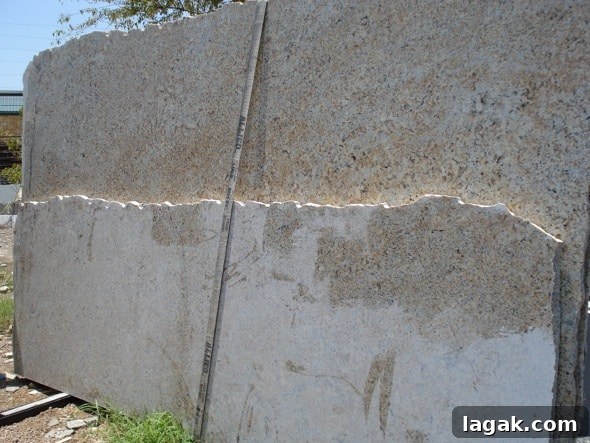 Within a week the granite was cut and ready. Meanwhile, I needed to prepare the table for the new top.
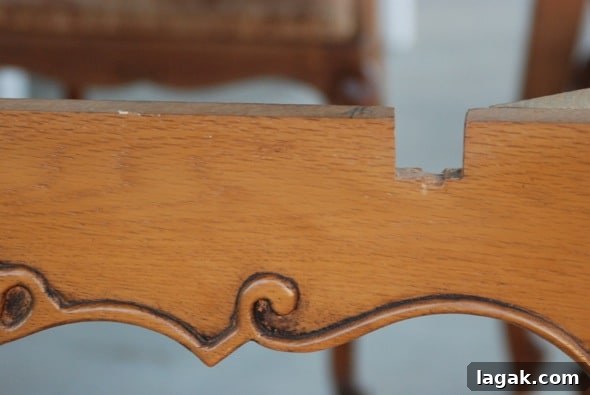 The table had a removable leaf that I didn’t plan to use with the granite, so removing it left grooves on both sides of the tabletop.
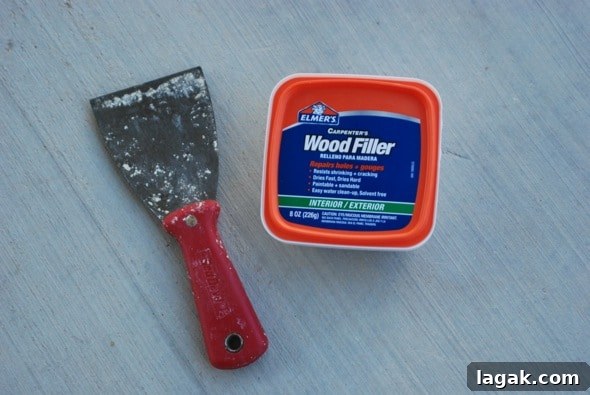 I filled those grooves with wood filler.
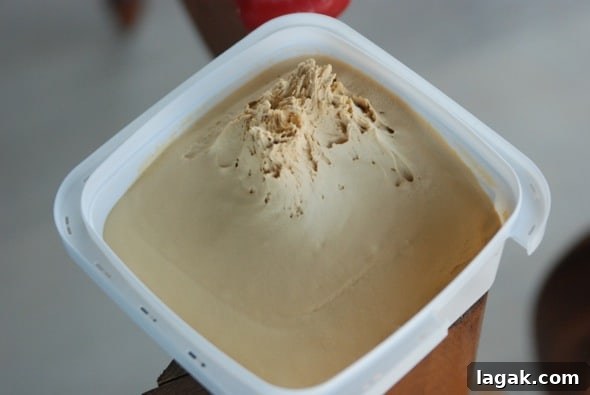 The filler is putty-like in texture.
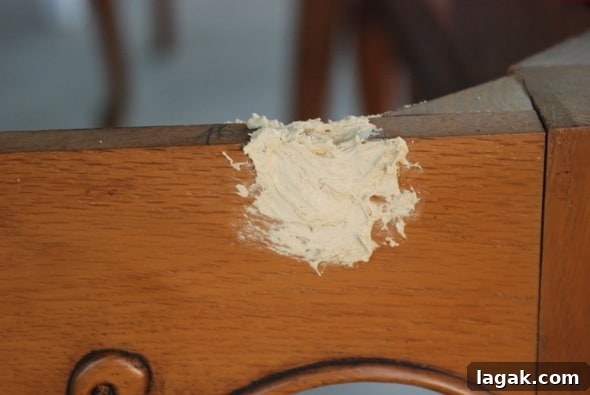 I applied it by hand, shaping it into the groove so it extended slightly past the surrounding wood.
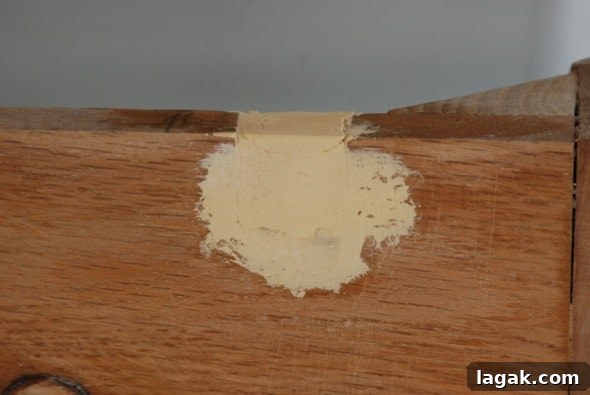 After letting it dry overnight, I sanded it flush with the tabletop.
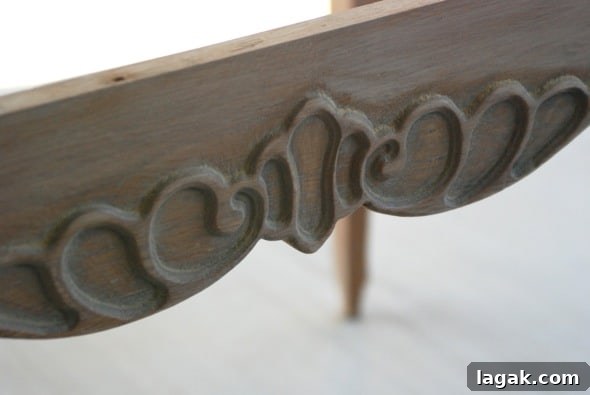 I sanded the entire table and chairs with coarse sandpaper and steel wool. I prefer to hold the steel wool with a paper towel rather than gloves.
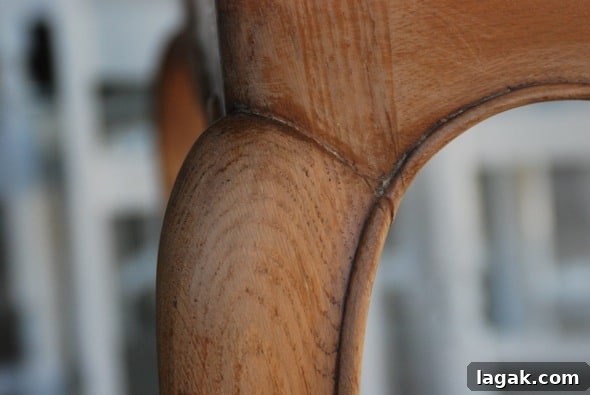 Because I was aiming for a shabby chic look, the sanding didn’t need to be perfect.
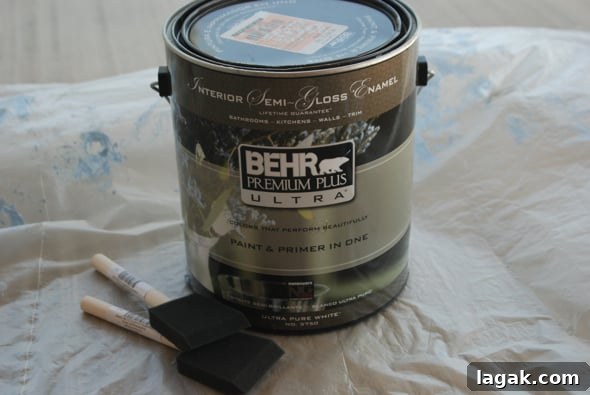 After wiping away the dust, I applied a base coat that combined primer with semi-gloss Behr paint in the color Cumberland Fog (#560E-2) from Home Depot, using a medium sponge brush to reach the detailed areas and achieve a smooth finish.
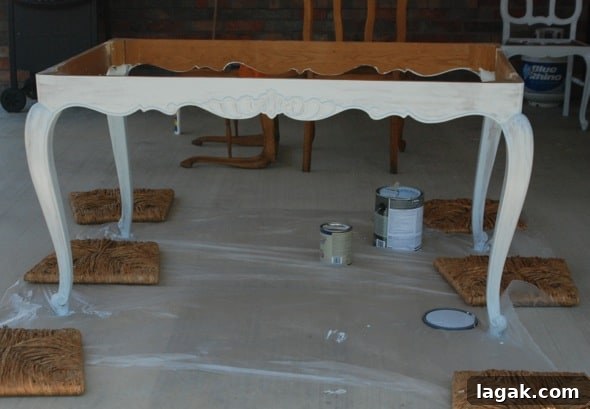 One coat wasn’t enough, so I painted the table and all the chairs twice, going through about five sponge brushes in the process.
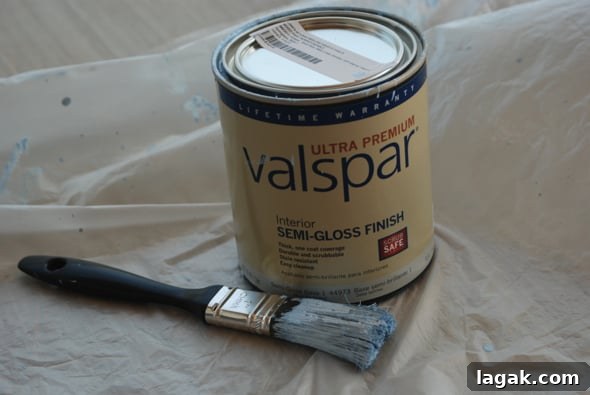 After the paint dried overnight I decided the color was a touch light, so I added a darker blue topcoat: Valspar Clear Horizon (#248-2) semi-gloss from Lowe’s. I applied this coat with a regular brush because I wanted brush strokes to show and to let the lighter base color peek through.
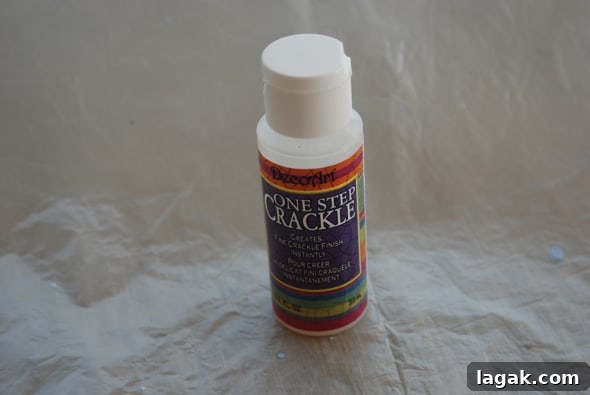 Next I used DecoArt One Step Crackle to add a subtle aged effect. Instead of the typical base‑coat‑then‑topcoat crackle that reveals the bottom color through the cracks, I used the one‑step method so I could control the color and intensity. I painted crackle selectively on leg arches, accents and chair backs, then let it dry for two hours.
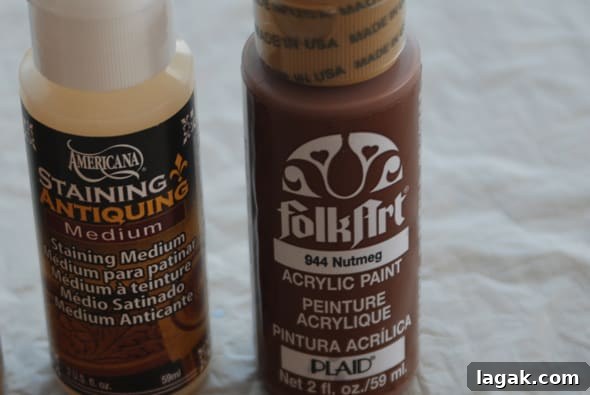 I made a glaze by mixing Americana Staining Antique Medium with FolkArt Nutmeg (#944) and wiped it on with a cloth.
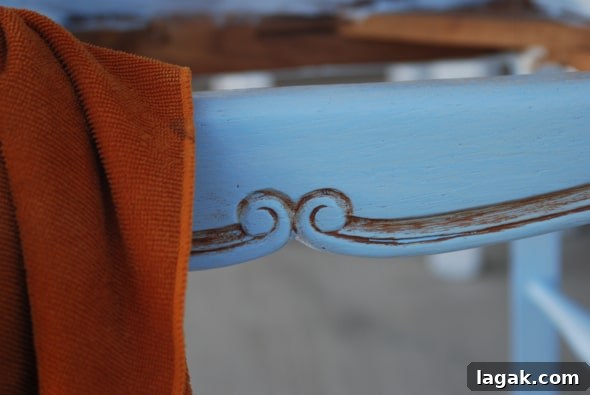
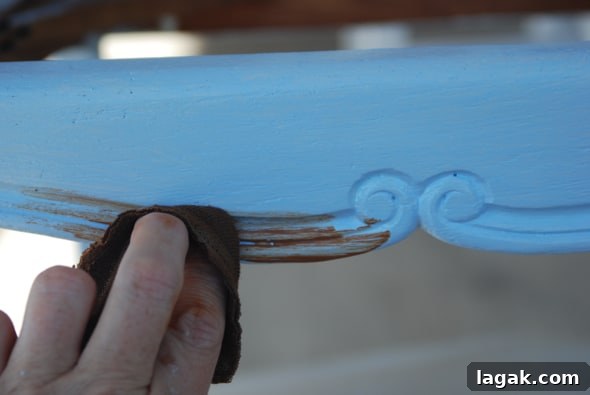 I rubbed the glaze into the crackled areas and the grooves, then wiped away the excess with a damp cloth so the glaze remained where I wanted it—deepening details and creating a lived-in patina.
 After another night of drying, I considered upholstery options for the seats. Rather than lugging a chair and granite scrap into the fabric store, I painted a sample on paper and used that to choose a fabric.
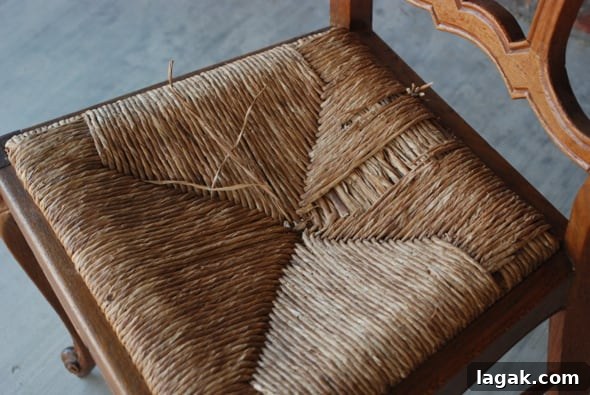 The original woven rush seats were worn and difficult to clean after 60+ years, and I wanted a more formal look. That meant cutting wooden seat bases to fit inside the frames.
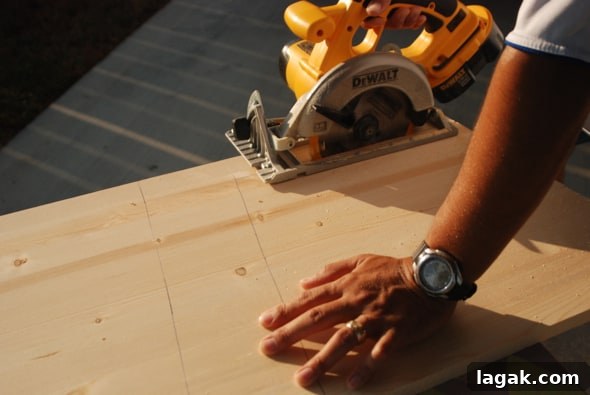
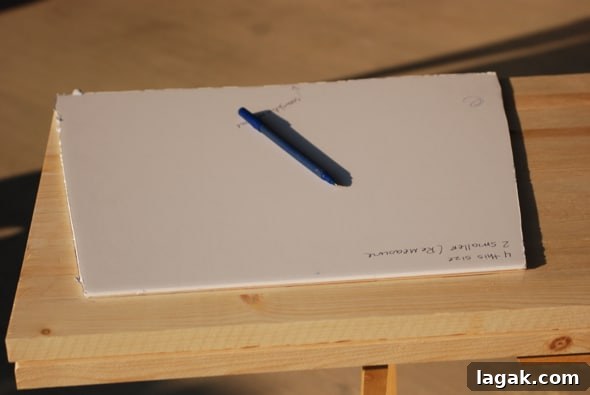 I made a pattern from foam core and tested it in each seat. Four seats were the same size and the other two matched each other. I traced the pattern onto 3/4-inch plywood and cut the pieces with a circular saw, then sanded the edges.
 I used 1‑inch foam for the cushions, leaving about a 1/2‑inch overlap beyond the wood for wrapping, and cut the foam with kitchen scissors.
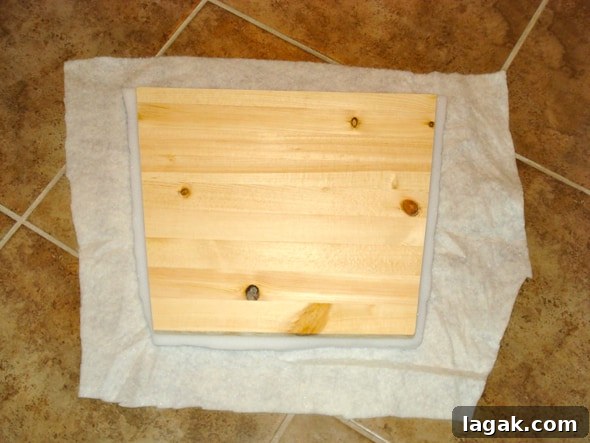 I laid batting flat, set the cushion and wood on top, then wrapped and stapled the batting at 12, 6, 3 and 9 o’clock to smooth the edges. The batting doesn’t need to be pulled taut—just enough to even out the foam and wood lines.
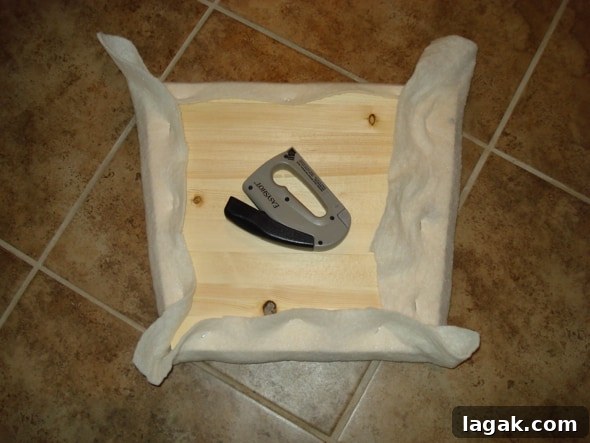 For the fabric, I placed the right side down, set the wrapped cushion face down, and cut ample fabric so the pattern aligned properly. After stapling at 12, 6, 3 and 9 o’clock and pulling the fabric tight, I continued stapling around the edges, taking care with the corners.
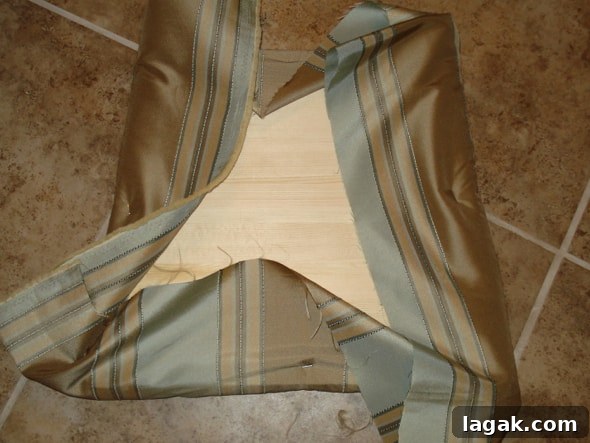 To finish corners, I folded the fabric neatly over the corner and stapled down, then folded and stapled each side, trimming excess fabric so nothing hung below the seat.
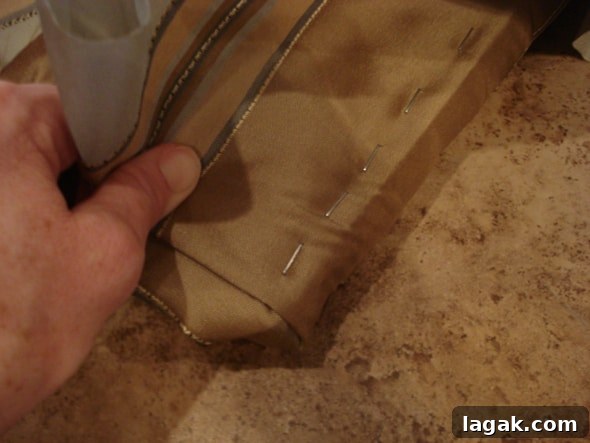 Finally I folded and stapled the underside for a clean finish and returned the cushions to the chair frames.
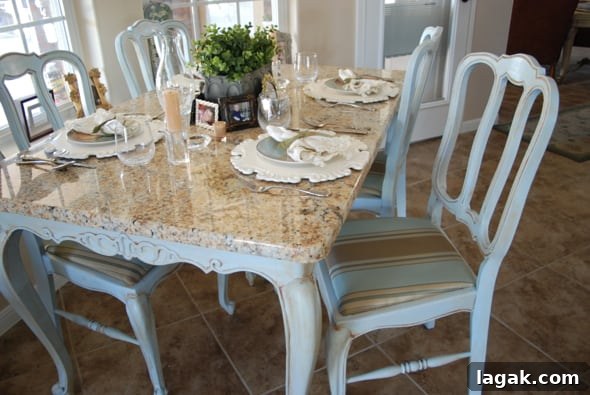 The chairs looked elegant and suited the table’s style perfectly.
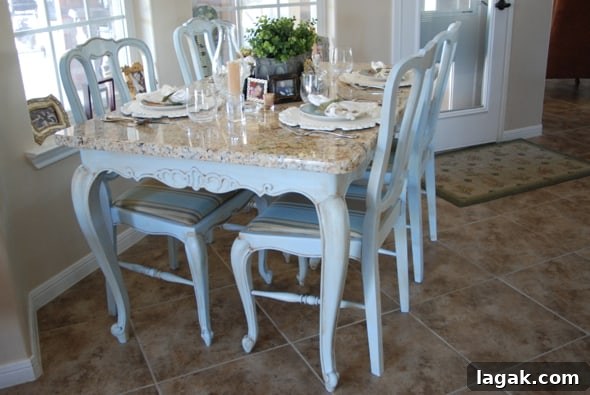 When the granite arrived, I set it onto the tabletop—its weight keeps it secure, so no adhesive was necessary. The granite transformed the piece into the centerpiece I imagined.
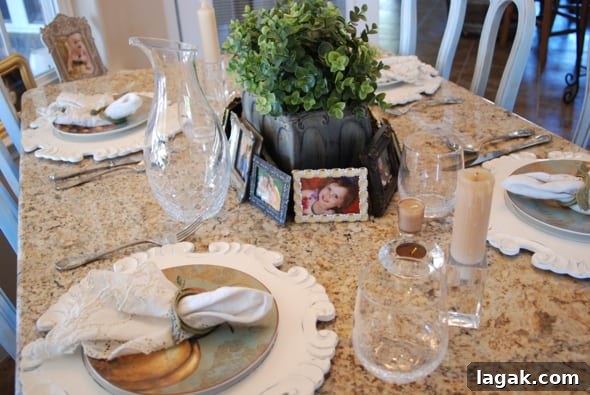 I finished with a few personal touches—small framed photos of family so loved ones are always present at our table. Now, wherever the Army sends us, I have my granite countertop and a family table that feels like home.