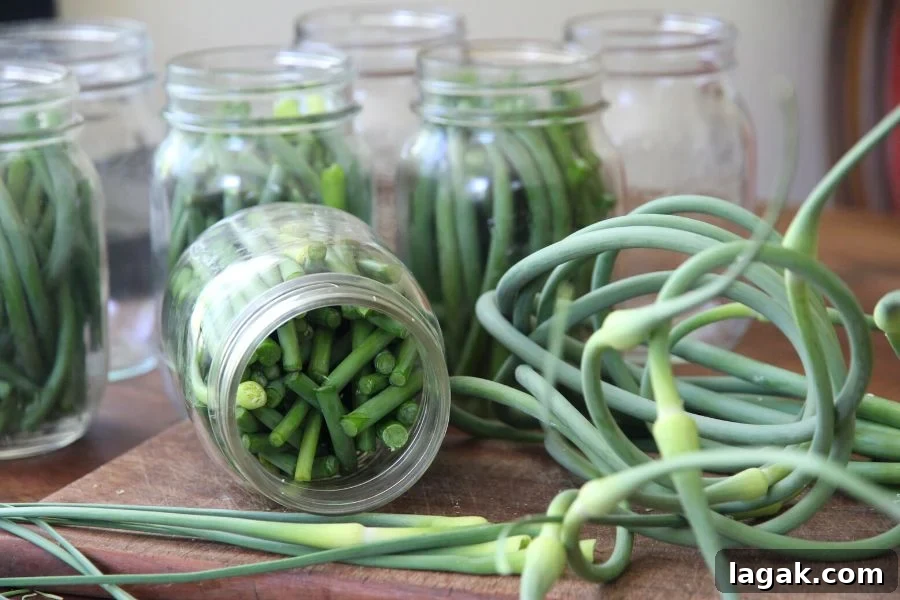
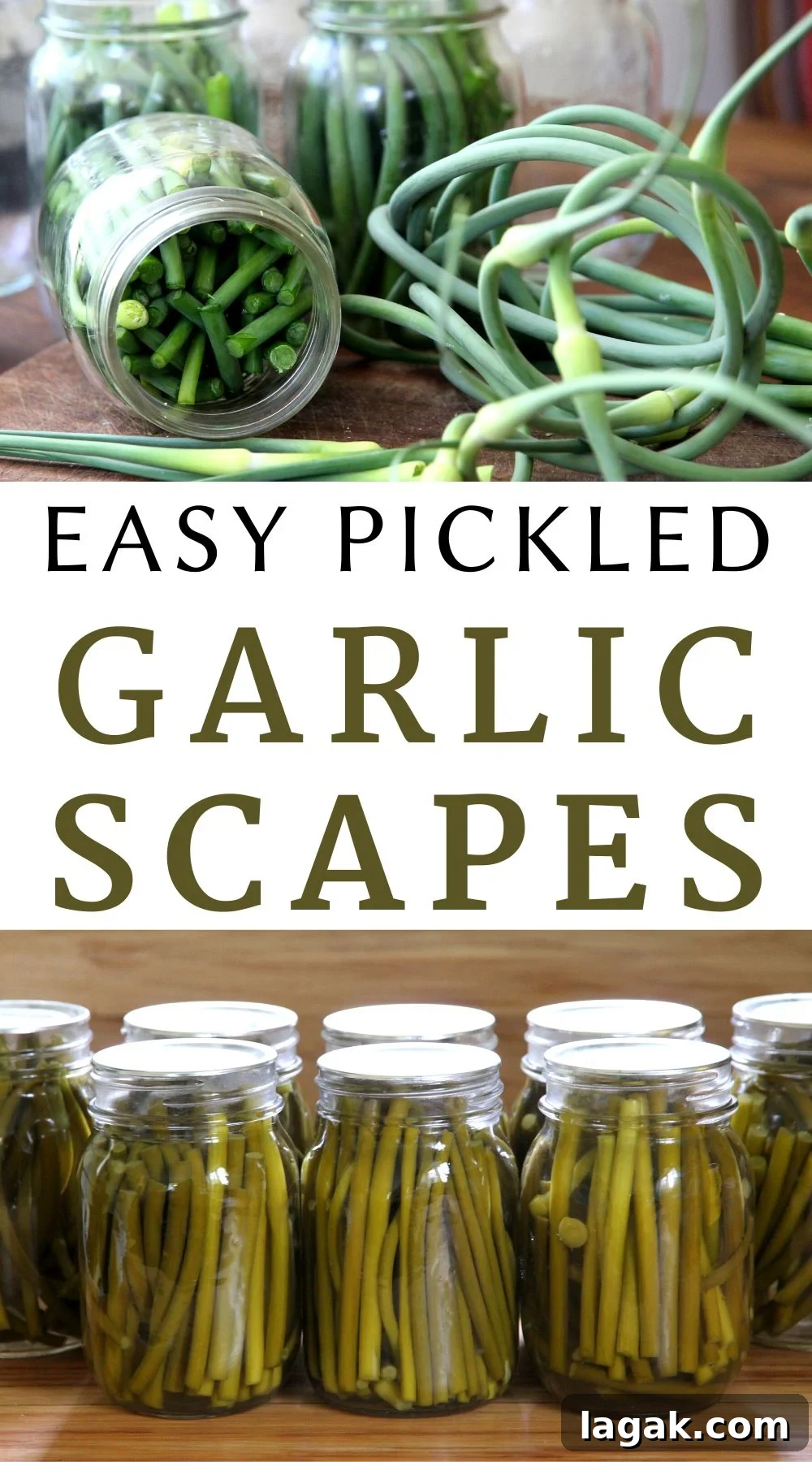
Wondering what to do with extra garlic scapes? This simple canning recipe preserves garlic scapes in a pickling brine so you can enjoy their fresh, mild garlic flavor all winter long.
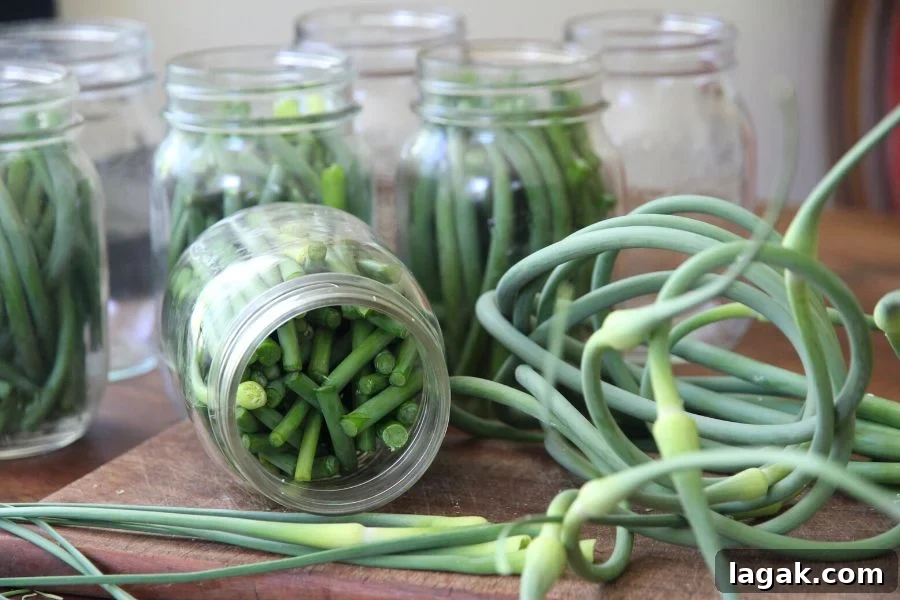
I grew up gardening but didn’t encounter garlic scapes until adulthood. The first time I tried one, I was amazed by the concentrated garlic flavor: not hot like raw garlic cloves, but milder with a subtle sweetness. Once I tasted them, I started experimenting in the kitchen and discovered how versatile they are.
As a gardener, I also loved that growing hardneck garlic can yield two harvests: the scapes in early summer and the bulbs later. To maximize bulb size, most gardeners snap scapes off before the flower develops and use those stems in recipes instead.
Each summer I make a double batch of canned pickled garlic scapes using a water-bath canner. This recipe is straightforward and ideal for home cooks and gardeners who want an easy way to preserve scapes.
What Are Garlic Scapes?
Garlic scapes are the flowering stems produced by hardneck garlic varieties. When a hardneck plant prepares to reproduce, it sends up a firm stalk with a long bud at the tip. If left on the plant, that bud will open into tiny flowers and later form bulbils that drop to the ground and grow as small garlic plants the following year.
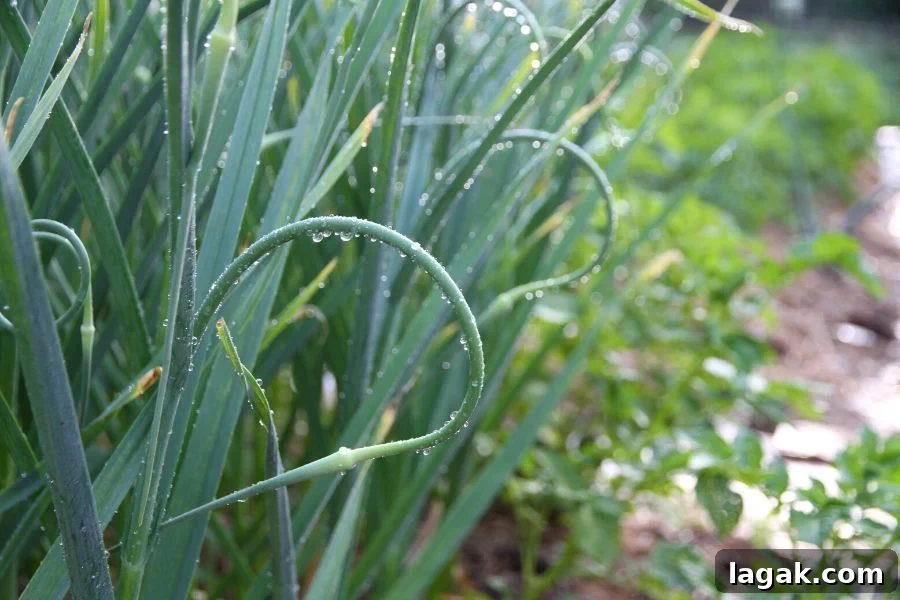
Because allowing scapes to mature reduces the energy the plant can devote to the underground bulbs, gardeners commonly snap them off when they appear and use them in the kitchen. That timing keeps the harvested bulbs larger at harvest and gives you delicious scapes to cook with.
What Type of Garlic Produces Scapes?
Not all garlic produces scapes. The two main garlic types are softneck and hardneck. Softneck garlic, common in warmer climates and often used for braids, does not produce scapes. If you want scapes, grow hardneck garlic. Hardneck types form a stiff flowering stalk that gives the variety its name and produces the scapes gardeners harvest.
When to Harvest Garlic Scapes
In northern regions, garlic scapes appear in early summer. They’re slow to flower, so you can leave them for several weeks to increase your yield. Harvest before the base of the stalk becomes woody—snap one off and taste the base as you check weekly. Picking while tender makes them easier to cut and fit into jars.
Where to Find Garlic Scapes
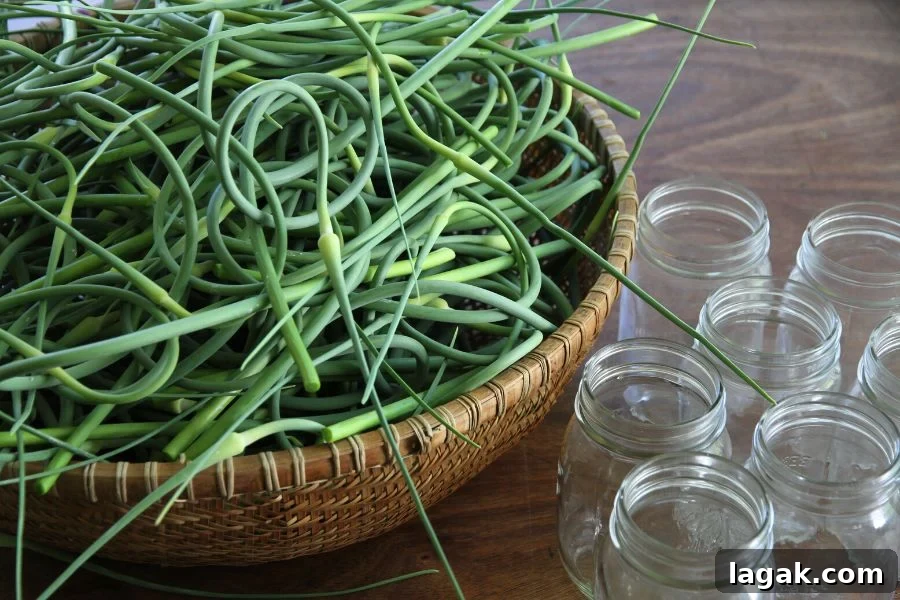
If you don’t grow your own hardneck garlic, check farmers’ markets or local CSAs during late spring and early summer—scapes are a seasonal item that small farms often sell. Hardneck garlic is an easy crop to grow if you want a reliable source next year.
Tips for Making Canned Pickled Garlic Scapes
Follow the full recipe below for precise measurements and processing instructions. A few quick tips to improve your results:
- Harvest scapes while still tender—before they get long and stringy.
- Trim and test the base of each scape; remove any tough, woody ends.
- Trim off bud tips—the tapered ends of the buds can be too tough to enjoy.
- Pack jars as full as you can without crushing the scapes to make the most of each jar.
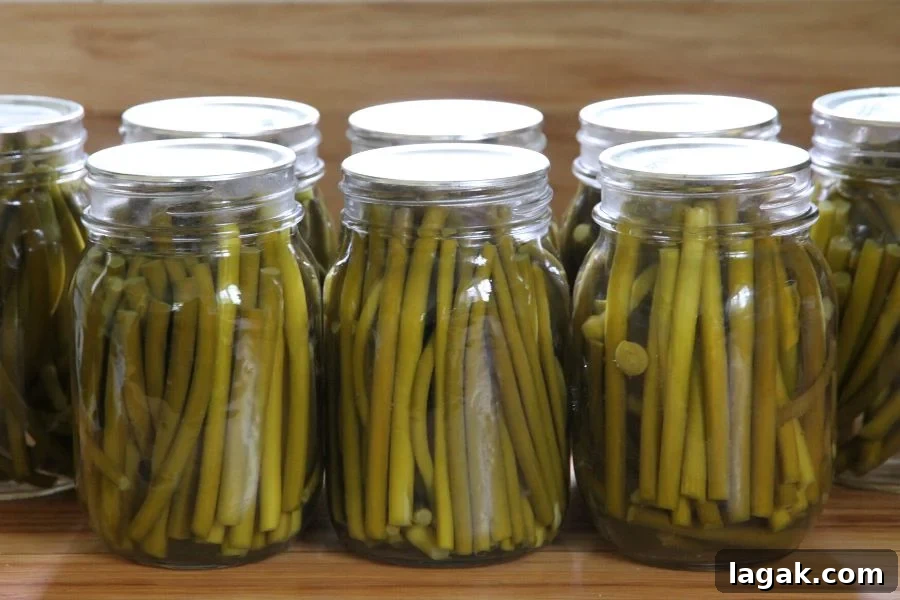
Uses for Pickled Garlic Scapes
Pickled garlic scapes are versatile. Here are some favorite uses:
- Serve as a simple side dish at the table.
- Chop and add to tuna or egg salad for a mild garlic kick.
- Use as a replacement for dill pickles in potato salad or other recipes that call for pickles.
- Add sliced scapes to sandwiches for extra tang and garlic flavor.
- Include on a charcuterie board as a mild, vinegary accompaniment.
Because they’re pickled, scapes can substitute for dill pickles in many recipes. Their garlic flavor is gentle while the vinegar brings brightness—experiment with them in your favorite dishes.
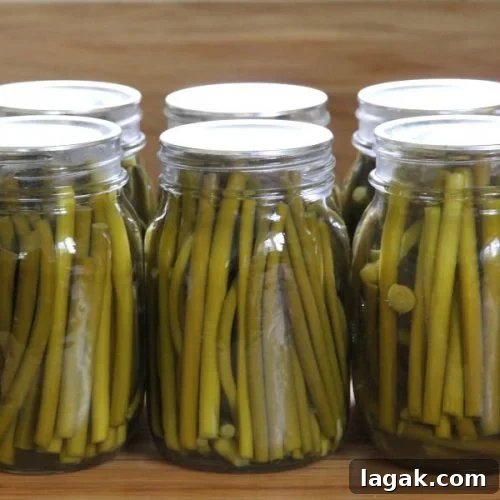
Canning Pickled Garlic Scapes
Equipment
-
1 water bath canner
-
7 pint (500 ml) jars
-
7 standard mouth canning lids
-
7 standard canning bands
-
1 stockpot for making brine
Ingredients
- 1800 gm (4 lbs) fresh, tender garlic scapes
- 6 cups apple cider vinegar (or white vinegar)
- 6 cups filtered water
- 2 tablespoons canning salt
- 7 teaspoons mustard seed (optional)
Instructions
-
Harvest garlic scapes in the morning before the day becomes hot.
-
Fill your water-bath canner with water and start heating it on the stove so it stays hot when jars are ready.
-
In a stockpot combine the water, vinegar, and canning salt.
-
Bring the brine to a rolling boil and maintain a boil for 10 minutes.
-
Measure a single scape against the height of a pint (500 ml) jar, allowing for 1 inch of headspace; use that scape as a guide when cutting the rest.
-
If using mustard seed, add about 1 teaspoon to the bottom of each jar before packing scapes.
-
Pack lengths of garlic scapes into pint jars, trimming and arranging them so the jars are filled but not overly compressed.
-
Using a funnel and ladle, pour the hot brine over the scapes, leaving about 1/2 inch headspace.
-
Wipe the jar rims with a clean damp cloth, center the lids, and screw the bands on fingertip-tight.
-
Place jars into the hot water-bath canner and process for 10 minutes at altitudes 0–1,000 ft. Adjust processing time if you are at higher altitudes according to your local canning guidelines.
Did you make this recipe?
If you try this, share your results—I’d love to see how your jars turned out.