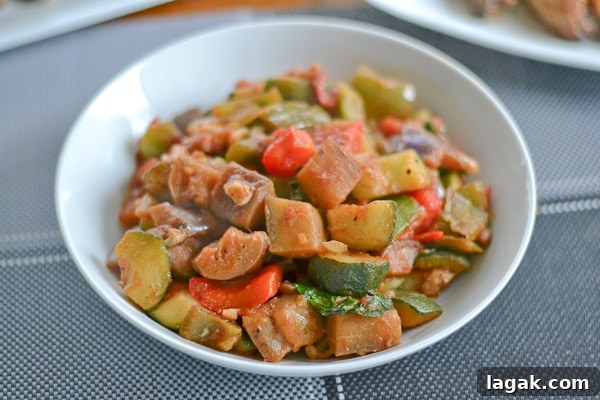
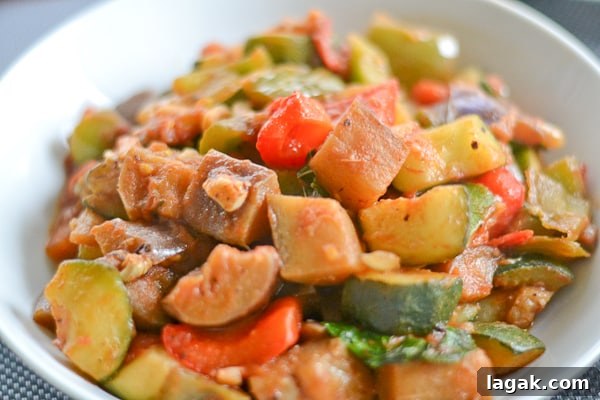
Ratatouille is a classic French vegetable stew featuring zucchini, eggplant, bell peppers, tomatoes and fragrant herbs. There are several ways to prepare it: you can cook all the vegetables together, or sauté them in separate batches and then combine them with the aromatics. This version sautés vegetables in stages, which takes a few extra steps but produces deeper, more concentrated flavors. Ratatouille is often served as a side, but it also makes a satisfying main when paired with rice, bread, couscous or grains. It reheats well and can be enjoyed warm or at room temperature.
Cooking Tips for Perfect Ratatouille
Use fresh, ripe vegetables for the best flavor—seasonal produce from a farmers’ market will make a noticeable difference. Cut the vegetables into uniform pieces so they cook evenly. Sautéing in batches prevents overcrowding and encourages caramelization, which adds savory depth. If the stew seems thin, simmer it a bit longer to reduce excess liquid. Taste and adjust seasoning as you cook: a splash of balsamic vinegar or a pinch of sugar can balance tomato acidity nicely. Finally, let the ratatouille rest for a short while before serving to allow the flavors to meld.
Serving Suggestions and Variations
Ratatouille is extremely versatile. Serve it over quinoa, couscous, rice or pasta for a full meal, or alongside grilled meats and seafood as a flavorful side. A dollop of Greek yogurt, crème fraîche or crumbled feta adds creaminess. For a briny note, add olives or capers; for a Mediterranean twist, stir in artichoke hearts or sun-dried tomatoes. If you enjoy heat, a pinch of red pepper flakes or smoked paprika works well. This dish is equally good hot, warm or cold, making it convenient for meal prep or picnics.
Frequently Asked Questions
Can I use other vegetables in ratatouille?
Yes. Ratatouille is adaptable—mushrooms, carrots, different types of squash or even potatoes can be used. Keep pieces similar in size for even cooking and adjust cook times for denser vegetables.
What’s the best way to store leftover ratatouille?
Place leftovers in an airtight container and refrigerate for up to four days. For longer storage, freeze in portions for up to three months. Thaw in the refrigerator overnight before reheating.
How can I make ratatouille ahead of time?
Ratatouille develops more depth when allowed to sit. Prepare it a day ahead, refrigerate once cooled, and reheat gently. It’s ideal for meal prep because flavors meld and improve with time.
What should I serve with ratatouille?
Enjoy ratatouille on its own, or serve with crusty bread, rice, couscous, polenta or pasta. It’s also a great accompaniment to grilled or roasted proteins like chicken, fish or lamb.
What are common mistakes when making ratatouille?
Avoid overcrowding the pan when sautéing; that prevents proper browning. Also, don’t skip the resting period after cooking—letting the dish sit helps the flavors combine and improve the final taste.

Ratatouille (Vegetable Stew) Recipe
 Liza Agbanlog
Pin Recipe
Ingredients
- Several splashes of olive oil
- 2 Chinese eggplants, cut into 1-inch chunks
- 2 zucchinis, cut into 1-inch chunks
- 1 red bell pepper, cored and seeded, cut into 1-inch chunks
- 1 green bell pepper, cored and seeded, cut into 1-inch chunks
- 1 onion, sliced
- 4 cloves garlic, chopped
- 5 large ripe tomatoes, cut into 1-inch chunks
- 1 bay leaf
- A few sprigs of fresh thyme or 1 tsp dried thyme
- Sea salt and freshly ground pepper, to taste
- 1 bunch fresh basil, chopped
- 1 tbsp balsamic vinegar
Instructions
-
Heat a large skillet over high heat and add a splash of olive oil. Sauté the eggplant and zucchini, stirring often, until they are golden and tender, about 8–10 minutes. Transfer to a large bowl and set aside.
-
Reduce the heat slightly, add another splash of oil to the skillet and cook the bell peppers until just tender, about 4–5 minutes. Add them to the reserved vegetables.
-
Add a little more oil if needed, then sauté the sliced onion until softened. Stir in the chopped garlic and cook for a couple more minutes, careful not to burn the garlic.
-
Lower the heat, add the tomatoes along with the bay leaf and thyme, and simmer until the tomatoes break down and the sauce thickens, about 6–10 minutes.
-
Return the reserved eggplant, zucchini and peppers to the skillet. Season with salt and pepper and simmer just until everything is heated through and flavors are blended.
-
Stir in chopped fresh basil and the balsamic vinegar. Remove the bay leaf and serve immediately.
Notes
Nutrition