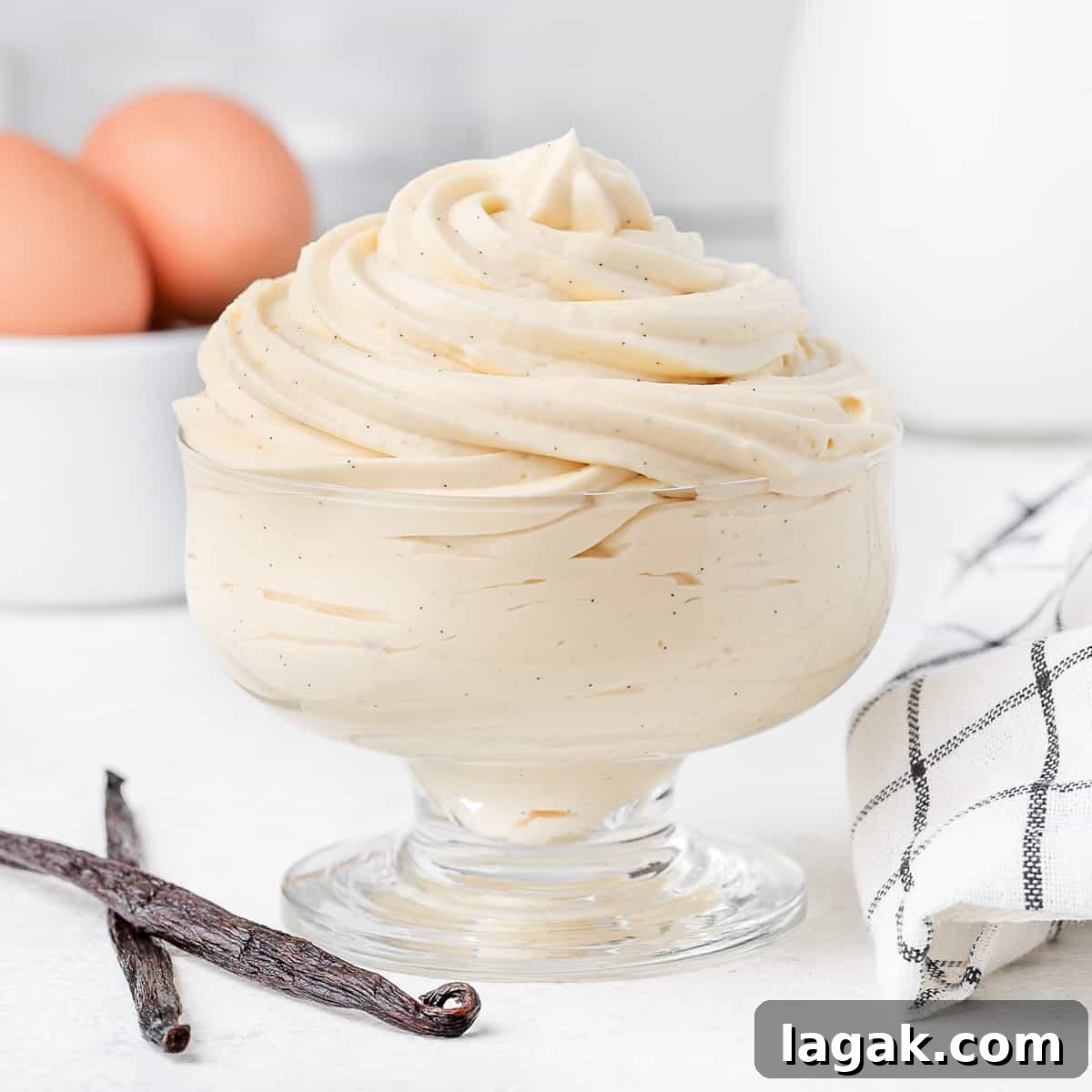
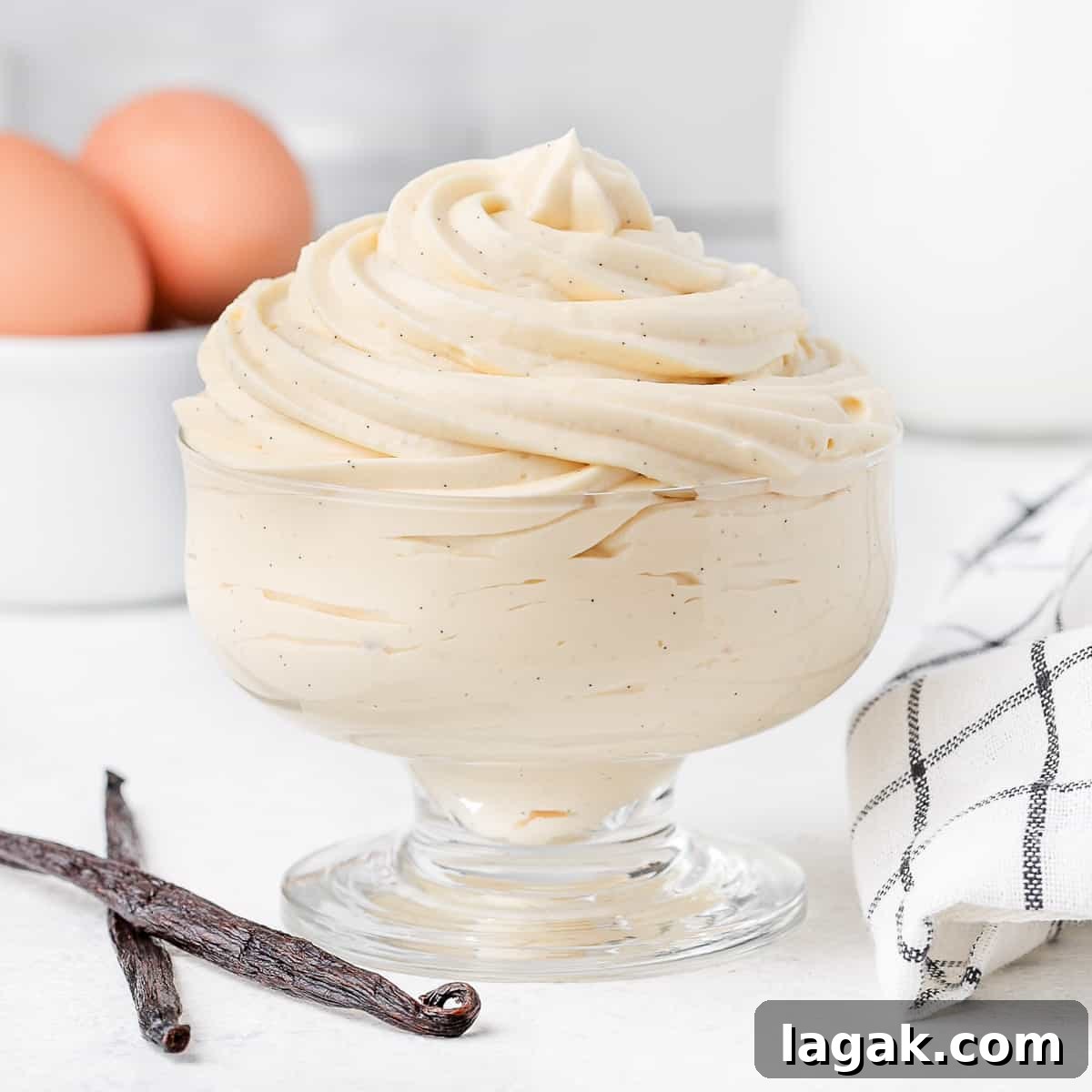
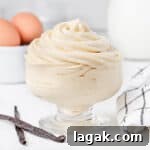
This Vanilla Bavarian Cream—known in French as Crème Bavaroise—is a light, flavorful cream that works beautifully as a dessert on its own or as a filling for pastries. It’s made by combining a pouring custard (Crème Anglaise) with gelatin and whipped cream for a delicate, airy texture.
Why we love this recipe
This Bavarian Cream is deliciously light and silky, made with just a few simple ingredients. It’s slightly lighter than diplomat or mousseline creams and creamier than classic pastry cream, making it extremely versatile. Serve it on its own, use it to fill choux, tarts, donuts, or layer it in cakes and charlottes.
What is Crème Bavaroise
Crème Bavaroise is a traditional French preparation that blends Crème Anglaise (a milk-and-egg pouring custard), softened gelatin, and whipped cream. The combination yields a smooth, airy cream that can be poured into molds to set or used as a light filling.
Ingredients
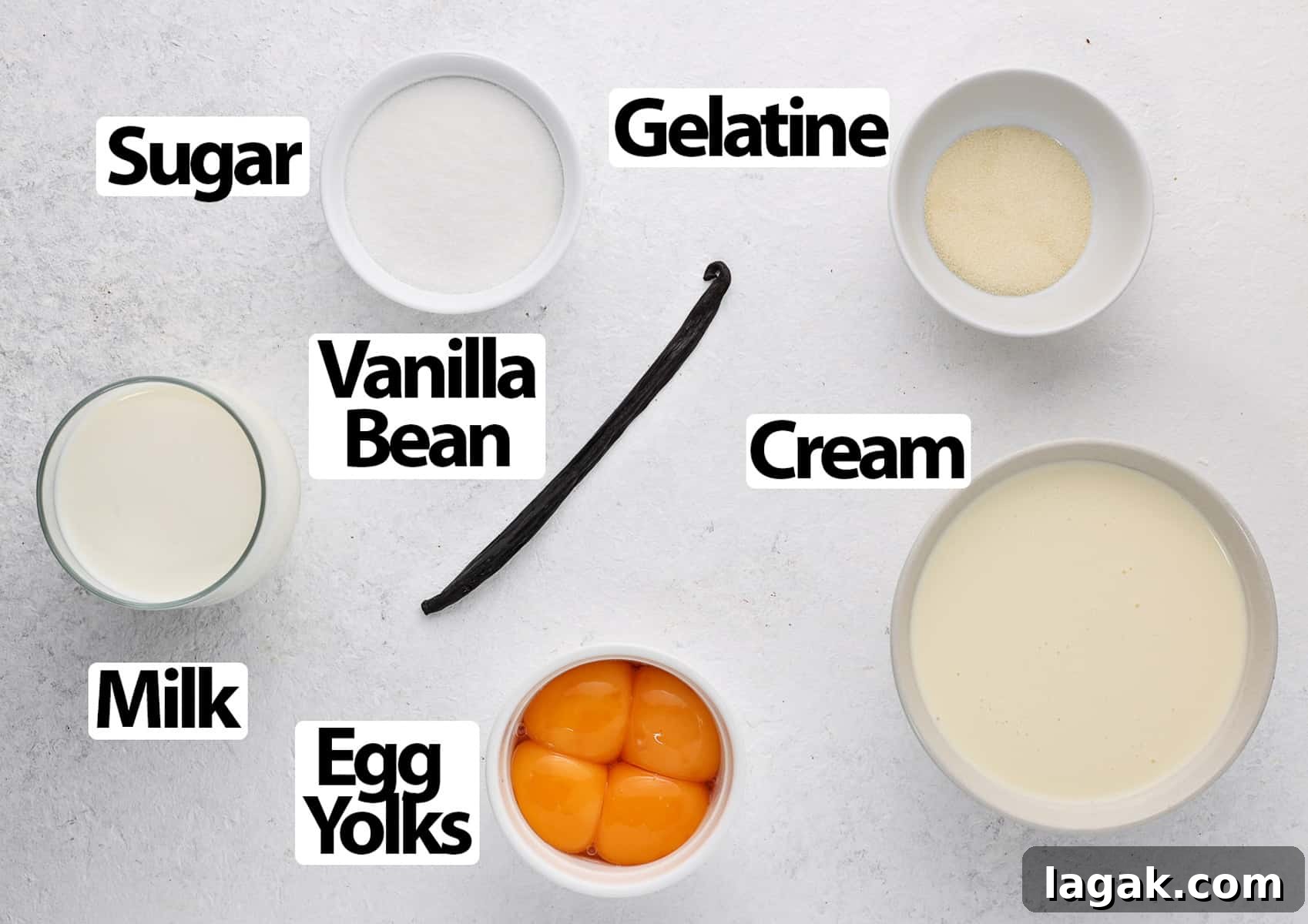
Scroll down to the recipe card for exact quantities
Core ingredients and notes:
- Milk: Use whole (full cream) milk for best flavor and mouthfeel. Plant-based milks can work but yield a different texture.
- Vanilla: A fresh vanilla bean gives the best aroma and flecks, or substitute vanilla paste. Extract will work but is less intense.
- Egg Yolks: Only the yolks are used; keep whites for other recipes.
- Gelatin: I use powdered gelatin hydrated in cold water. Gelatin sheets may be used instead—adjust according to package instructions.
- Cream: Heavy or thickened cream with at least 30% fat so it whips properly and stabilizes the bavarois.
Flavour Variations
- Chocolate: Add cocoa to the milk or melt chocolate into the warm custard—ratios may need slight adjustment.
- Fruit: Replace part or all of the milk with a fruit purée or juice for a bright, fruity bavarois.
- Coffee: Stir instant espresso into the milk before heating for a coffee-flavored cream.
- Praline: Fold in praline or hazelnut paste for a sweet, nutty variation.
How to make Bavarian Cream, step-by-step
Make the Crème Anglaise base
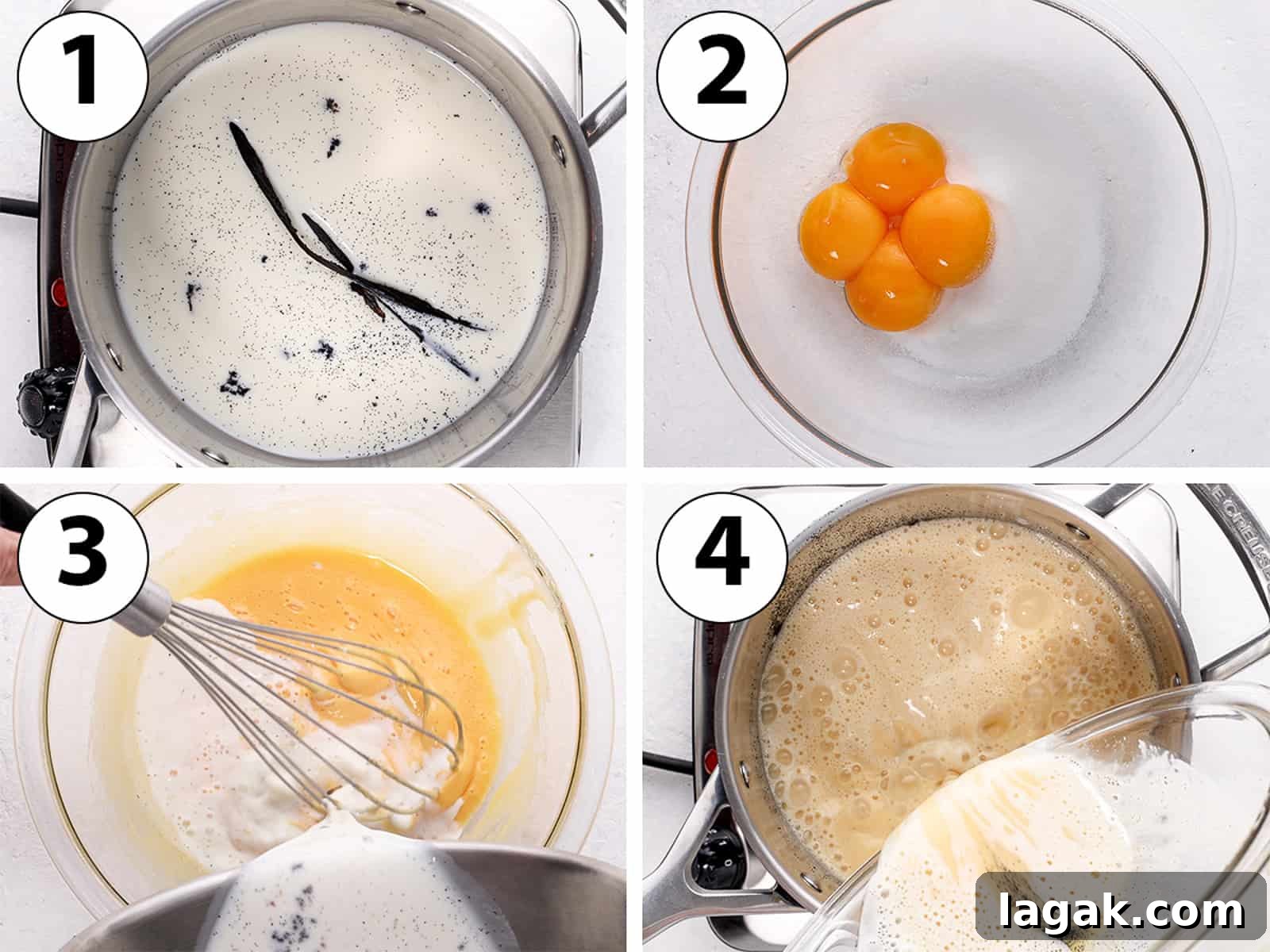
- Warm the milk with the split vanilla bean (seeds and pod) over low heat and bring just to a simmer. Remove from heat and let infuse 10–20 minutes.
- Whisk egg yolks and sugar together until smooth in a heat-proof bowl.
- Temper the yolks by slowly pouring the warm milk into the egg mixture while whisking, then return everything to the saucepan.
- Cook gently over low heat, stirring constantly, until the custard thickens—do not boil. The custard is ready when it coats the back of a spoon or reaches about 82°C (180°F).
Add gelatin and fold in whipped cream
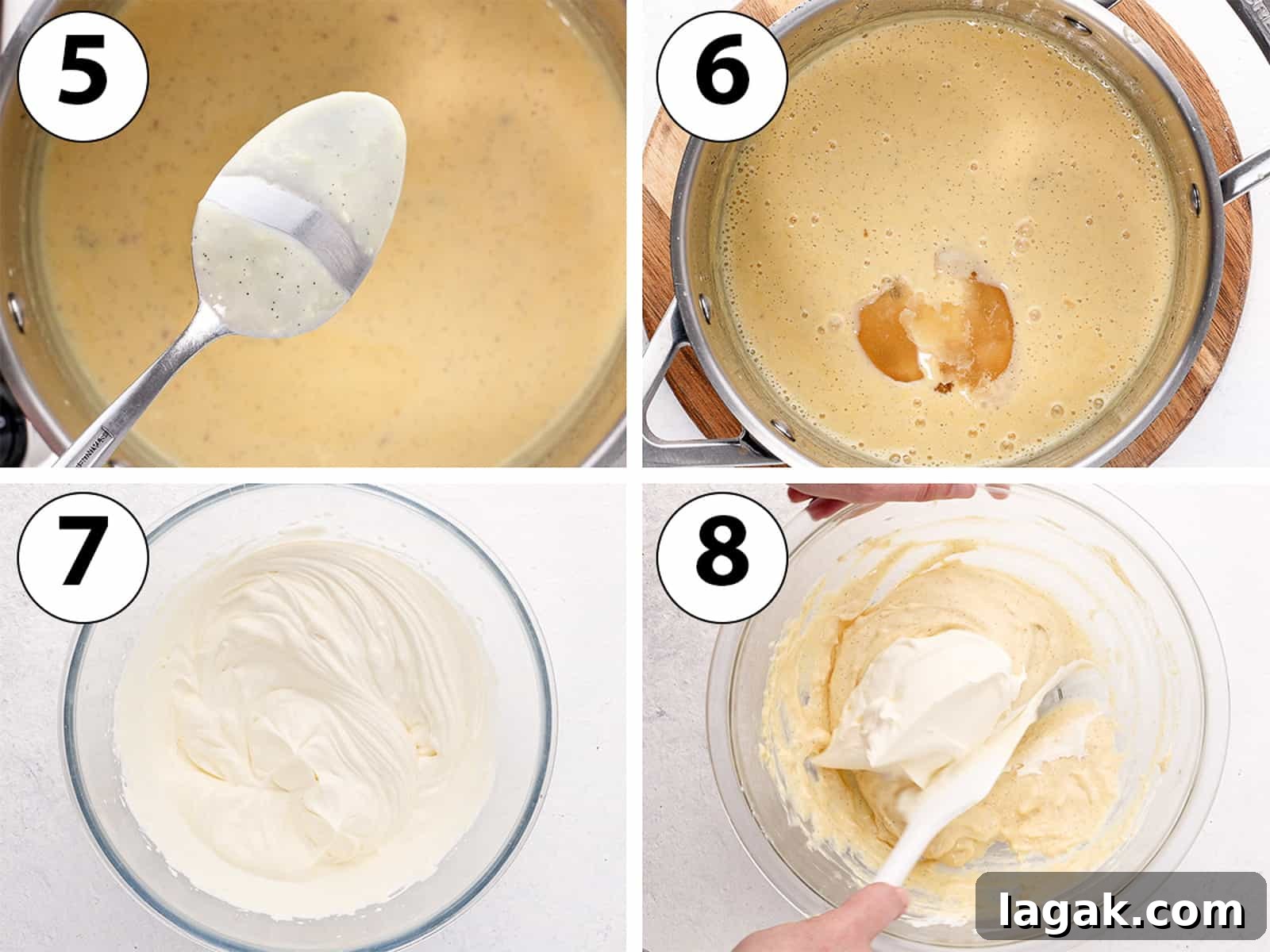
- Hydrate the gelatin with a little cold water until it blooms, then whisk it into the warm custard until fully dissolved.
- Transfer the custard to a clean bowl, cover the surface with plastic wrap, and chill until it is cool to the touch but not fully set (about 30–60 minutes).
- Whip the cream to stiff peaks in a chilled bowl.
- Loosen the cooled custard if it has begun to set, then gently fold the whipped cream in thirds until uniform but still light.
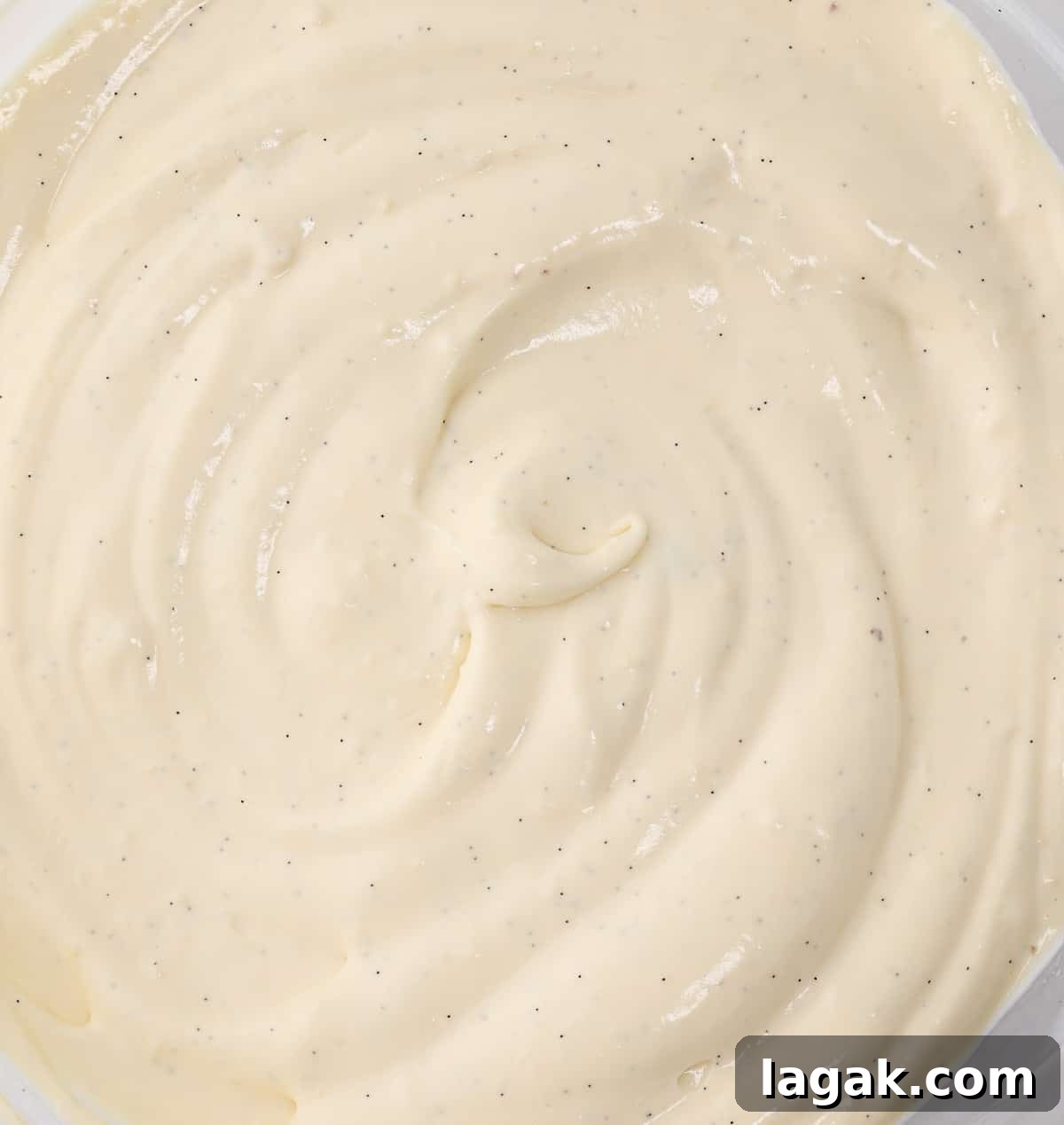
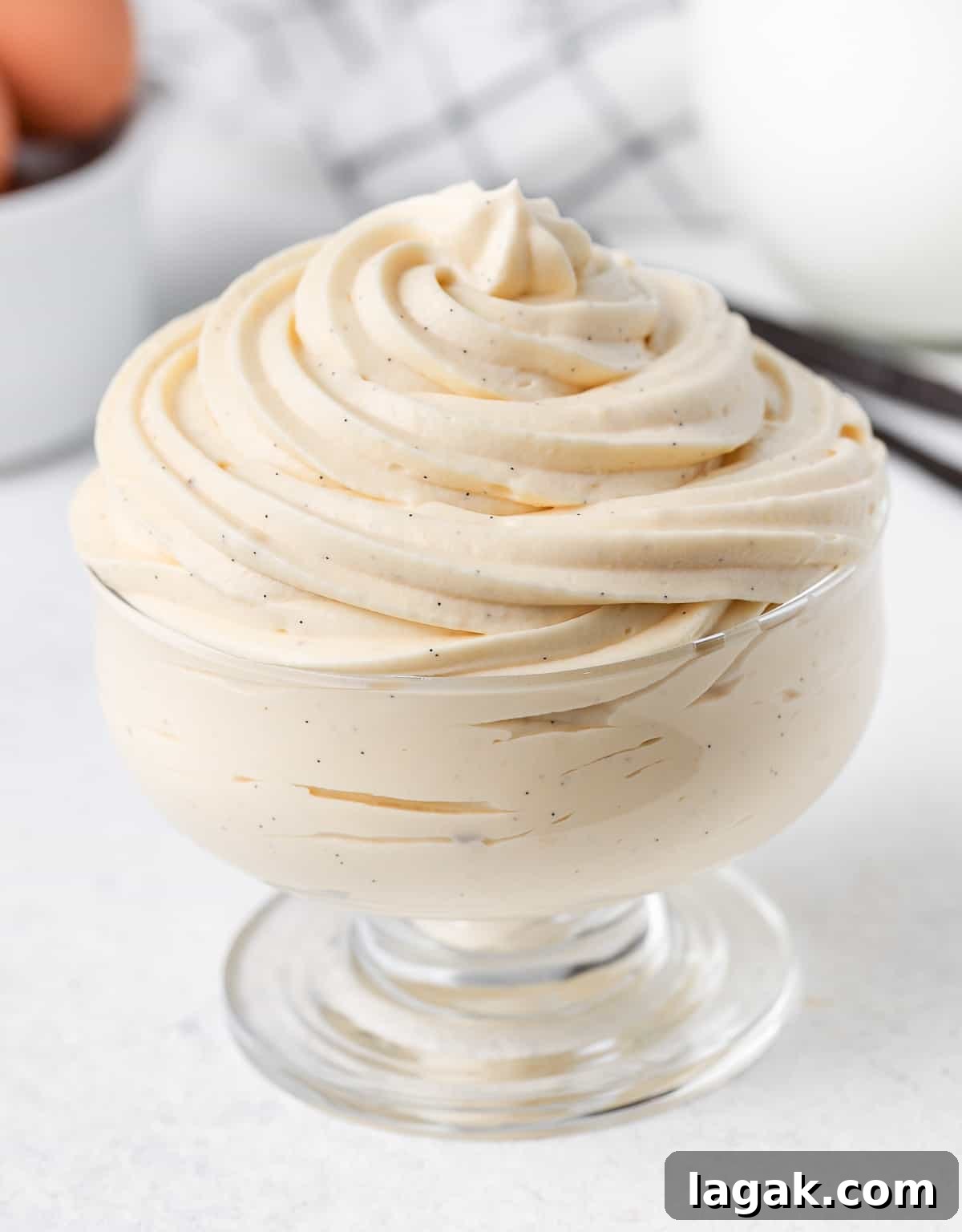
To serve as a dessert, pour into cups or molds and chill until fully set (about 2 hours). For use as a filling, you can use the bavarois immediately or refrigerate until needed; if you plan to pipe or need it very firm, chill for a couple of hours to set.
Recipe FAQs
Bavarian Cream is a Crème Anglaise base thickened with gelatin and lightened with whipped cream. Pastry cream (Crème Pâtissière) is thickened on the stove with cornstarch or flour and is denser and less airy.
Classic bavarois has a rich custard flavor rounded by vanilla and a lighter, creamier mouthfeel thanks to whipped cream.
If you need the cream to set firmly (for molds, piping, or cake fillings), gelatin is recommended. For soft pastry fillings that don’t require shape retention, you can omit it, though the texture and stability will be different.
Tips & Troubleshooting
- Grainy or lumpy custard: This usually means the eggs overheated. Strain through a fine sieve to remove lumps, and if needed, smooth with an immersion blender on low speed.
- Custard set too much in the fridge: If the gelatin starts to set before folding in cream, whisk vigorously to loosen it. If fully set, blend very gently with an immersion blender to renew the texture.
- Bavarois too soft: It may need more chilling time, the gelatin might not have dissolved fully, or the whipped cream may have deflated. Slightly increasing the gelatin or the proportion of whipped cream can help achieve greater stability.
How to use Bavarois Cream
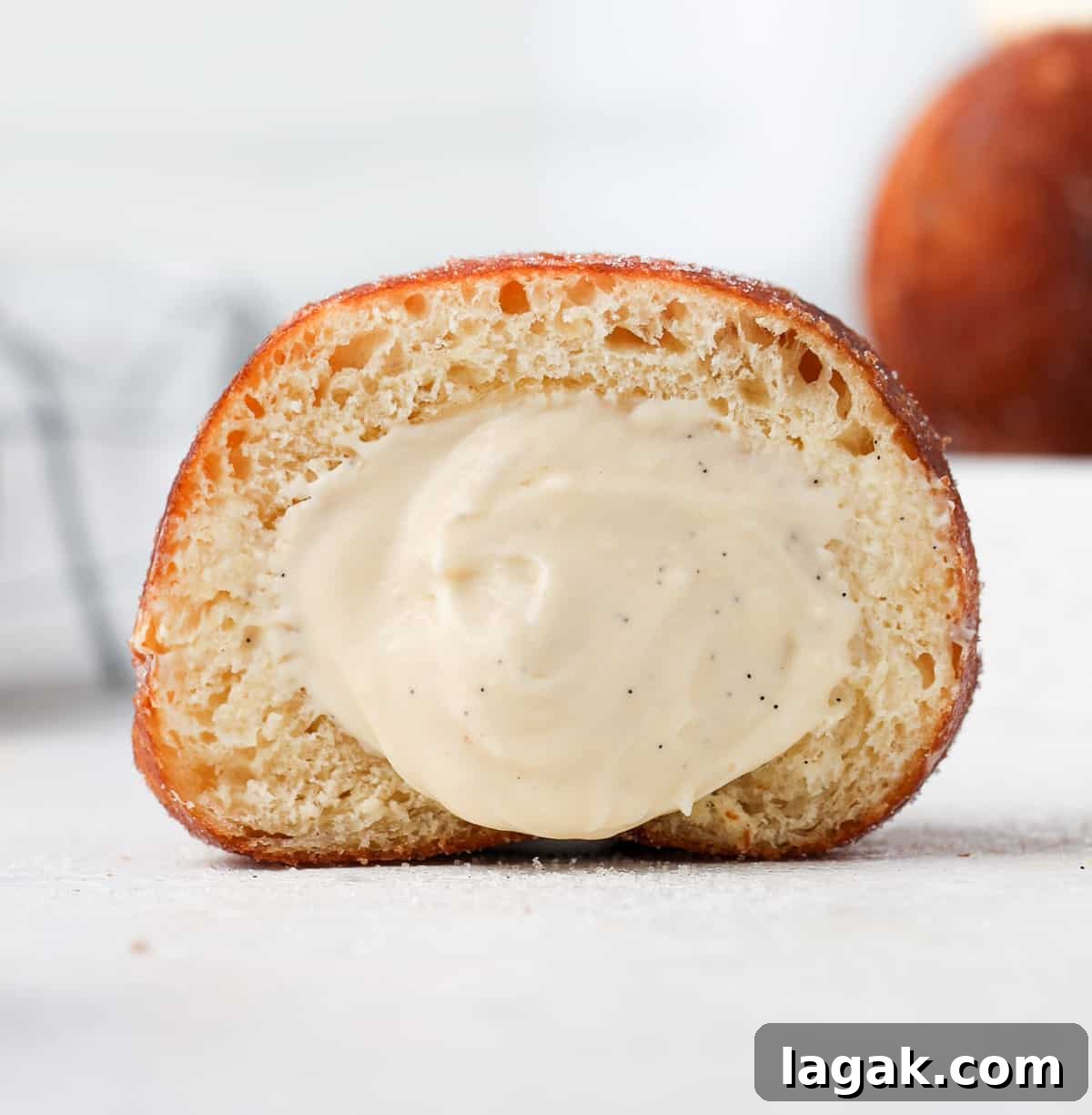
Bavarian cream is versatile: use it as a chilled dessert with fruit compote or coulis, as a filling for cream puffs, tarts and donuts, or as a silky layer in cakes and entremets.
Storing & Freezing
Store the prepared bavarois in the refrigerator in an airtight container or covered with plastic wrap touching the surface. It will keep for up to three days. Freezing is not recommended, as texture will degrade.
More cream recipes
- Chocolate Crémeux
- Pistachio Pastry Cream
- Chocolate Pastry Cream
- Crème Légère
- Diplomat Cream
- Crème Pâtissière
- Namelaka
- Crème Chantilly
- Mousseline Cream
- Stabilised Mascarpone Whipped Cream
Made this recipe?
Leave a comment and share a photo on Instagram by tagging @a.baking.journey!
Recipe
Bavarian Cream (Crème Bavaroise)
about 600 g (2 1/2 cups)
Ingredients
- 240 ml (1 cup) Full cream / whole milk
- 1 Vanilla bean (or 1 1/2 tsp vanilla paste)
- 4 Egg yolks (about 75 g)
- 50 g (1/4 cup) Caster sugar
- 6 g (1 1/2 tsp) Gelatin powder + 1 tbsp cold water
- 240 ml (1 cup) Heavy / thickened cream (min. 30% fat)
Instructions
- Place milk and split vanilla bean (seeds and pod) in a saucepan. Warm over low heat to a simmer, remove from heat and infuse 10–20 minutes.
- Whisk egg yolks and sugar together in a heat-proof bowl.
- Temper the yolks by gradually whisking in the warm milk, then return the mixture to the saucepan.
- Cook over low heat, stirring constantly, until the custard thickens (do not boil).
- Bloom the gelatin in cold water until it forms a paste, then whisk it into the warm custard until fully dissolved.
- Transfer the custard to a clean bowl, cover the surface with plastic wrap, and chill until cool to the touch (30–60 minutes).
- Whip the cream to stiff peaks.
- Loosen the cooled custard if needed, then gently fold in the whipped cream in 3–4 additions.
- Use immediately for fillings, or pour into molds/cups and chill at least 2 hours to set. For piping or cake use, chill about 2 hours for firmer texture.
Notes
- If using vanilla paste, there’s no need to infuse the milk. Remove and save the pod if desired.
- Do not let the custard boil—eggs will curdle. The custard is ready when it coats a spoon or reaches ~82°C (180°F).
- Find the right temperature to fold the cream in: cool but not set. If the custard begins to set, whisk to loosen; if fully set, blend gently with an immersion blender.
Nutrition (per serving)
Calories: 1416 kcal | Carbohydrates: 72 g | Protein: 31 g | Fat: 114 g | Sugar: 69 g