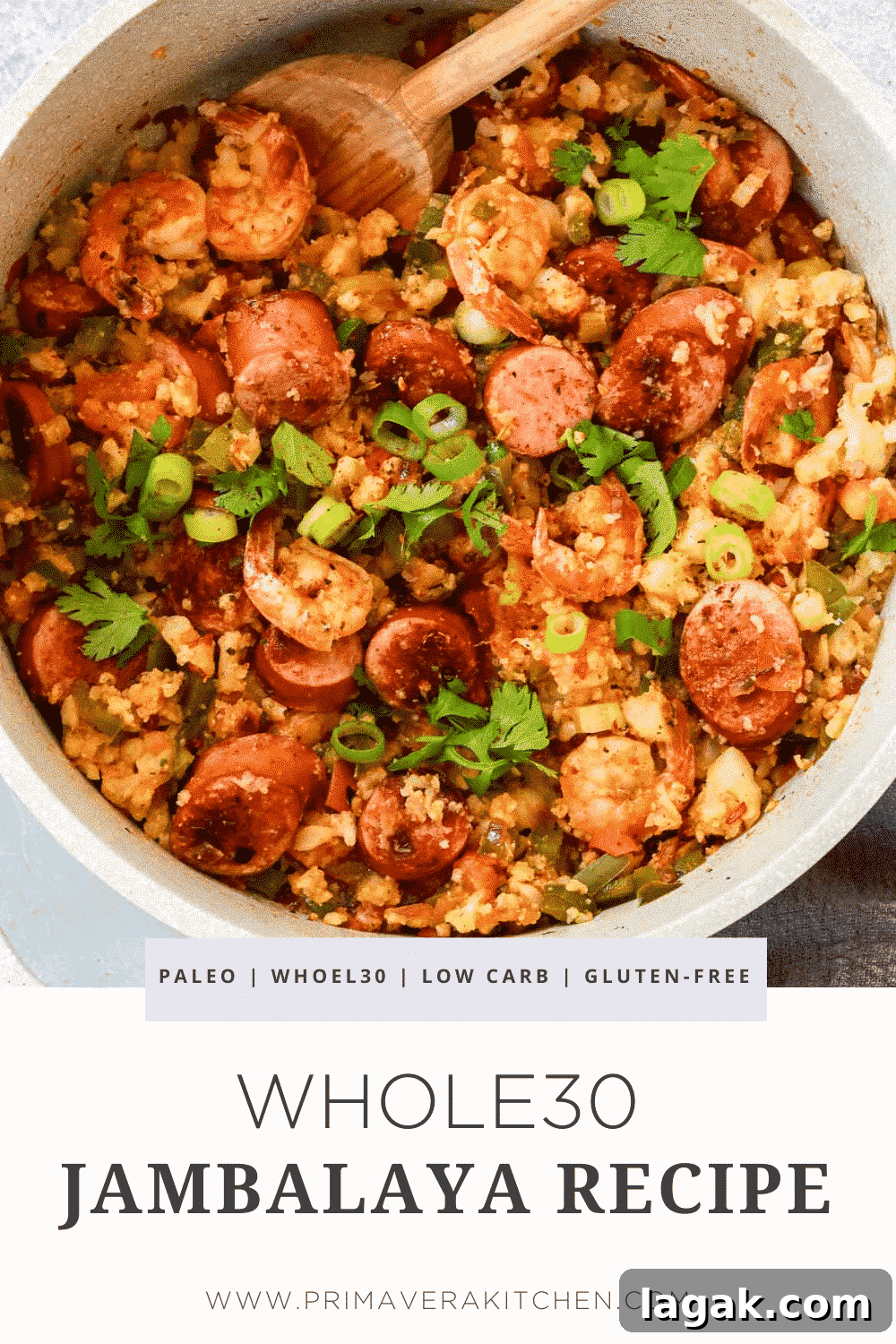
Having a Whole30 jambalaya recipe in your collection means you don’t have to miss out on classic Louisiana flavors. With a few mindful swaps, you can enjoy this comforting southern dish while keeping it Whole30-compliant and low-carb.

Jambalaya combines proteins and vegetables in a single pot for a flavorful, satisfying meal. Follow this streamlined recipe and you can have a Whole30-friendly jambalaya on the table in under 30 minutes. It’s also suitable for keto and low-carb plans when made with cauliflower rice, and cooking everything in one pot keeps cleanup quick and easy.
How to turn traditional jambalaya into a Whole30 jambalaya recipe
Traditional jambalaya begins with chicken or smoked sausage cooked with onions, bell peppers, and celery—the Cajun and Creole “holy trinity.” Seafood, like shrimp, is often added later. Creole versions include tomatoes while Cajun versions usually do not; this recipe uses tomatoes for brightness. The main adjustment for Whole30 is replacing rice with cauliflower rice, which provides the same texture without the grains.

What sausage can you eat on Whole30?
Not all sausages are Whole30-friendly. Read labels carefully and avoid any sausage containing sugar, nitrates, MSG, or other non-compliant additives. A clean, minimally processed sausage will keep the dish authentic while staying within Whole30 rules. If you have leftover sausage, it can be reused in other recipes.
How do you rice cauliflower?
The easiest option for this recipe is frozen riced cauliflower—readily available and convenient. Frozen riced cauliflower heats quickly and keeps your cooking time short. If you prefer homemade riced cauliflower, pulse cauliflower florets in a food processor and freeze portions for future use. Unlike rice, cauliflower rice only needs to be heated through, so it speeds up the recipe.
What is Cajun seasoning?
Cajun seasoning is a versatile spice blend commonly sold pre-mixed, but it’s also simple to make at home. A classic mix typically includes:
- Garlic powder
- Onion powder
- Seasoning salt
- Oregano
- Thyme
- Chili flakes
- Black pepper
- Cayenne
- Paprika
Use extra cayenne or chili flakes if you like more heat. This seasoning works well on chicken, fish, shrimp, and vegetables, so making your own batch is handy.
What pairs well with this Whole30 jambalaya recipe?
The jambalaya is filling on its own, but these Whole30-compliant sides complement it nicely:
- Swiss chard
- Okra
- Collard greens
- Cole slaw (made without sugar or non-compliant mayonnaise)

Whole30 Jambalaya Recipe
Video
Ingredients
- 1 + 1 tablespoons olive oil
- 1 lb raw shrimp peeled, deveined and tail On
- 14 oz Andouille sausage (this kind of sausage is already cooked)
- 1 cup white or yellow onion diced
- 1 green bell pepper diced
- 1 red bell pepper diced
- 2 stalks celery diced
- 4 cloves garlic minced
- 2 tablespoons Cajun seasoning
- 1 cup diced tomatoes
- 1/4 cup chicken broth
- 3 cups cauliflower rice frozen
- 1 tablespoon fresh parsley
- 1 tablespoon green onion
- kosher salt and black pepper to taste
Instructions
-
In a large pot, heat 1 tablespoon of olive oil over medium heat. Add the shrimp and cook 4–5 minutes until just opaque. Avoid overcooking to prevent a rubbery texture. Remove and set aside.
-
Add the sliced sausage to the pot and brown on both sides, stirring occasionally. Remove and set aside with the shrimp.
-
Add the remaining tablespoon of olive oil, then add the onion, green and red bell peppers, celery, and garlic. Sauté until the vegetables are softened.
-
Stir in the Cajun seasoning, diced tomatoes, and chicken broth. Return the sausage to the pot, mix well, and cook 3–5 minutes over medium-low heat to blend the flavors.
-
Return the shrimp to the pot and add the cauliflower rice. Cook on low, stirring regularly, until the cauliflower rice is heated through.
-
Garnish with green onions and fresh parsley before serving.
Notes
- Choose sausage labeled without sugar, nitrates, MSG, or other non-compliant additives to keep the recipe Whole30-friendly.
- For extra spice, increase the cayenne or add more chili flakes.
- Frozen riced cauliflower is convenient and reduces prep time.
- To store: Refrigerate leftovers in an airtight container for up to 4 days.
- To reheat: Reheat gently on the stovetop or in the microwave until warmed through.
- To freeze: Freeze in a freezer-safe container for up to 3 months, leaving room for expansion.
Nutrition
Nutrition information is automatically calculated and should be used as an approximation.