Puntarelle are a delightful type of chicory, versatile and satisfying whether eaten raw or cooked. They’re also surprisingly easy to grow. After trying them for the first time last year, they’ve become a firm favourite in my garden and kitchen.
You may see recipes using the singular “puntarella,” but technically that is the Roman Italian word for a single shoot. Puntarelle (with an “e” at the end) is the plural and refers to multiple shoots, which is usually what you’ll be preparing. The plant and seeds are sometimes labeled as Cicoria (di) Catalogna, Cicoria di Gaeta, or Cicoria Asparago (asparagus chicory). Be aware that Cicoria di Veneto is typically a leaf-only chicory similar to endive and does not produce the distinctive shoots. Some seeds sold as Cicoria Catalogna can also produce mainly leaves, so check variety descriptions carefully. In a future post I’ll share a reliable UK source for true puntarelle seeds.
Historically, asparagus chicory seeds were available to UK gardeners; Jane Grigson’s Vegetable Book notes Thompson & Morgan sold them in 1976. According to Charlie Hicks, puntarelle were grown in England centuries ago and even exported to Italy. Today they’re less common here and often imported for fine dining. I hope to help revive interest in this tasty vegetable. If you want to learn how to grow and cook puntarelle, read on.
This image shows puntarelle about 4–6 weeks old. The plant produces narrow, frilled, ribbed leaves that surround a central cluster of juicy edible shoots.
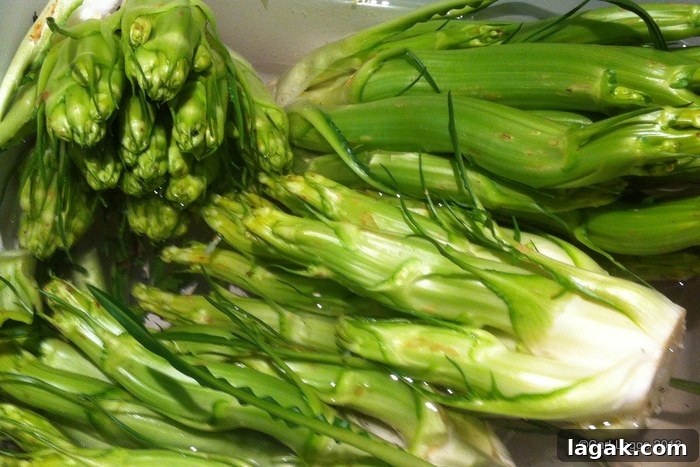
This pile shows leaves and shoots harvested in October, about three months after sowing the seeds.
Both the leaves and the shoots are edible and have distinct textures and flavours.
Puntarelle Shoots
The shoots are particularly striking: hollow, ribbed on the inside, crunchy and lightly bitter when raw. You can mellow both the crunch and the bitterness by steaming, boiling or sautéing the shoots.
In Rome, puntarelle are traditionally cut into fine lengthwise strips, then iced for about an hour so they soften and curl. They’re dressed with a punchy anchovy and lemon (or red wine vinegar) dressing and served with fettunta—good toasted bread drizzled with quality extra virgin olive oil.
Below is an example I made, served with ripe home-grown tomatoes:
You’ll sometimes see a dedicated tool—the taglia—used in markets to cut the shoots into strips. The classic Roman dressing is simple but bold: mashed anchovies, lemon juice or vinegar, and olive oil. The combination of crisp, curled puntarelle with a salty, tangy dressing is what makes the dish memorable.
Puntarelle Leaves
The leaves carry a stronger bitter chicory flavour, especially the larger, older leaves. I treat them like chard: strip the leaf from the rib, sauté the rib first, then add the shredded leaves to sauté briefly or steam them. They work well tossed in a punchy vinaigrette, or added to soups, casseroles, stews and pasta fillings.
Both leaves and shoots can be cooked together in hearty recipes, for example paired with beans. The shoots are also excellent sliced crosswise into small tubes (about 1 cm long) and added to pasta sauces, minestrone or casseroles for texture and a mild bitter note.
Puntarelle are an interesting vegetable to try for gardeners and cooks alike. If you want to learn how to cultivate them, see my follow-up post about growing puntarelle.