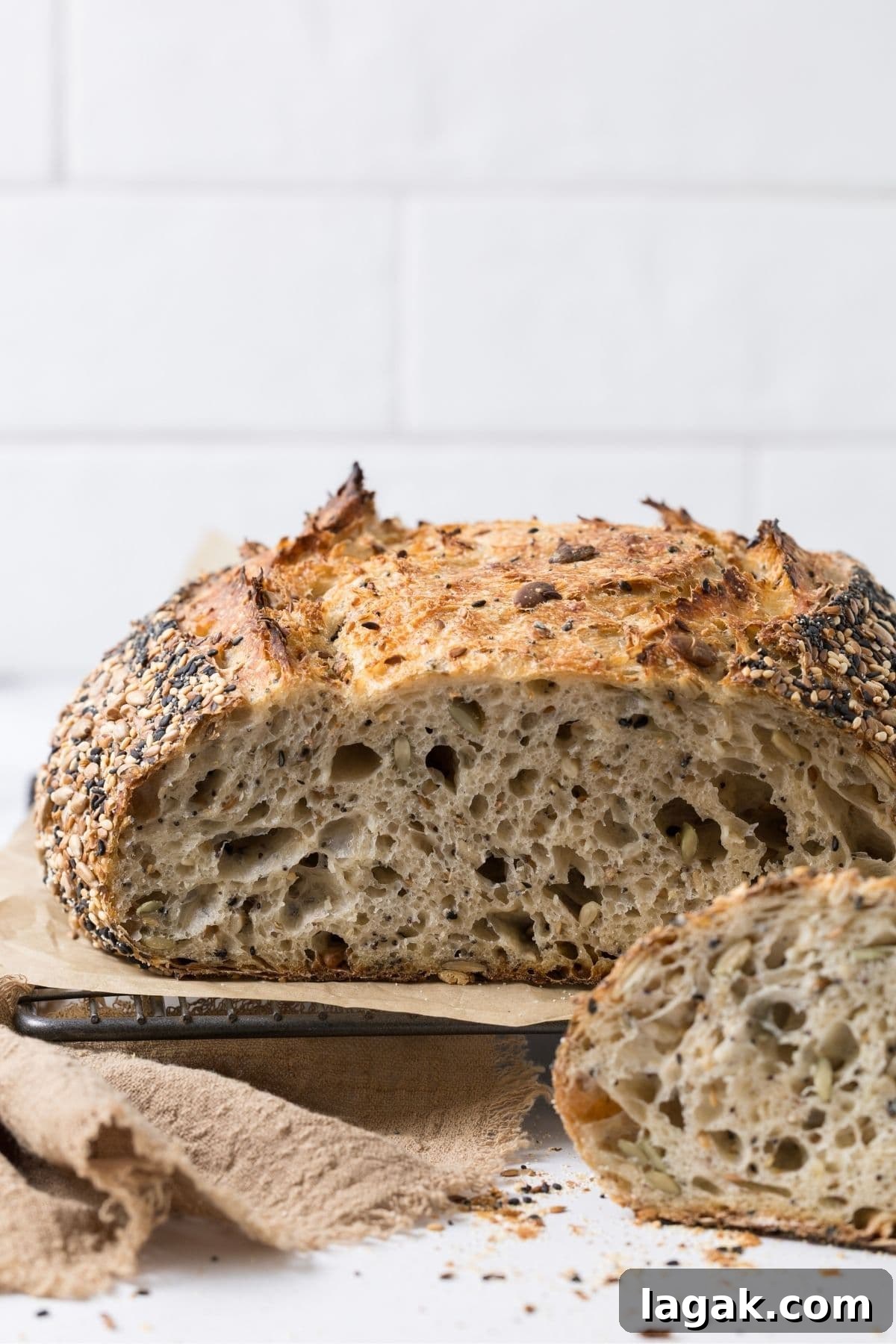
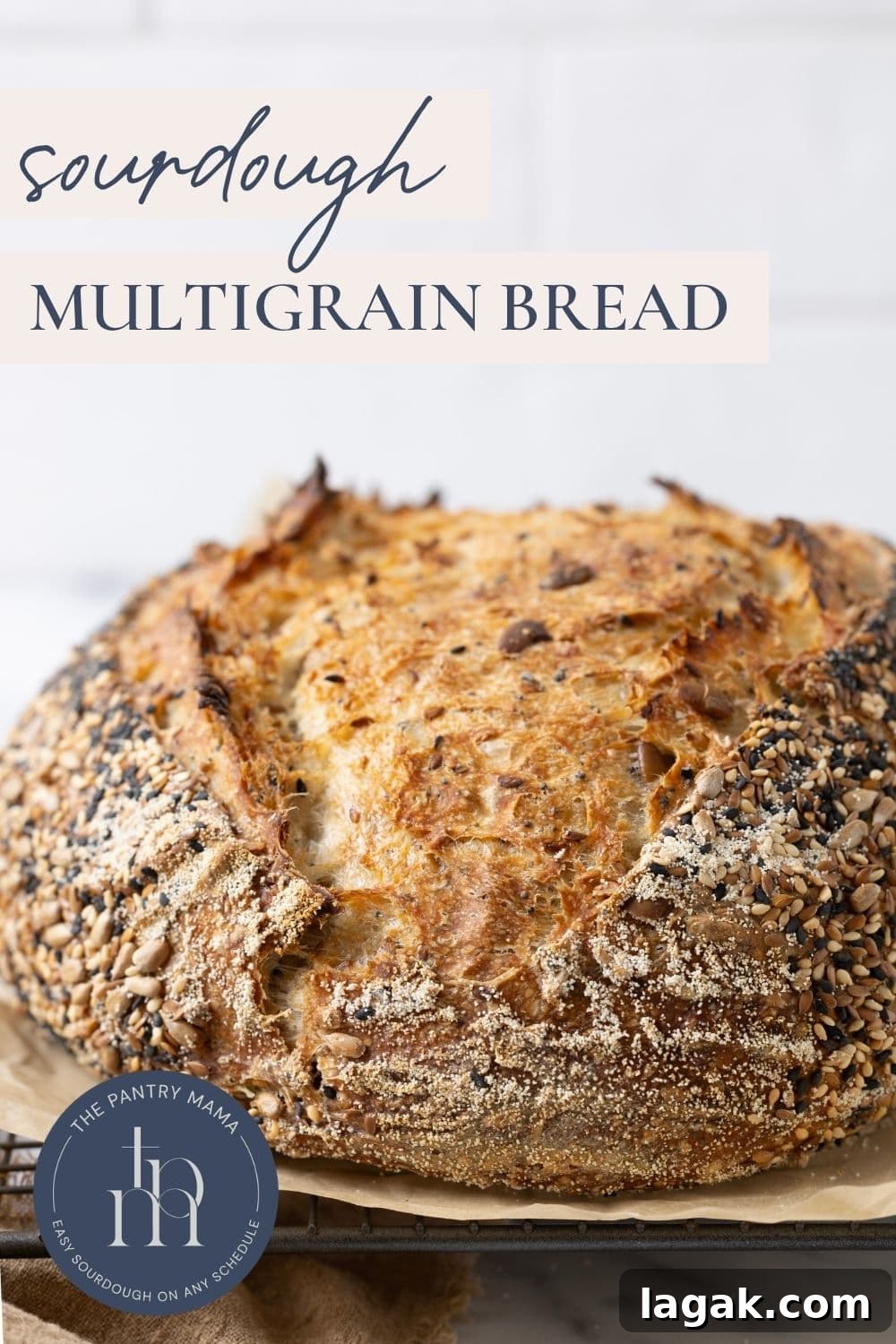
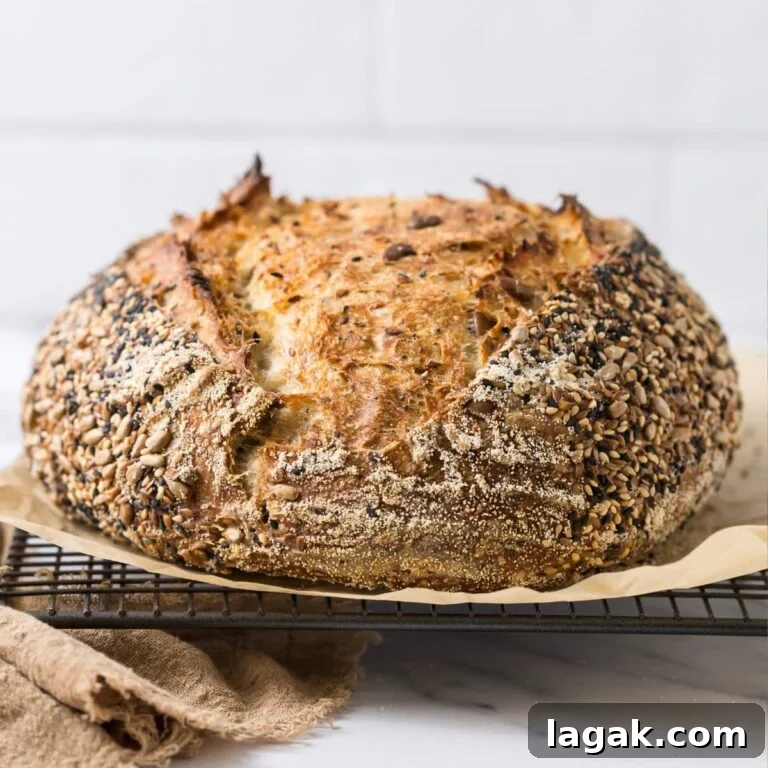
Full of wholesome texture and nutty flavour, this easy multigrain sourdough bread delivers everything you want from a grainy loaf. The recipe is highly adaptable — add the seeds and whole grains you enjoy, or substitute part of the bread flour with whole wheat if you prefer. Multigrain bread has a comforting, rustic appeal: the aroma of a hearty loaf baking is irresistible.
Why You’ll Love This Recipe
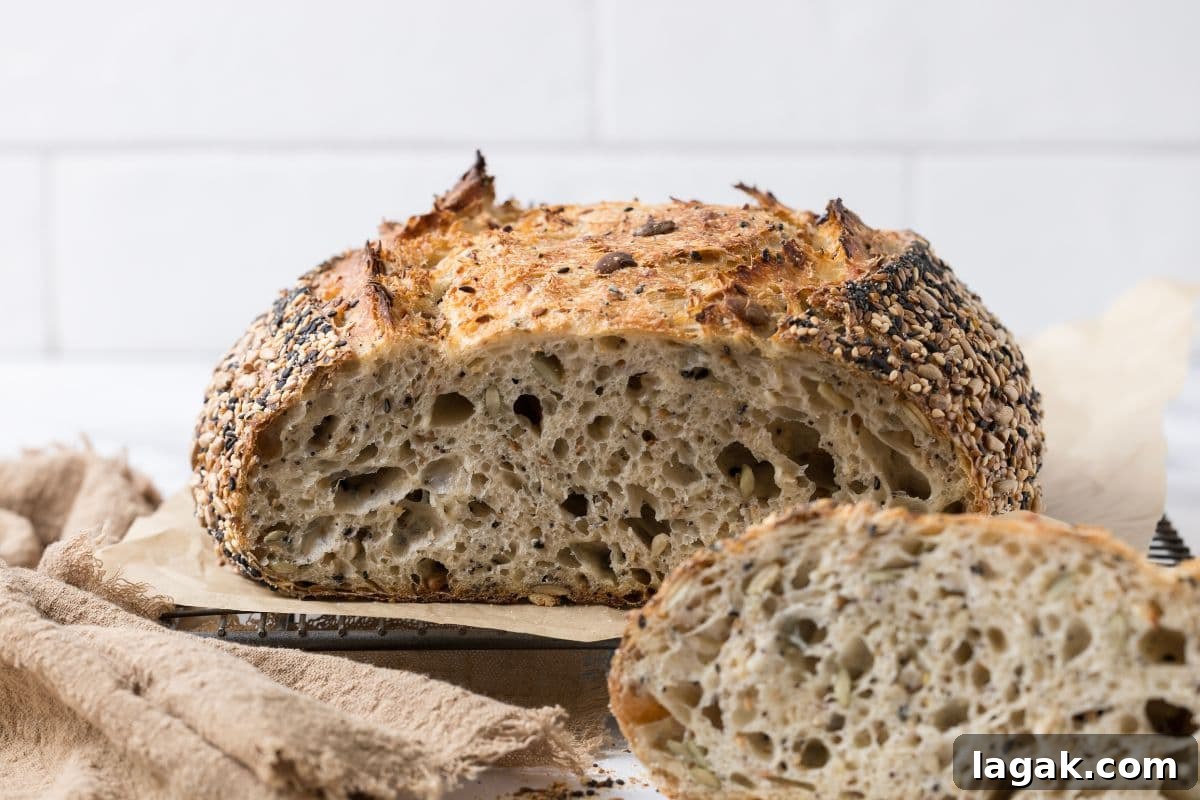
- Balanced Ratio – After weeks of testing, the grain-to-flour ratio in this recipe keeps the crumb soft and airy while still producing a crisp, chewy crust and good oven spring, even with lots of seeds and grains.
- Plenty of Grains – Multigrain bread uses two or more grains, but most versions include several grains plus seeds. This sourdough loaf leans toward a seeded multigrain style thanks to the mix of seeds included.
I love this recipe. It is going to be on my regular rotation from now on. Simple and delicious and very very seedy. Right now I’m eating it slathered with butter and drizzled with hot honey. Even my hubby is a fan (and he is not a fan of other seed bread recipes I’ve experimented with) so that’s saying something. Great job on this!
– LeAna
Ingredients
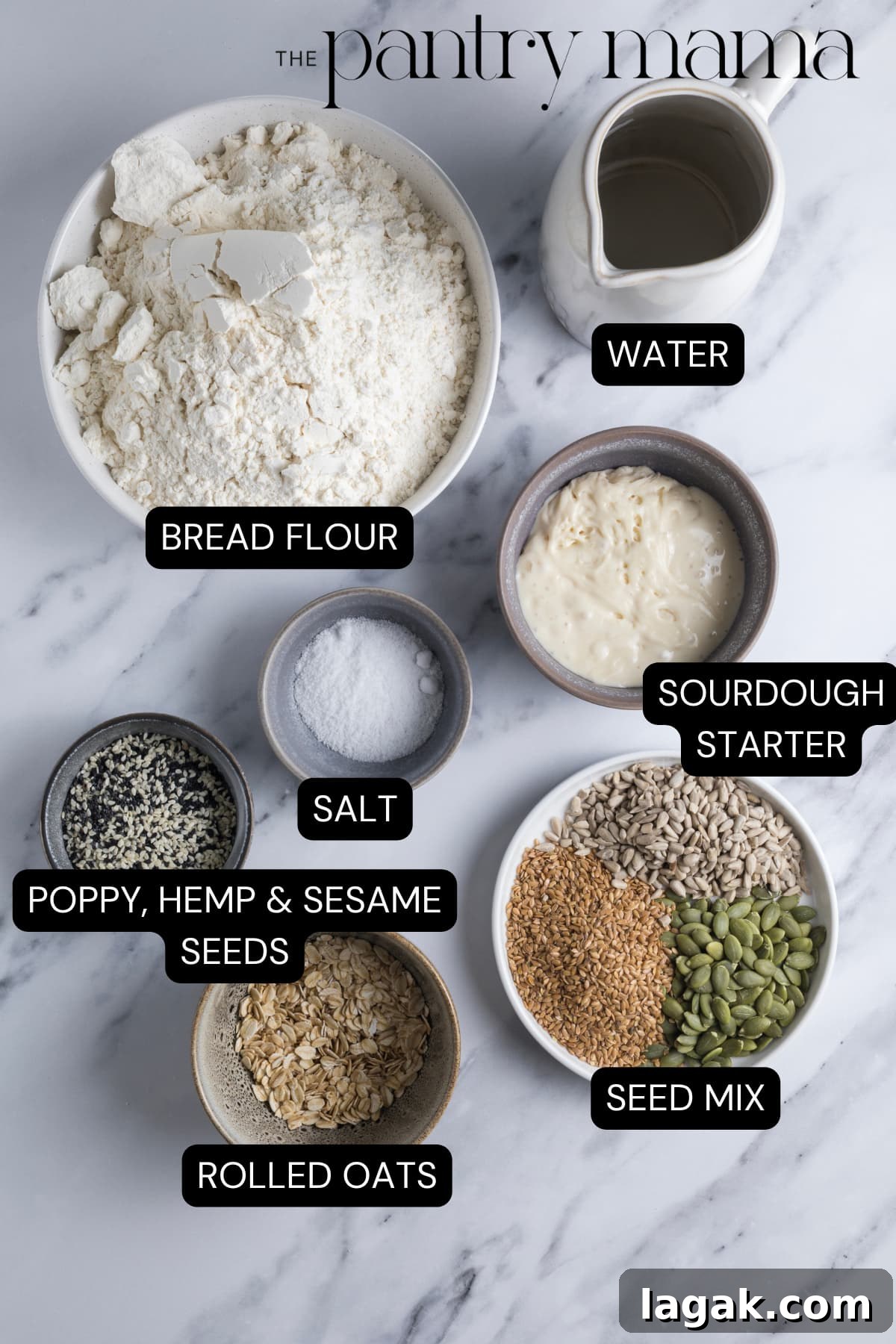
- Seeds – Use any combination of seeds and whole grains you like. Aim for about 100–150g total. Options include pumpkin, sunflower, flax, sesame, poppy, quinoa, cracked wheat and steel-cut oats.
- Sourdough Starter – Active, fed starter; 100g of bubbly starter is used here.
- Bread Flour – Use bread flour for best oven spring. You can substitute up to 50% with whole wheat flour, but higher amounts may reduce rise; consider adding a bit of vital wheat gluten if needed.
- Water
- Salt
- Rolled Oats
How To Make Multigrain Sourdough Bread
This sourdough loaf is approachable for beginners. It uses the same basic steps as a simple sourdough loaf, with the addition of soaked seeds for better texture and incorporation. Use an active starter fed a few hours before you begin and weigh your ingredients for accuracy.
Soaking the Seeds
Soak pumpkin, sunflower, flax and rolled oats in about 100g water for roughly an hour. Do not soak poppy, sesame or hemp seeds. Soaking prevents seeds from drawing moisture out of the dough and helps them incorporate smoothly.
Kate’s Pro Tip
Tips for Soaking Seeds
Soaked seeds are less likely to burn during baking and blend into the dough more easily. Drain them well before adding so the dough isn’t too wet — excess water can make the dough slack and affect crumb and crust.
Making the Dough
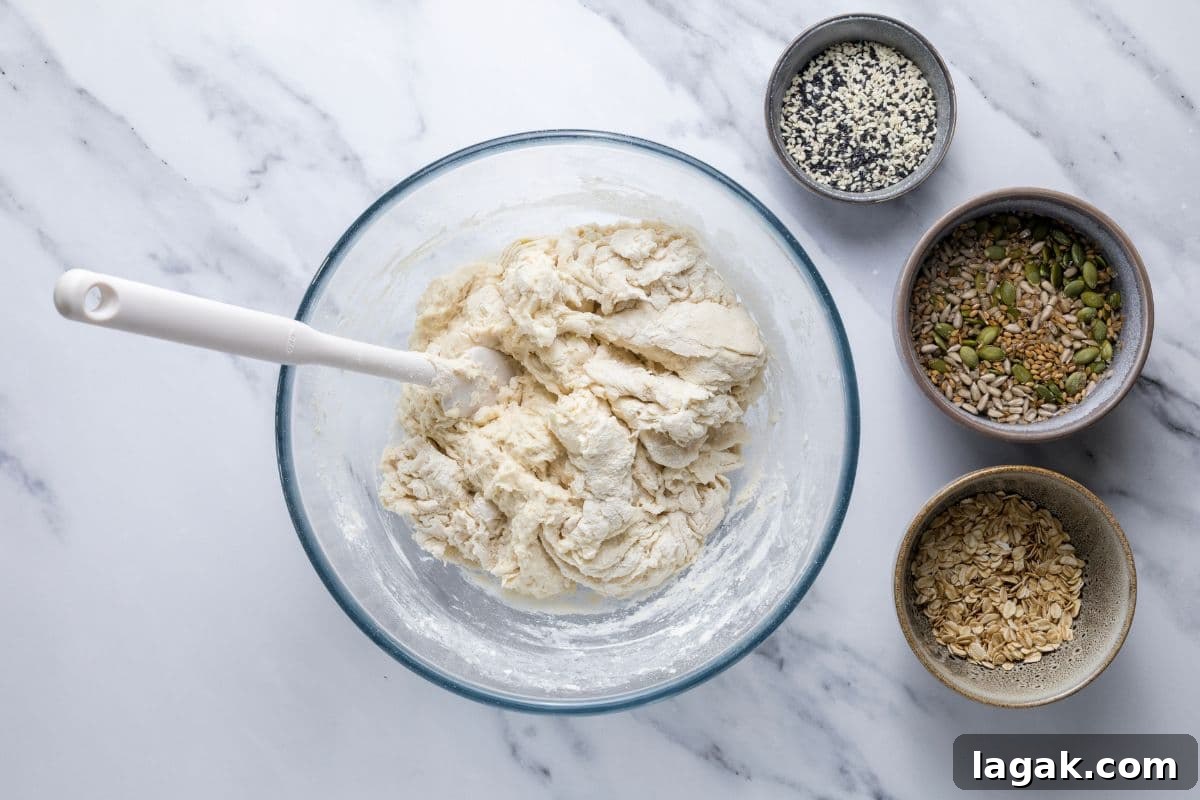
Weigh your starter and water into a large bowl and stir briefly to combine. Add flour and salt, then mix until you have a shaggy dough. Cover and rest for about an hour for the autolyse.
Adding the Seeds
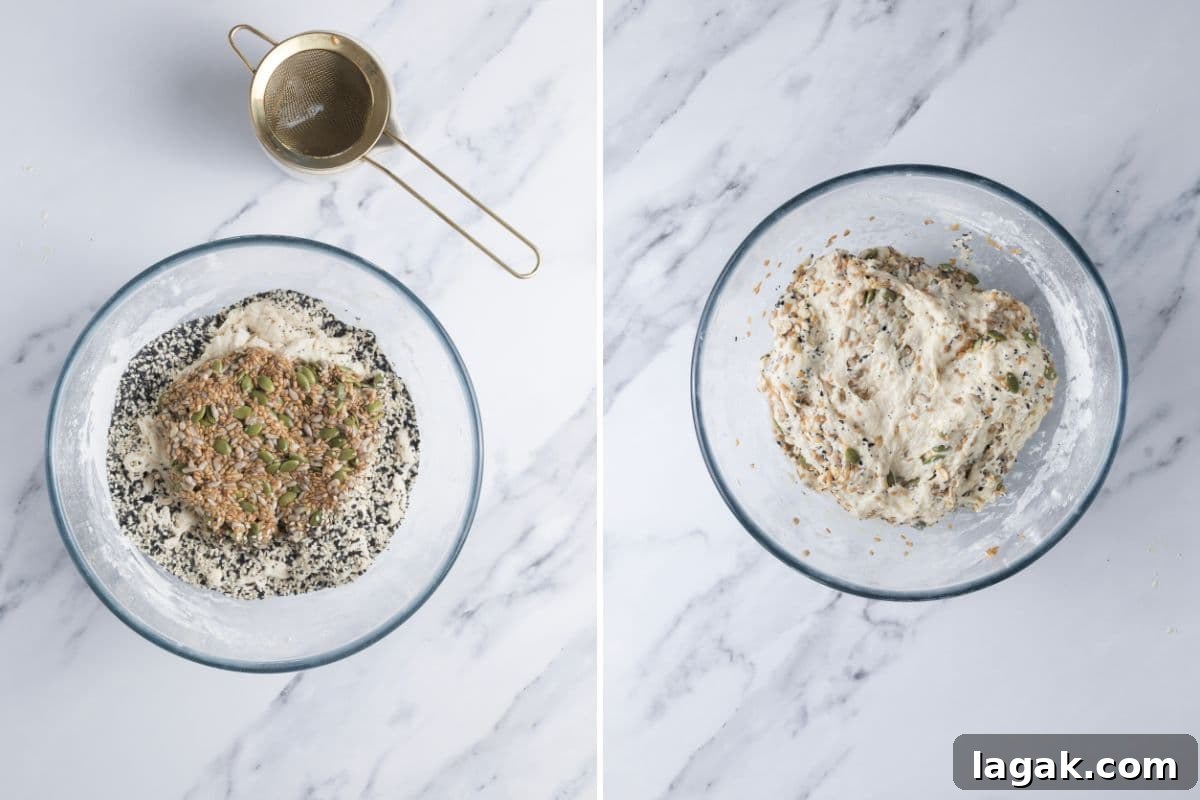
Drain the soaked seeds, then add them and the oats to the center of the dough. Fold the dough over the seeds and work around the bowl until they’re incorporated. Don’t worry if they aren’t perfectly distributed yet — stretch and folds will even them out. Cover and rest for 30 minutes.
Stretch & Folds
Perform 4–6 sets of stretch-and-folds over roughly two hours. For each set, stretch the dough up and fold it over itself four times, with about 15 minutes between sets. These builds structure and strength in the dough.
Bulk Fermentation
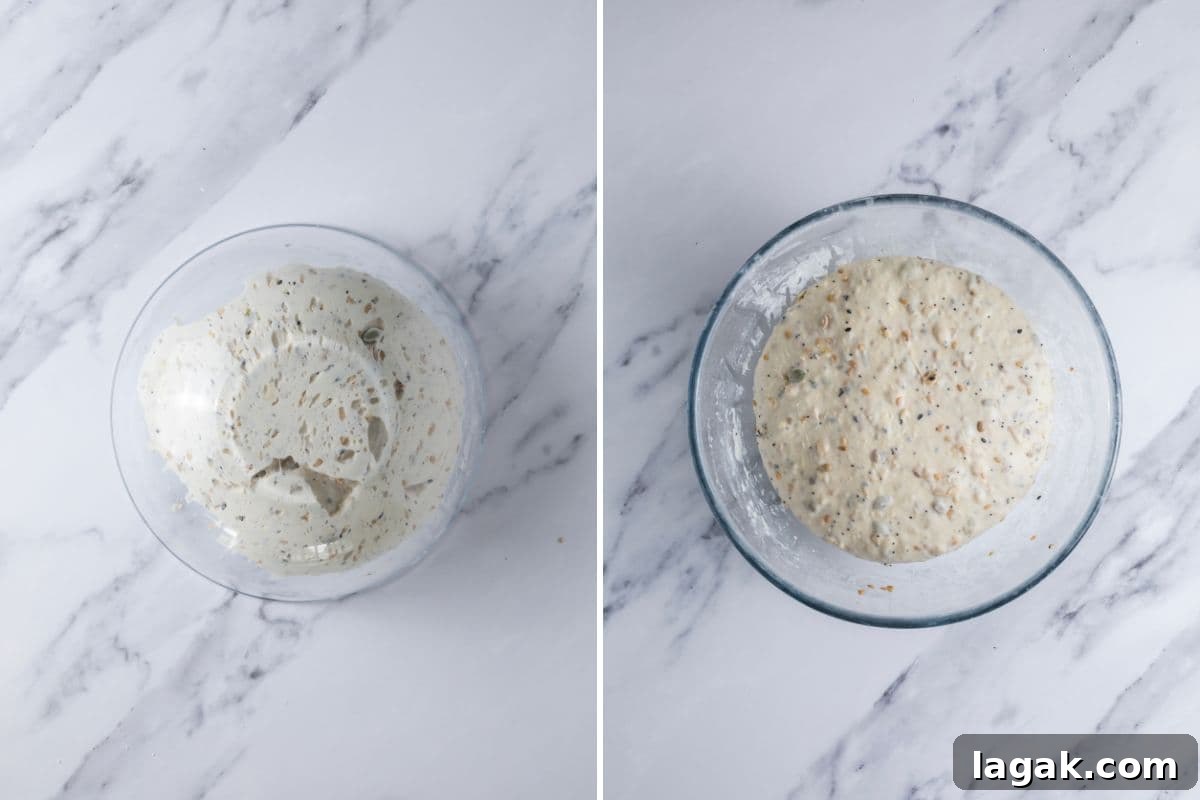
After the final stretch-and-fold, cover the bowl and let the dough bulk ferment at room temperature until it has roughly doubled and shows bubbles. The exact timing depends on your room temperature.
Shaping Your Dough
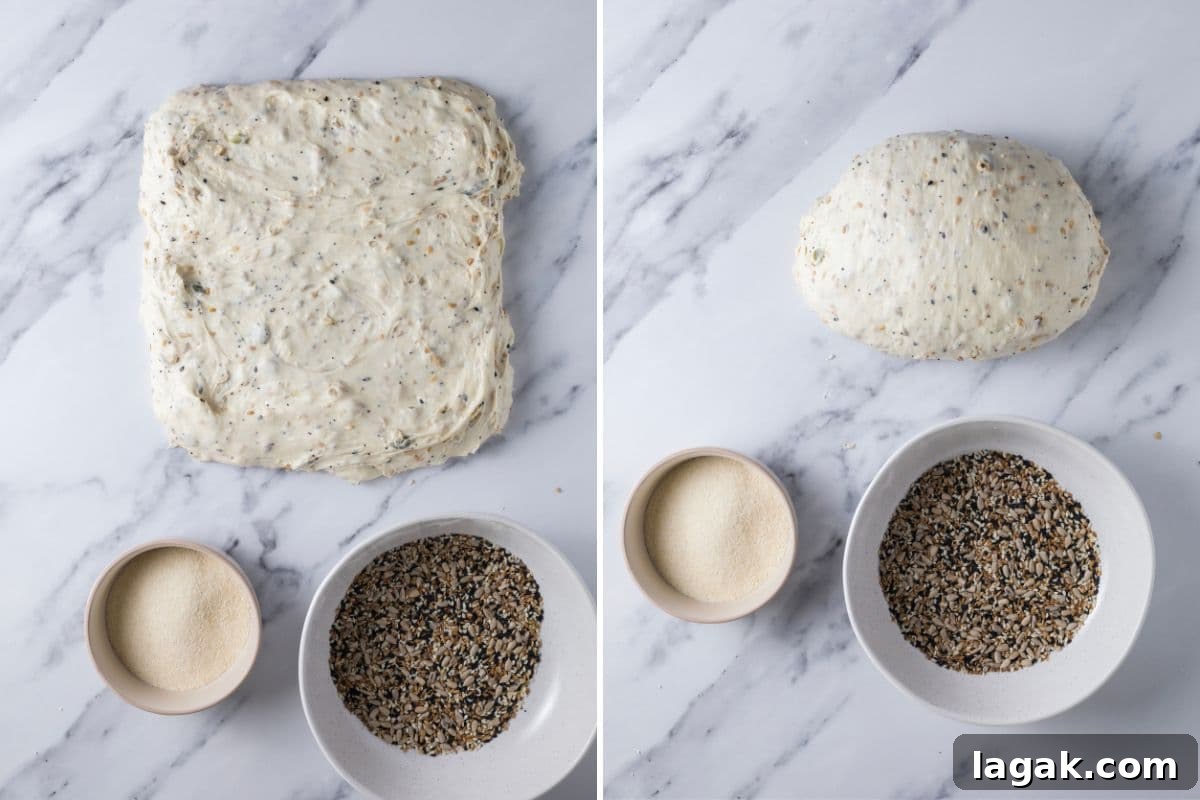
Turn the dough out onto a lightly floured surface (rice flour is useful because it won’t stick) with the smooth side down. Fold the edges into the center, flip the dough over and use the tacky underside to form a tight round or a batard.
Topping with Seeds
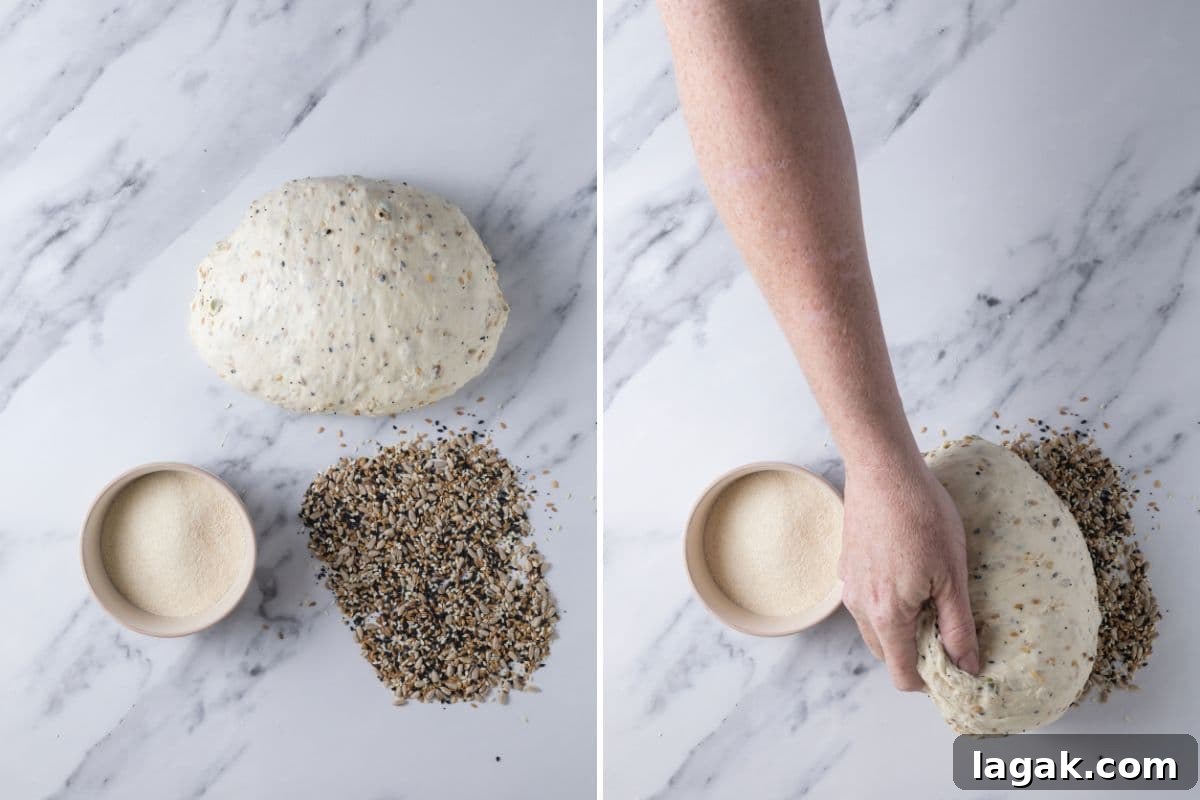
Place the shaped dough seam-side up into a banneton dusted with flour or a bowl lined with a floured towel. For a seeded crust, roll the top of the shaped dough in a seed mix, or scatter seeds in the banneton so the dough picks them up when placed inside.
Cold Ferment
Cover the banneton loosely and refrigerate for at least 5 hours and up to 36 hours. A longer cold ferment deepens flavour, develops blisters on the crust and makes scoring easier. For best flavour, aim for a long overnight or 36-hour cold ferment.
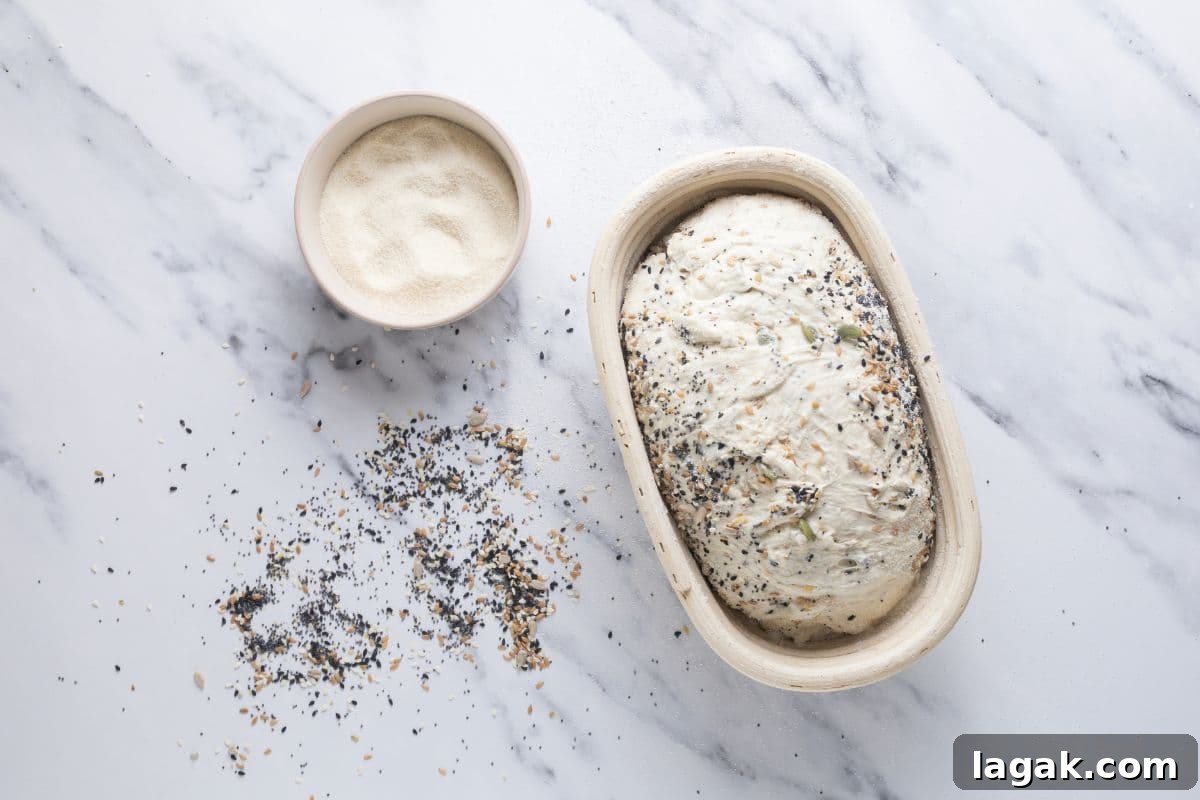
Longer cold fermentation enhances flavour and texture; however, shorter rests still produce delicious loaves if you’re short on time.
Score and Bake
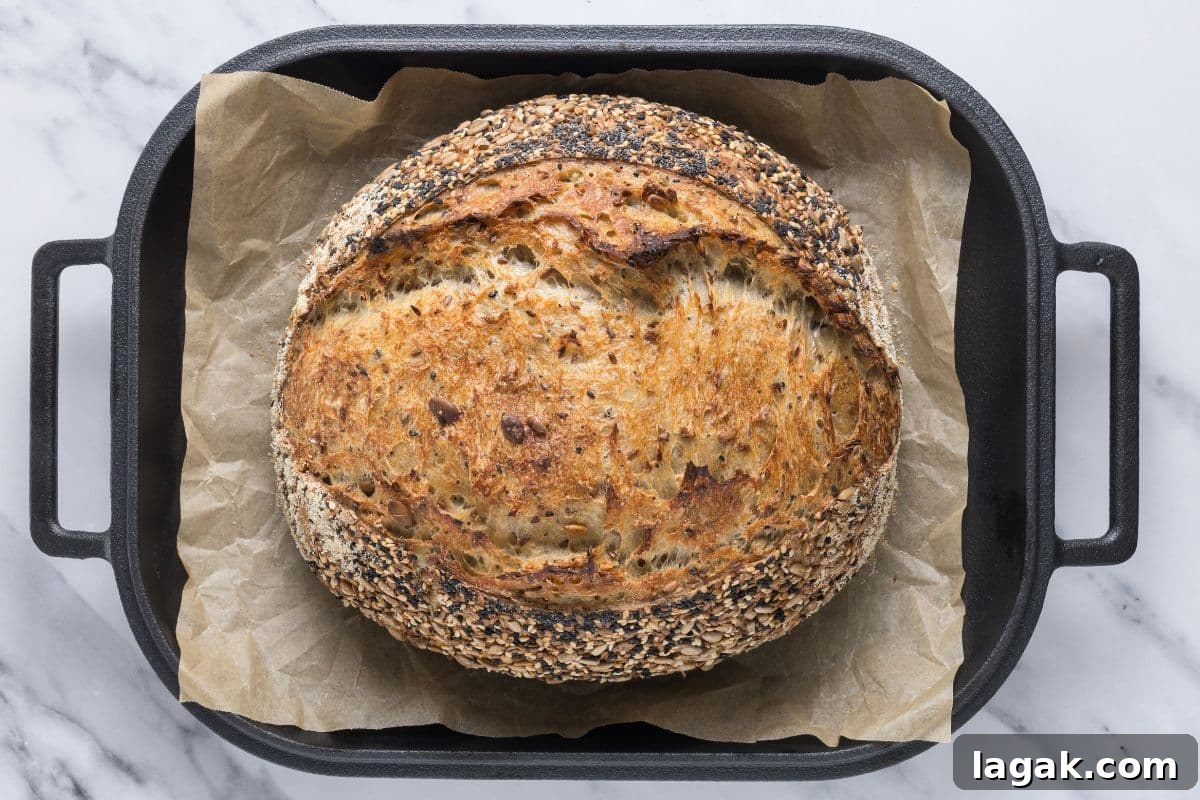
Preheat your oven to 230ºC / 450ºF with a Dutch oven inside for at least 30–60 minutes. When ready, turn the dough onto parchment paper, score the top, then transfer it into the preheated Dutch oven using the paper as a sling. Cover and bake.
Optional: place a baking sheet on the shelf below the Dutch oven to protect the base from burning.
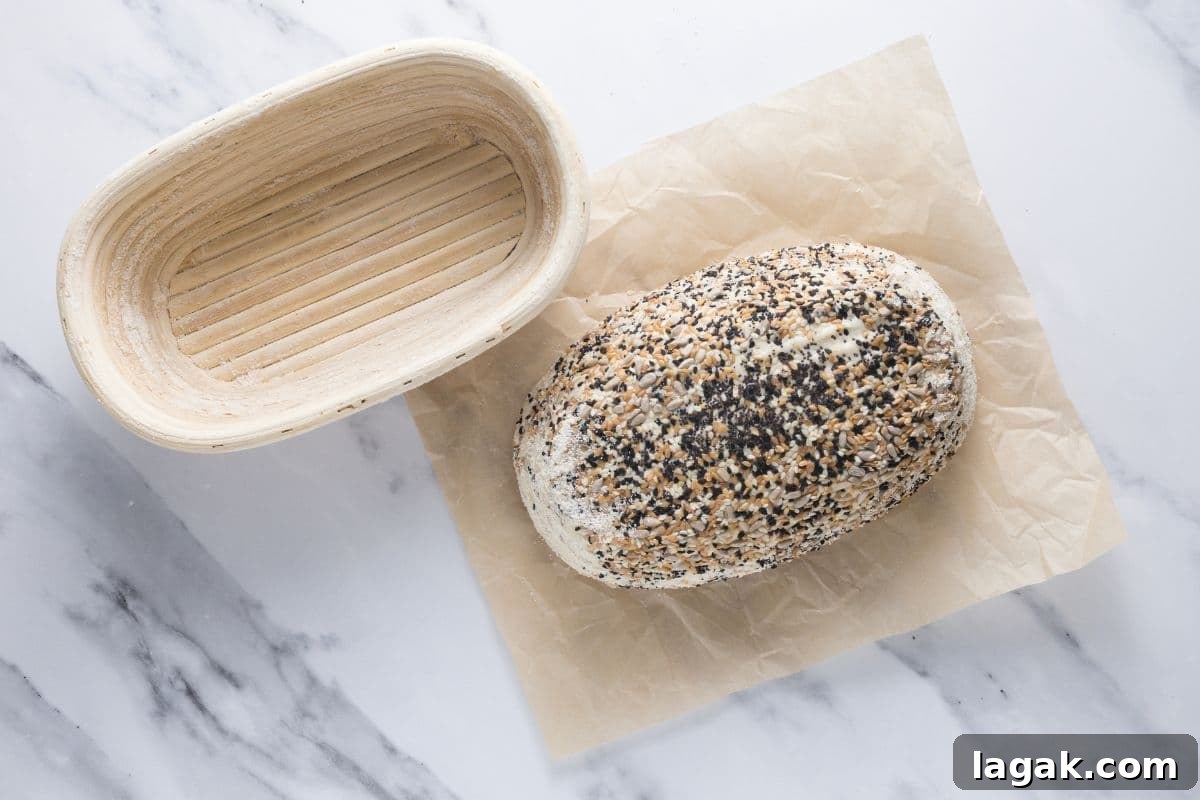
BAKE TIME: 30 minutes with the lid on at 230ºC/450ºF, then 10–15 minutes with the lid off at 210ºC/410ºF. Remove from the Dutch oven and cool on a wire rack.
Baker’s Timeline
Here’s a sample timeline to follow and adapt to your schedule:
DAY 1
1:00pm – Feed starter
5:00pm – Premix and autolyse (soak seeds now)
6:30pm – Shape into a ball and rest 30 minutes
7:00pm – Perform 4–6 sets of stretch & folds over ~2 hours
9:00pm – Cover and leave for bulk ferment if temperature is suitable
DAY 2
6:00am – Shape and place in banneton, refrigerate
2:00pm – Bake in a hot oven until golden
7:00pm – Slice and enjoy with butter or your favourite topping
Serving Ideas
This multigrain loaf works anywhere you’d use a regular white loaf: sandwiches, toast with peanut butter and jam, or topped with poached eggs and hollandaise. It’s also great for little ones who can benefit from the added seeds (omit visible seeds on the crust if you want to be subtle).
How To Store and Freeze
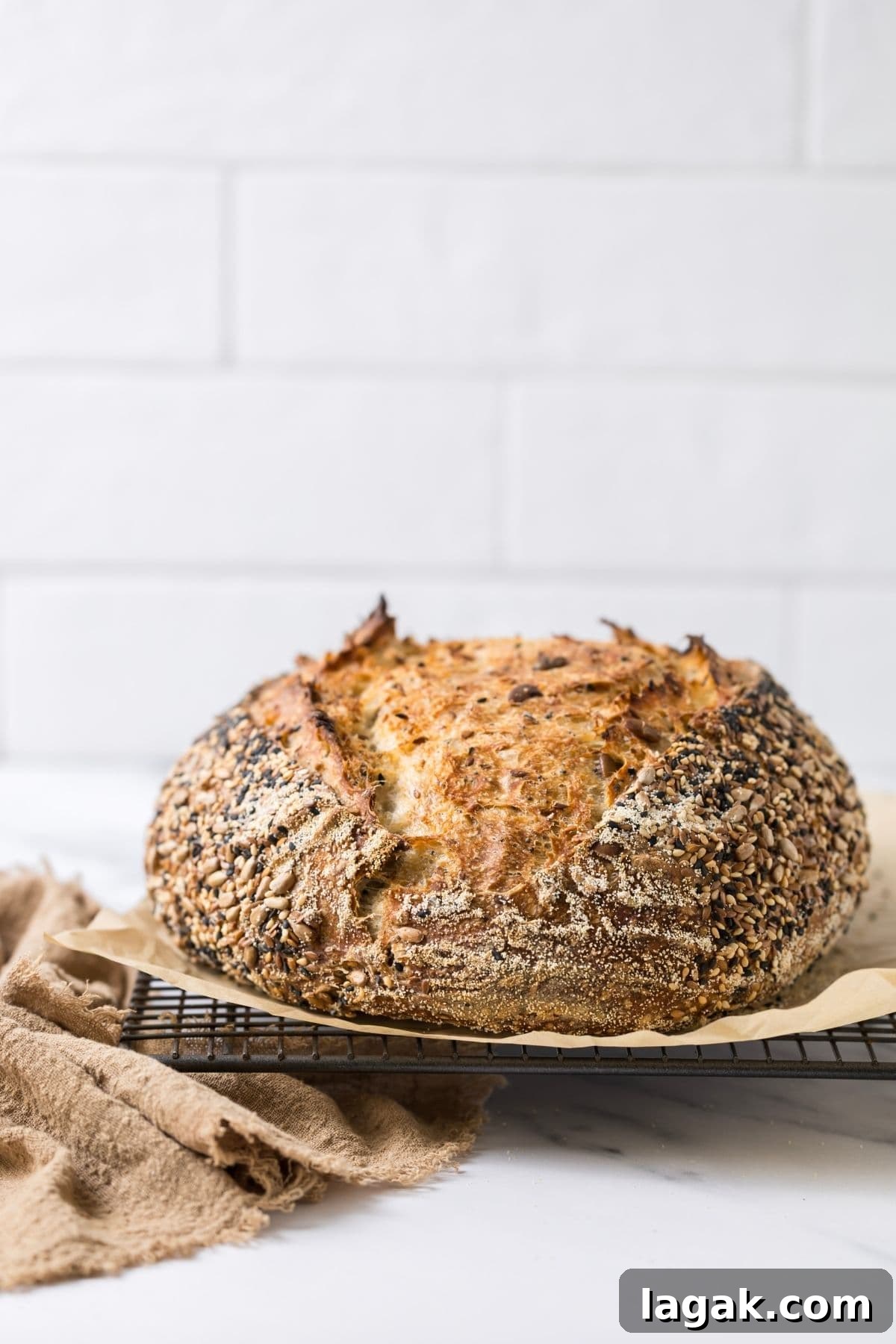
Allow the loaf to cool completely before slicing. The bread is best within 24 hours, but it freezes well: place a cooled loaf into a zip-top bag and freeze for up to three months. Thaw at room temperature in the bag to retain moisture.
Frequently Asked Questions
Soaking is not mandatory, but it prevents seeds from pulling moisture from the dough and helps maintain hydration, texture and an open crumb. If you have time, soak and then drain the seeds before adding them.
Seeds won’t significantly change bulk fermentation as long as they remain under about 20% of the dough weight. Treat the bulk ferment like any sourdough loaf and watch for the usual signs that it has nearly doubled and is aerated with bubbles.
Allow sourdough to cool at least 90 minutes to let the crumb set. For best texture, especially with rye or denser grains, waiting 4–6 hours gives the best result.
Try an “invisible” multigrain loaf, such as an oatmeal sourdough, where the oats are incorporated into the crumb rather than decorating the crust. Avoid rolling the loaf in seeds to keep the exterior familiar.
Easy Multigrain Sourdough Recipe
Rate Recipe
Print Recipe
Equipment
- Mixing Bowl
- Banneton
- Dutch Oven
Ingredients
- 100 g Sourdough Starter, Active and Fed
- 500 g Bread Flour
- 350 g Water
- 10 g Salt
- 25 g Rolled Oats
- 25 g Pumpkin Seeds
- 25 g Sunflower Seeds
- 25 g Flax Seeds
- 10 g Hemp Seeds
- 10 g Sesame Seeds
- 10 g Poppy Seeds
- Additional seeds for topping, as desired.
Instructions
- Before You Start:
Soak pumpkin, sunflower, flax and rolled oats in ~100g water for about an hour. Drain before using. - Autolyse:
Combine starter and water, mix briefly, then add flour and salt. Mix until shaggy, cover and rest ~1 hour. - Adding Seeds:
Drain seeds and add them to the dough, folding until mostly incorporated. Rest 30 minutes. - Stretch & Folds:
Perform 4–6 sets over about 2 hours, with 15 minutes between sets. - Bulk Ferment:
Cover and let the dough ferment at room temperature until it has roughly doubled and shows large bubbles. - Shaping:
Turn the dough out, shape into a tight ball or batard and place seam-side up in a banneton or lined bowl. - Cold Ferment:
Cover loosely and refrigerate 5–36 hours (longer for more flavour and better crust blisters). - Preparing to Bake:
Preheat oven to 230ºC/450ºF with Dutch oven inside. Keep dough chilled until ready to bake. - Scoring:
Turn chilled dough onto parchment, score the top and use the paper to lower the loaf into the hot Dutch oven. - Bake:
30 minutes with lid on at 230ºC/450ºF, then 10–15 minutes lid off at 210ºC/410ºF. Remove and cool on a rack.
Notes
- Starter: This recipe assumes an active starter fed a few hours before baking.
- Stretch & Folds: If doing them on the bench, mist the surface with water rather than using extra flour.
- Bulk Ferment: Warm homes speed fermentation; cool homes slow it. Look for the dough to have just doubled and be filled with bubbles.
- Baking Tips: If the base browns too quickly, place a baking sheet on the shelf beneath the Dutch oven. If unsure the loaf is fully baked, turn off the oven and leave the bread on the rack inside with the door ajar to finish.
Nutrition
Nutrition information is automatically calculated and should be used as an approximation.
Like this? Rate and comment below!