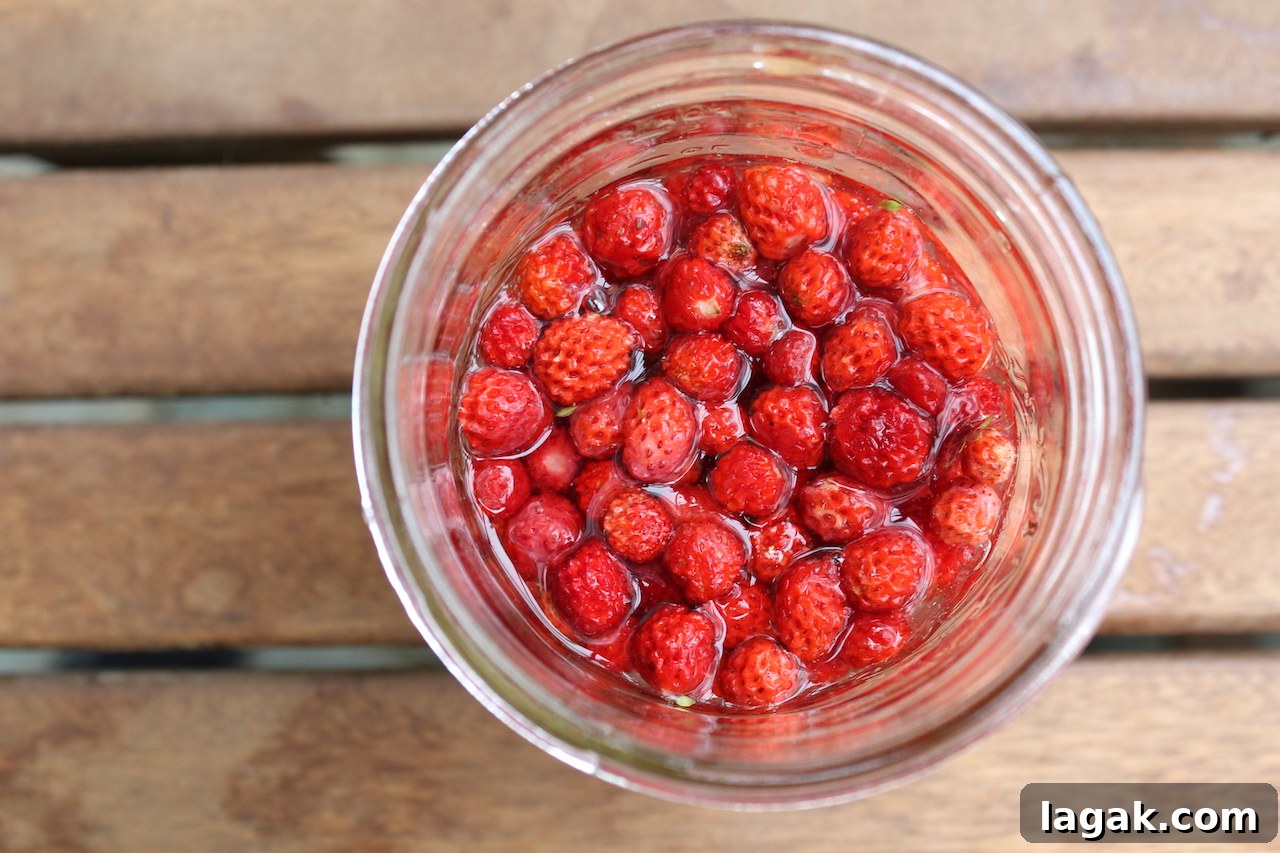
Honey and strawberries are a divine pairing over yogurt or ice cream. Given a little time to mingle, the combination can ferment into a tasty probiotic topping. Honey-fermented strawberries become a tangy, slightly effervescent preserve that works beautifully on toast, pancakes, baked goods, or plain yogurt.
With a gentle mash after fermentation, these berries take on the texture of a healthier jam—sweet, tart, and probiotic-rich.
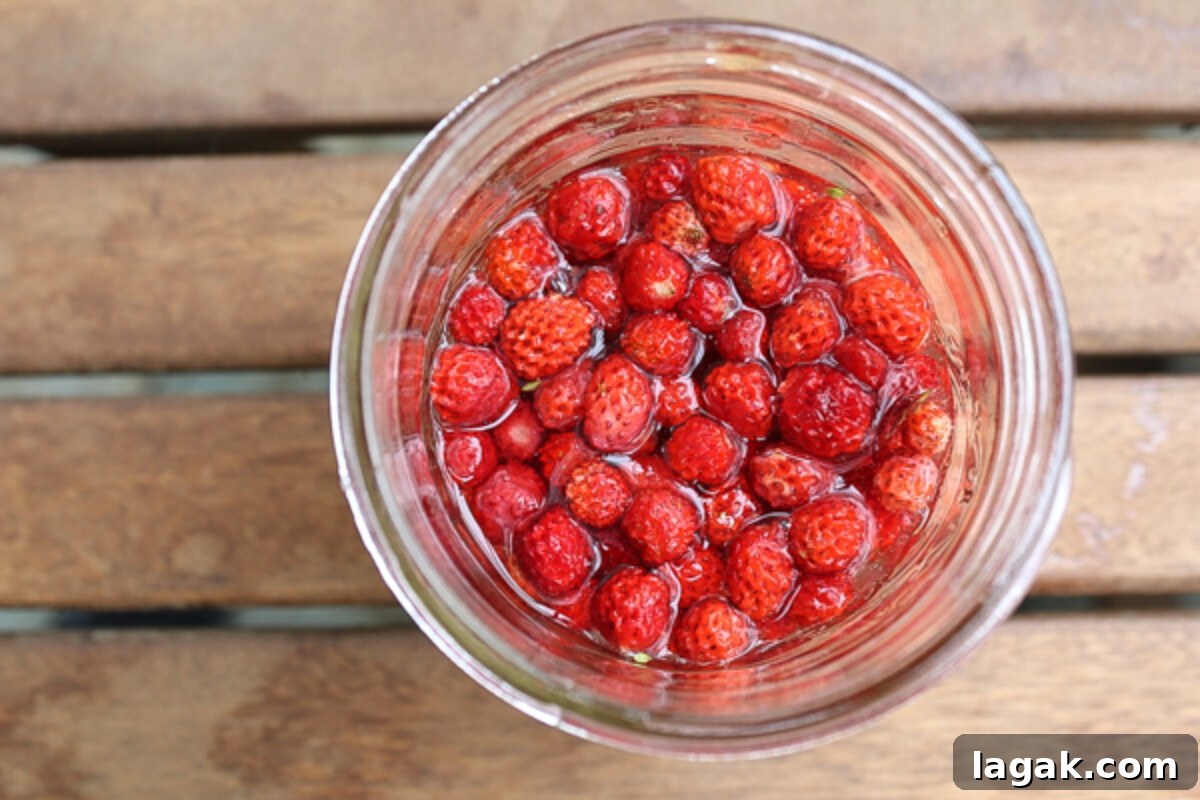
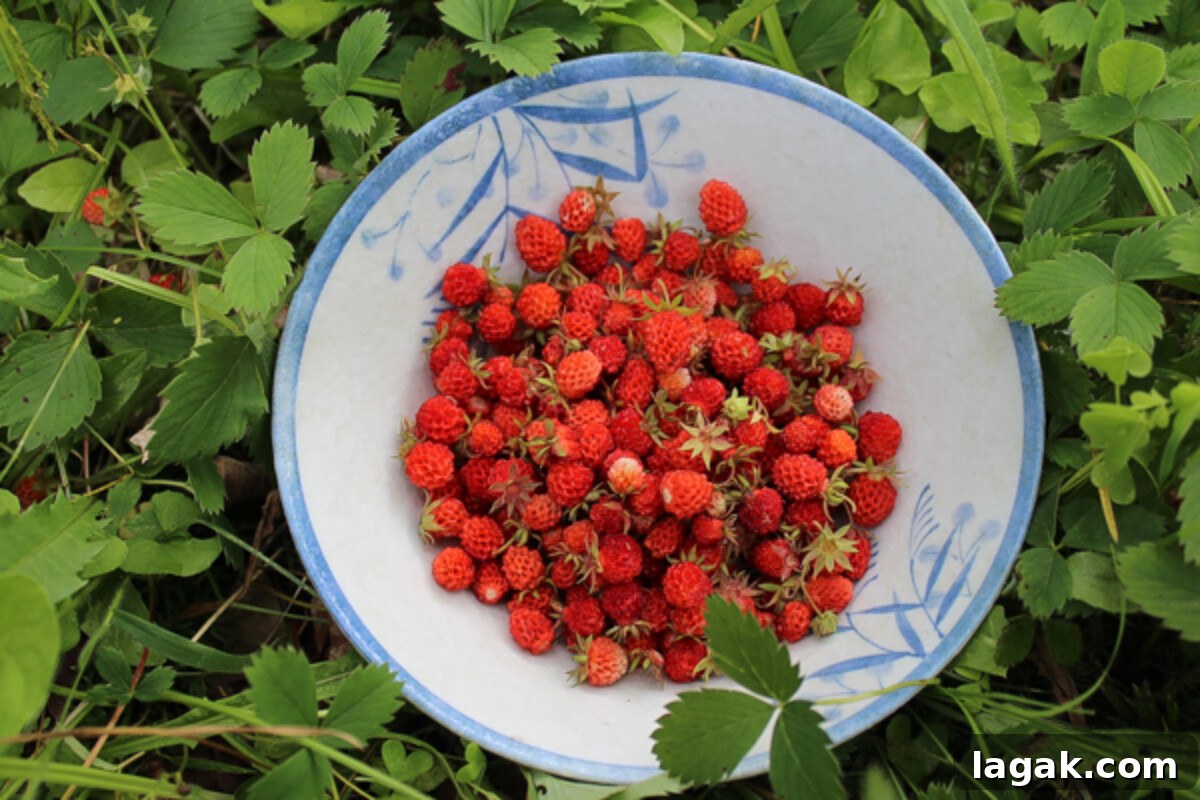
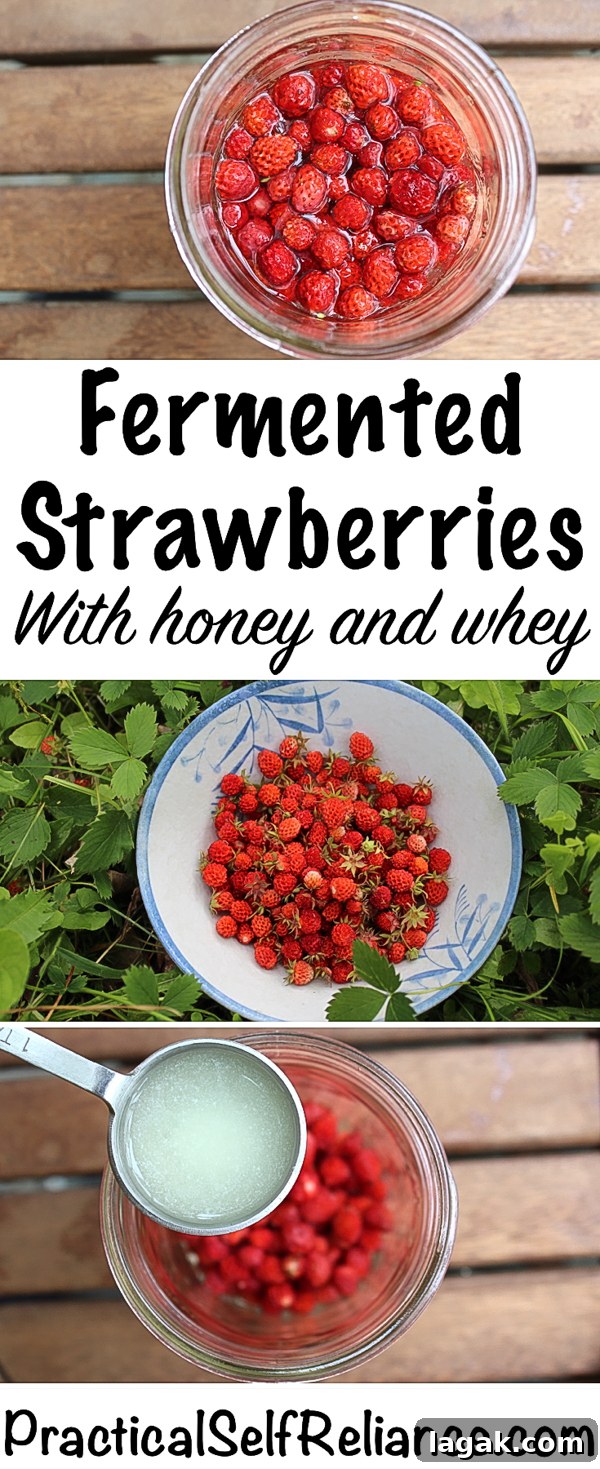
Some fermentation guides warn against fermenting strawberries, saying they are either too acidic or too soft. In practice, strawberries can ferment well. If you worry about softness, choose smaller, firmer berries—homegrown or foraged alpine strawberries are ideal.
Starter Cultures for Fermented Berries
Unlike many vegetables, fruits often harbor more yeast on their skins than lactic acid bacteria. Left to their own devices, fruit ferments can become alcoholic as yeast outcompete lactic bacteria. If you want a lacto-ferment (rich in beneficial lactic acid bacteria) rather than an alcoholic ferment, give the lactic bacteria a head start.
The easiest and most traditional way to do that is with whey. Two tablespoons of fresh whey from yogurt are enough to inoculate a pint jar of strawberries. If you avoid dairy, a crushed probiotic capsule dissolved in a little water will also work—just mix it first so it doesn’t clump.
How to Ferment Strawberries
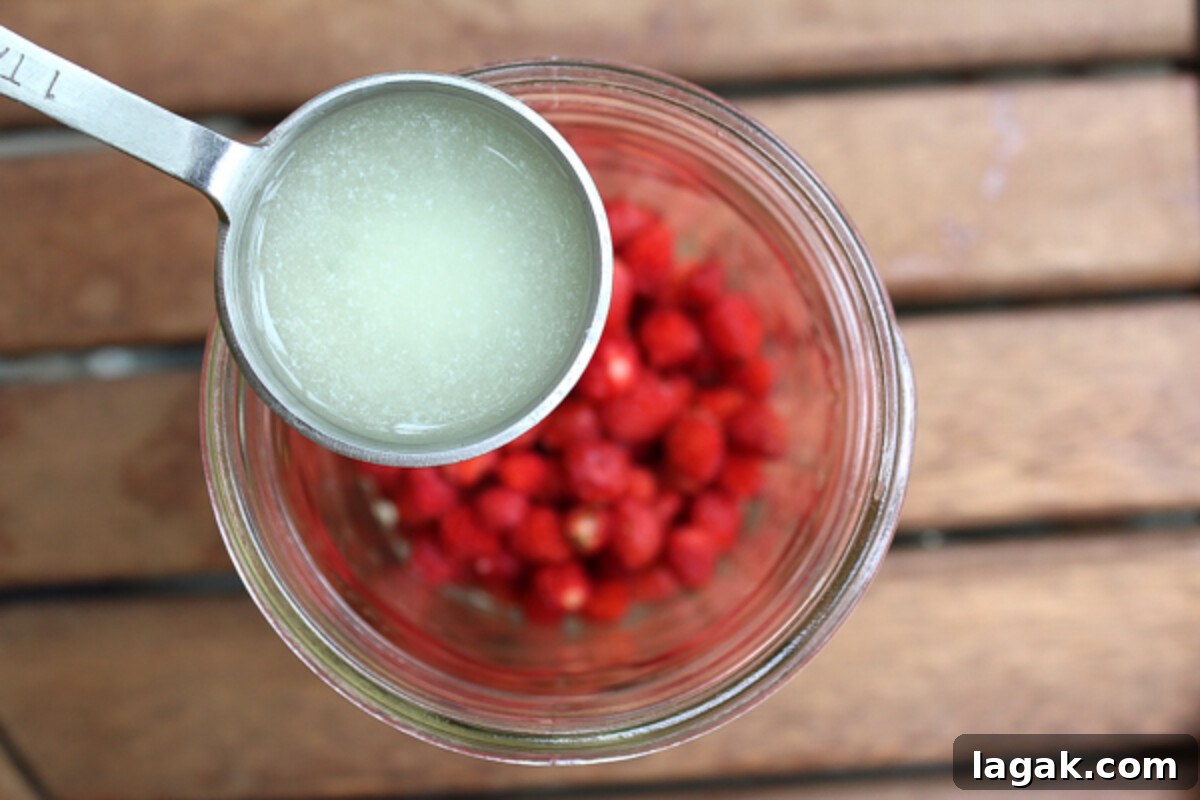
To ferment strawberries, fill a wide-mouth pint jar leaving about 1 inch of headspace. Make a light fermentation liquid by combining honey, whey (or dissolved probiotic), a pinch of salt, and a small amount of water.
A simple brine ratio for one pint: 2 tablespoons honey, 2 tablespoons fresh whey (or one probiotic capsule dissolved in a little water), 1/4 teaspoon salt, and roughly 3 tablespoons water. Pour this mixture over the strawberries and add additional water so the berries are fully submerged.
Keep the fruit submerged under liquid throughout fermentation. Use a fermentation weight or a small zip-top plastic bag filled with water to press the strawberries below the surface.
Strawberries require only a short ferment at room temperature—about 24 to 48 hours. After 24–48 hours taste them. They should be tangy and slightly effervescent; leaving them longer will let yeasts produce alcohol and will reduce sweetness as sugars are consumed. Once you’re happy with the flavor, seal the jar with a regular lid and move it to the refrigerator. The cold slows fermentation and stores the berries for serving.
Fermenting Berries for Preservation
This quick water-and-whey method is intended for short-term probiotic foods rather than long-term preservation. Refrigerated, the fermented berries keep well for about two weeks.
If you want to preserve berries for the winter, a traditional Finnish method submerges fruit in nothing but honey. Packed in honey and stored in a cool cellar, the fruit can slowly lacto-ferment and remain edible and pleasantly tangy through the colder months. Another option is intentionally alcoholic ferments, such as berry meads, which will preserve fruit for much longer when properly made.
Fermented Strawberries Recipe
Fermented Strawberries
This quick lacto-ferment adds probiotics to berries and keeps them sweet and tangy—perfect for topping yogurt or pastries.
Ingredients (4 servings)
- 2 cups strawberries
- 2 tbsp whey (or 1 probiotic capsule dissolved in water)
- 2 tbsp honey
- 1/4 tsp salt
- ~3 tbsp water, plus more to cover
Instructions
- Fill a wide-mouth pint jar with strawberries, leaving about 1 inch of headspace.
- Stir together honey, whey (or dissolved probiotic), salt, and approximately 3 tablespoons water to make the fermentation liquid.
- Pour the liquid over the berries and add extra water as needed so the strawberries are fully submerged.
- Place a fermentation weight (or a small zip-top bag of water) on top to keep the berries below the surface.
- Cover with a towel or use a fermentation lid if you have one. Ferment at room temperature for 24–48 hours.
- When the flavor is pleasantly tangy, seal with a regular lid and refrigerate. Use the berries strained or spoon them with some of their brine.
Notes
Smaller, firmer berries give better texture after fermentation. Taste early to avoid an overly alcoholic result. Store in the refrigerator and use within two weeks for best quality.
Nutrition (per 1/2 cup prepared, approximate)
Calories: 84 kcal; Carbohydrates: 15 g; Protein: 6 g; Fat: 1 g; Sugar: 13 g; Sodium: 202 mg; Vitamin C: 42 mg. Nutrition data is an estimate and should be used as a guideline only.
More Fermentation Recipes
If you enjoy fermenting, try other simple projects like mesophilic yogurt, kvass, sauerkraut, lacto-fermented pickles, or fermented hot sauce—each offers unique flavors and probiotic benefits.