
Kimchi is a cornerstone of Korean cuisine, made by fermenting vegetables to create a bold, tangy, and spicy condiment. This kimchi recipe features napa cabbage and radish combined with chili flakes, garlic, ginger, fish sauce, and scallions. Fermentation develops kimchi’s signature balance of sour, spicy, and umami flavors while providing beneficial probiotics that support digestive health. Bright and versatile, kimchi enhances rice bowls, noodles, soups, stews, and sandwiches, and also stands on its own as a vibrant side dish.
Important Tips for Making the Best Kimchi Recipe
Ferment slowly. Taste daily during the initial fermentation; when it reaches the level of tanginess you prefer, move it to the refrigerator to slow further fermentation and preserve that flavor.
Use coarse sea salt. Coarse salt draws moisture from the cabbage evenly without breaking down the texture too much, helping crispness and proper brining.
Include a sweet element like pear or onion. A little sweetness from fruit or onion balances the heat and boosts the fermentation process, giving complexity to the paste.
Keep solids submerged under brine. Make sure the cabbage and vegetables remain under liquid during storage to minimize the risk of unwanted surface mold and to ensure even fermentation.
A Brief History of Kimchi
Kimchi has a history spanning over two millennia. Early versions were simple salted and preserved vegetables suited for long winters; the rich red, chili-spiced variety that many recognize today emerged after chili peppers arrived in Korea in the 16th century. Over time regional and household traditions produced countless variations: some kimchi are mild and slightly watery, while others are aged long and develop deep, complex sourness and funk. Across Korea, kimchi remains an everyday staple and a cultural symbol served at virtually every meal.
How to Store Kimchi (and Make It Last Longer)
Proper storage preserves flavor and safety. Because kimchi is a living, fermented food, its flavor profile continues to change with time. When stored correctly it can be enjoyed for months; the taste will evolve from crisp and mildly sour to deeper, more pungent notes as it ages. Follow these simple storage methods:
Refrigerator Storage (Best Method)
- After fermenting at room temperature for 1–2 days (depending on temperature and desired tang), transfer kimchi to the refrigerator.
- Use an airtight glass jar or food-safe fermentation container; avoid reactive metals that can alter flavor and corrode from the acid.
- Keep the kimchi fully submerged in its brine to reduce the chance of mold and to ensure even fermentation.
- Properly stored kimchi will keep for 3–6 months or longer; flavor will gradually deepen and sourness will increase with time.
Kimchi Recipe

Ingredients
- 4 lbs napa cabbage
- ½ cup salt (coarse sea salt preferred)
- 1 knob ginger
- 8 cloves garlic
- ½ yellow onion
- ½ Korean pear (or a ripe pear)
- ⅓ cup fish sauce
- 1 cup gochugaru (Korean chili flakes)
- 1 handful garlic chives
- 1 handful green onions
- 1 handful carrots (sliced)
Instructions
-
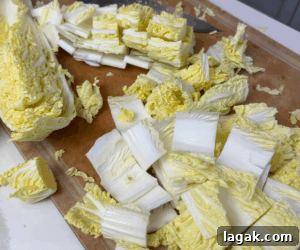
Split the napa cabbage and cut it into your preferred size—approximately 2-inch pieces work well for most uses.4 lbs napa cabbage

-
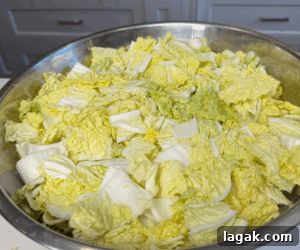
Thoroughly salt each piece of cabbage, then press down with a plate or weight and let it sit for 2 hours. This draws out moisture and helps the leaves soften while preserving some crunch.½ cup salt
-
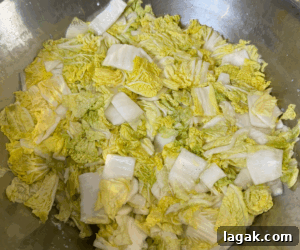
Rinse the cabbage multiple times to remove excess salt, then squeeze out excess water so the cabbage is seasoned but not overly salty.
-
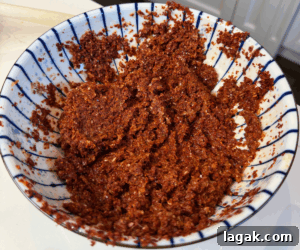
In a food processor, blend ginger, garlic, onion, pear, and fish sauce until you have a smooth paste. This paste forms the flavorful base of your kimchi.1 knob ginger, 8 cloves garlic, ½ yellow onion, ½ Korean pear, ⅓ cup fish sauce
-
Stir gochugaru (Korean chili flakes) into the paste until evenly incorporated. Adjust the amount if you want a milder or hotter kimchi.1 cup gochugaru
-
Chop the garlic chives, green onions, and slice the carrots into thin strips. These add texture, color, and freshness to the kimchi.1 handful garlic chives, 1 handful green onions, 1 handful carrots (sliced)
-
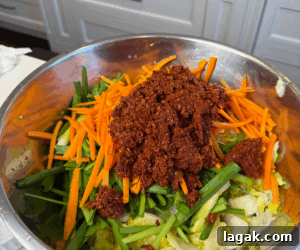
Combine the rinsed, drained cabbage with the chopped vegetables in a large bowl. Add the kimchi paste and, wearing gloves if possible, massage the paste into the cabbage so every piece is coated.
-
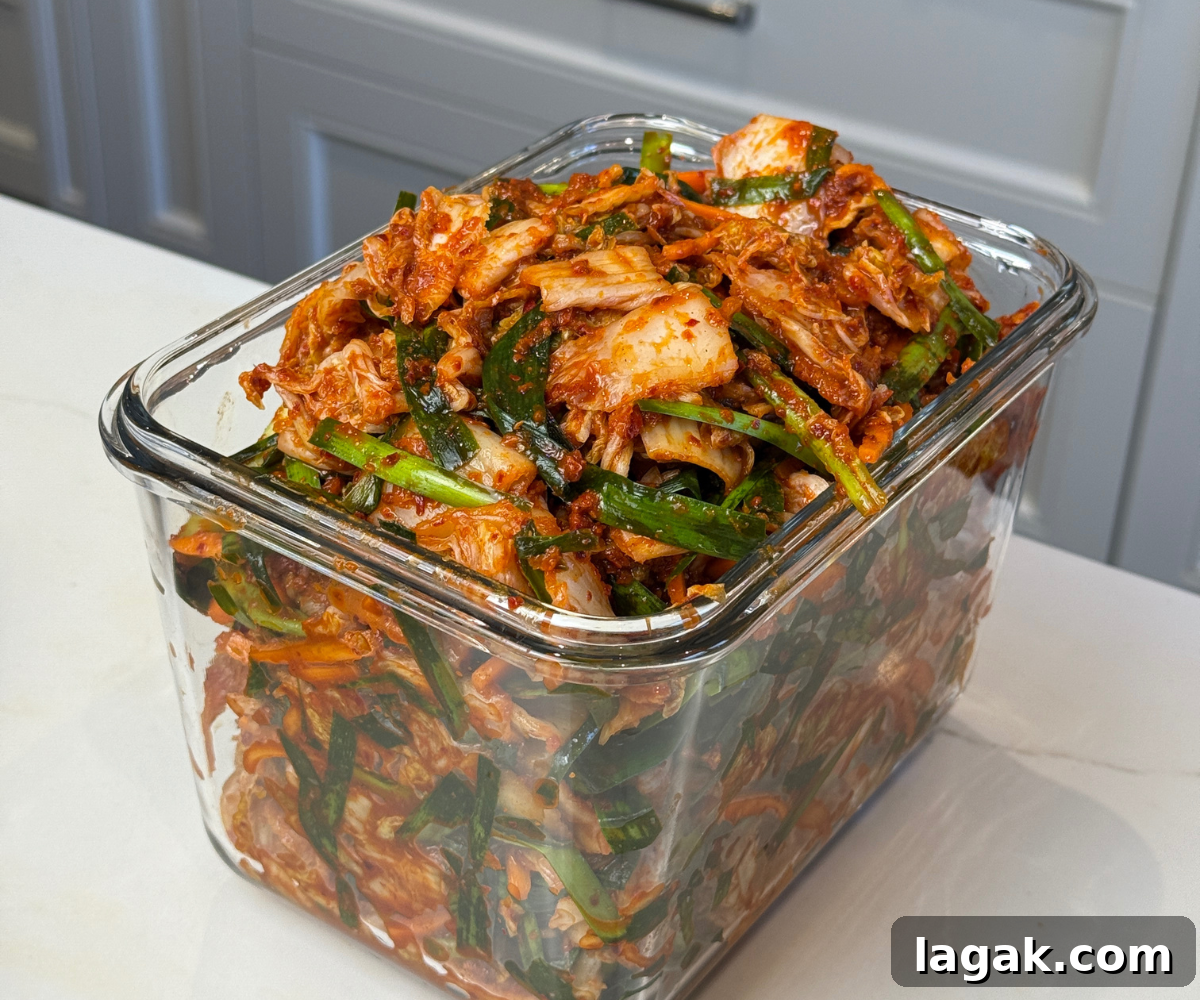
Pack the kimchi tightly into an airtight container or jar, pressing down so the brine rises above the solids. Leave a little headspace for gases produced during fermentation. Let it sit at room temperature for 1–2 days to start fermenting, then move to the refrigerator.
-
Store refrigerated for 3–6 months. The flavor will change over time from crisp and mildly sour to deeper and tangier as it continues to ferment slowly in the cold.