
Every Mother’s Day many mums I know—especially those with young children—share the same wish: a real break. We want one day when we don’t have to be the organiser, the cook, the carer and the household manager. We want to be women first and mothers second. And yet, almost instantly, guilt creeps in. Shouldn’t we be celebrating the very people who made us mothers? Isn’t Mother’s Day meant for gratitude and family time?
There’s a reason so many of us desperately crave time out. In our busy modern lives we are overwhelmed, overworked and frazzled. This affects men, women and children alike, but mothers often feel it most intensely. Many mums balance paid work with being the primary caregiver, running the household, volunteering at school, driving kids to activities and caring for older relatives. You are the glue holding things together, and when you’re exhausted, everything else suffers.
Like many mothers, you may put your needs last. You meet everyone else’s demands and leave little to nothing for yourself. When you do try to take time for yourself, it often comes with a heavy side of guilt because society still idealises the self-sacrificing mother. It’s time to rethink that narrative.
Whatever you need to give to others, you must first give to yourself.
If your tank is empty, you can’t pour into anyone else’s. Self-care isn’t selfish; it’s essential. An empty lamp can’t shine, and a drained mother cannot give her best. As Oprah has said in conversation with Brené Brown, the goal is to be so full that you’re overflowing—without ego, with gratitude—and able to share from your abundance.
So how do you become truly replenished and able to fulfil your role more fully? Short, surface-level treats won’t suffice. You need practical habits and deeper shifts that consistently refill your cup.
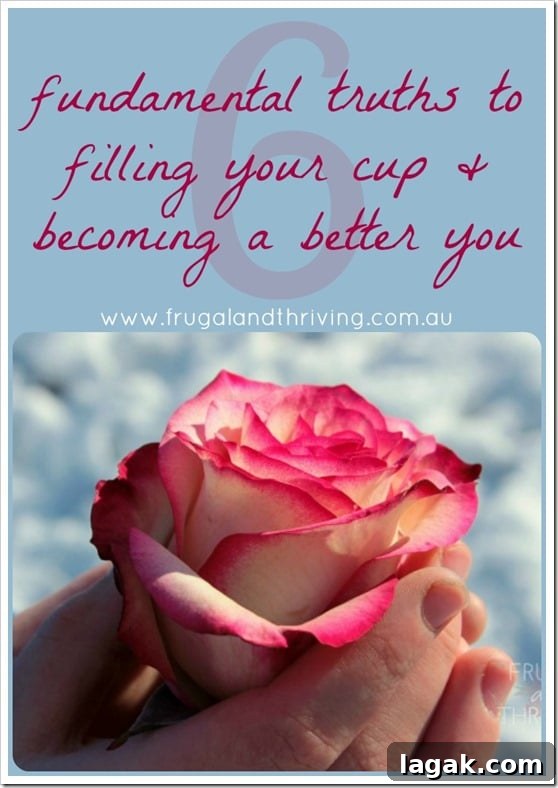
HOW TO FILL YOUR CUP AND LIVE THE GOOD LIFE
1. TAKE YOUR TIME
No one will automatically hand you time off—you have to claim it. Your family may not notice how tired you are or offer to cook; waiting for that to happen builds resentment. Taking time out means actively prioritising it. You are worthy of time spent as you choose. You don’t need to earn it with crisis or perfection. Put breaks in the diary, set expectations with your partner and children, and be a role model by encouraging them to do the same for themselves.
Practical options include asking your partner to take over dinner, scheduling a night out with friends, booking a movie, or setting aside an hour with a cup of tea. Even small, regular pockets of time help you recharge and find balance.
2. QUESTION YOUR STANDARDS OF PERFECTION
Ask whether you really lack time, or whether you carry unrealistic standards that refuse to let you relax. Perfectionism will keep you busy forever and rob you of creative energy and rest. The house will not fall apart if one task waits another day, but you may become exhausted trying to maintain impossible standards.
Allow yourself to let some things slide. Even people who devoted their lives to serving others, like Mother Teresa, set aside substantial daily time for spiritual renewal. Creative and meaningful work cannot flourish only in stolen moments; it needs space.
“A woman must be careful to not allow over-responsibility (or over-respectability) to steal her necessary creative rests, riffs, and raptures. She simply must put her foot down and say no to half of what she believes she ‘should’ be doing.” — Clarissa Pinkola Estés
3. PRIORITISE SELF-CARE
The airplane metaphor is true: put on your oxygen mask first. In daily life this means building habits that protect your health and well-being—sleep, nutritious food, exercise, showers, and medical check-ups. Nap when you can, move your body regularly, and make time for activities that replenish you.
Self-care can be difficult when demands are high, but this is the moment when it matters most. Question whether busy work is masking fear of stillness or difficult emotions. Life is finite; working constantly without rest is a losing strategy. Choose the routines that keep you resilient and present for the people and activities that matter.
4. BEAUTY IS MORE THAN SKIN DEEP
Looking and feeling good are linked. Programs that support people through illness often emphasise appearance because grooming, clothes and small rituals lift confidence and mood. Even if you don’t usually prioritise cosmetics or fashion, taking care with how you present yourself can be surprisingly restorative.
Appreciate both your outer and inner beauty. Look at yourself with kindness rather than criticism. Surrounding yourself with beauty—flowers, natural spaces, colourful surroundings—also replenishes your spirit. Small rituals of self-respect, whether a favourite outfit or a walk in the park, help you feel more whole.
5. SPIRITUALITY IS NOT DEAD
A busy life can leave you wondering about meaning. Connecting to something larger than yourself—whether through prayer, meditation, journaling, reading inspiring texts, or time alone in nature—can restore perspective and purpose. This doesn’t require religiosity; it simply asks that you make space to reflect and reconnect. That connection can steady you when life feels like a relentless treadmill.
6. GIRLFRIENDS ARE YOUR LIFELINE
Close friends provide validation, laughter and perspective. Sometimes the most healing thing is someone who says, “I hear you,” without judgment or quick fixes. Your social circle—your tribe—sustains you through hard times and celebrates the good ones. Invest time in friendships even when life is busy; these relationships enrich your life and make everything else worthwhile.
Mother’s Day can be a lovely reminder to be celebrated, but one day a year is not enough. Commit to caring for yourself throughout the year so you can give, love and serve from a renewed place. When you regularly refill your cup, you’ll be able to show up more fully—for your family and for yourself.