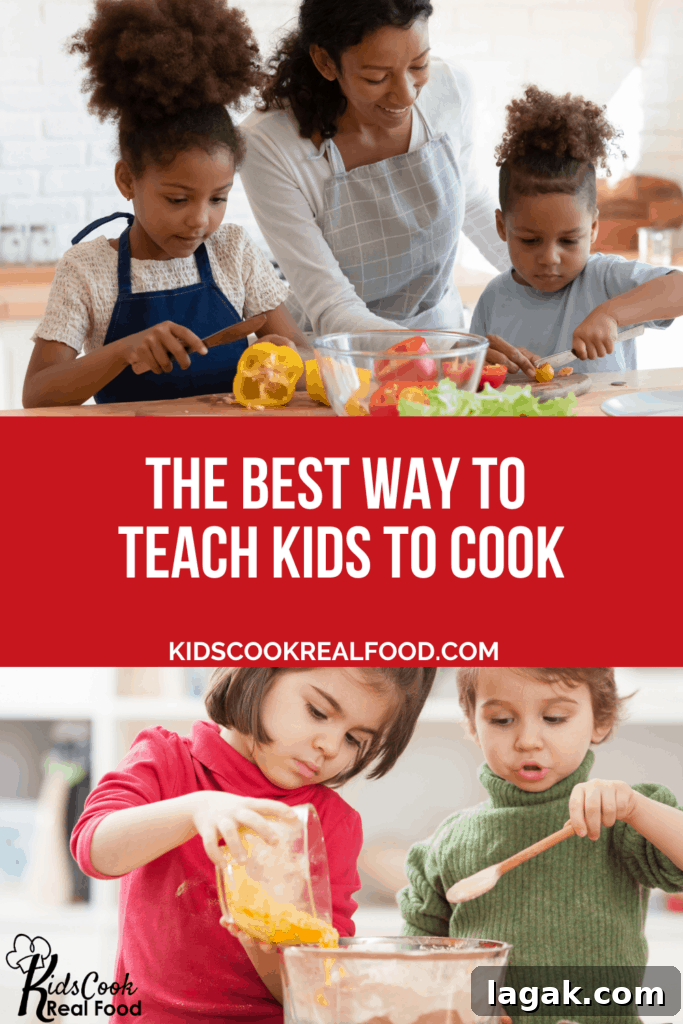
Teaching children to cook isn’t just about collecting recipes. To truly empower young cooks, build foundational skills the way you teach reading: one step at a time.
I drove past an elementary school recently and noticed huge packed snowballs sitting scattered across the playground. It made me smile—my own front yard also holds two enormous spheres of snow, the proud work of my six-year-old.
He set out to build a snowman and ended up making two massive snowballs that were too heavy for him to lift or bring together. We never managed to help him finish, so they remain two lonely halves of a snowman.
Meanwhile, on other lawns I saw perfected snowmen with scarves, hats, and cheerful faces. The difference between the unfinished snowballs and the completed snowmen made me reflect: to a child, what truly separates a finished project from an unfinished one?
The answer is simple: effort, joy, and ownership. My son had done so much of the work that he still calls it “my snowman,” even though it’s incomplete. He felt ownership and delight in the process. That’s the same feeling I want my children to have in the kitchen.
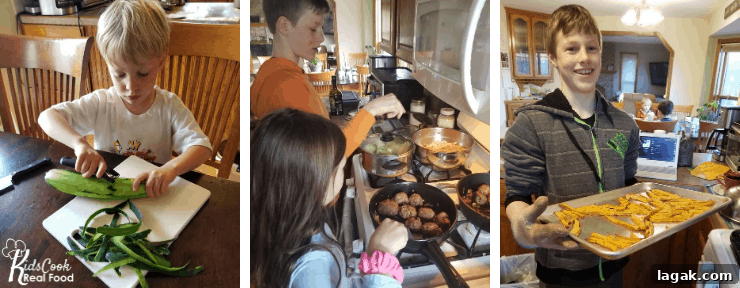
Kids don’t need to master entire meals at once. They only need one or two practical skills to be meaningfully involved. Learning a single task—spreading, measuring, chopping—gives them confidence and a real sense of contribution. That sense of ownership brings many unexpected benefits.
But Isn’t Teaching Kids to Cook All about Finding the Right Recipe?
Search engines will return dozens of lists titled “best kid-friendly recipes” or “recipes to teach kids.” While recipes are useful, focusing solely on them limits children’s abilities. Cooking is far more than following instructions; it’s creativity, problem solving, and adaptability.
Relying on recipes alone can leave families feeling constrained—what happens when the fridge contains random ingredients that don’t match a specific recipe? Teaching skills instead of rote recipes enables children to transform ingredients into meals without constantly searching for the “perfect” instruction sheet.
That’s why teaching a child to cook is better framed as building a toolbox of core skills rather than memorizing a short list of recipes. When a child learns techniques, those skills apply across countless dishes and situations.
How We Teach Kids to Cook
In our Kids Cook Real Food™ eCourse, the emphasis has always been skills first. The goal is to equip children with a wide range of practical abilities so they can confidently participate in family meals and prepare food that suits their tastes and needs.
Teaching five or ten fixed recipes gives children only a short-lived sense of capability. By contrast, teaching foundational skills—spreading, measuring, safely using knives, rolling dough, sautéing—turns kids into reliable kitchen helpers who can contribute to many different meals.
1. Skills let kids participate immediately
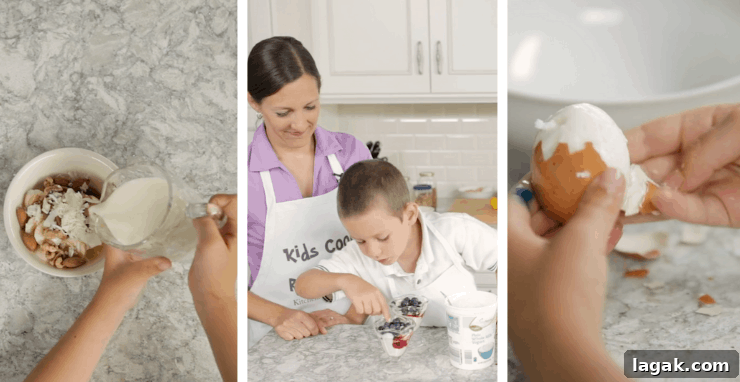
We consistently hear from parents that their children become capable helpers after just one class. A two-year-old who learns to spread with a butter knife can help make toast, bagels, and snacks. A five-year-old who learns to measure accurately can assist with countless recipes, from seasoning meat to making cookies.
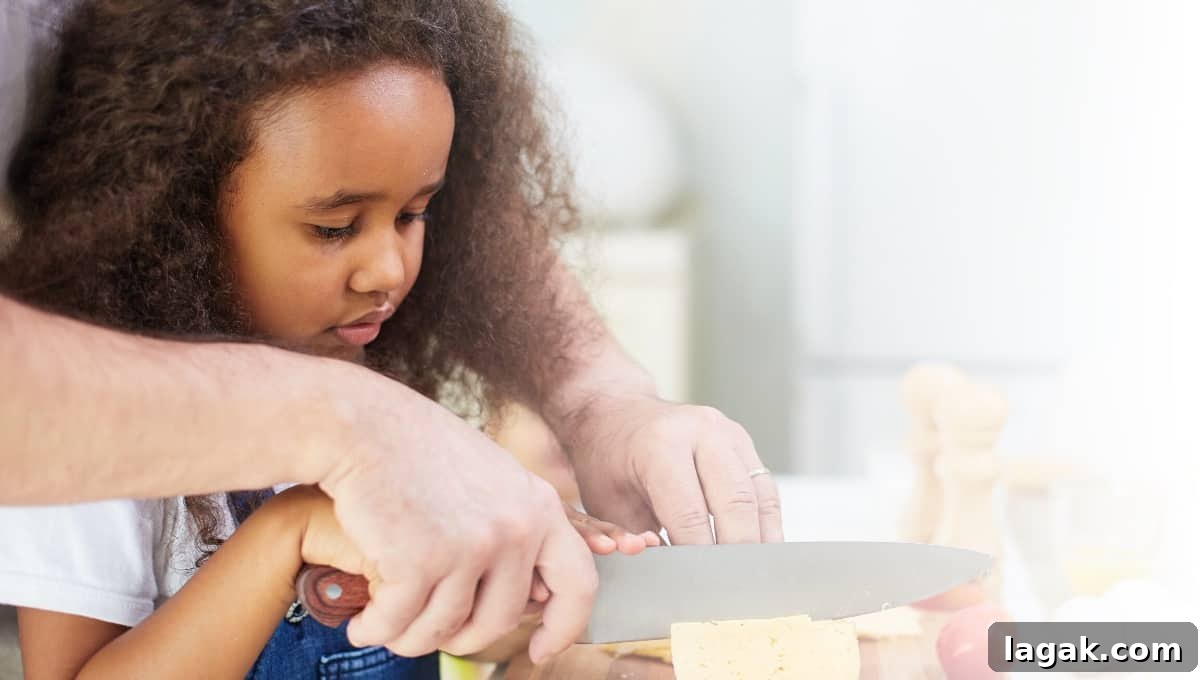
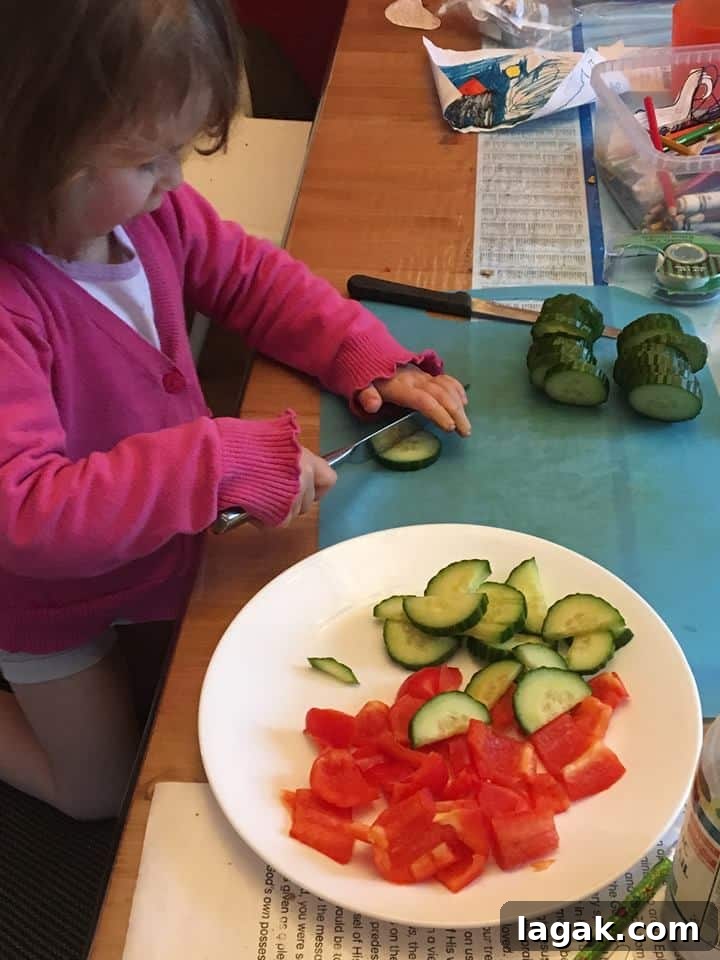
Older children who learn safe knife skills quickly become sous-chefs, saving families time and increasing independence. Knife practice and other skills are not gimmicks; they unlock real, everyday participation.
2. Skills open a world of creativity
Just as reading opens a universe of books and ideas, practical cooking skills open the produce aisle and a world of recipes. When children know techniques, they can improvise, adapt, and create without being limited to one recipe. This fosters creativity and independent problem solving—qualities children need in and out of the kitchen.
I want young cooks to walk into any kitchen and think, “I can handle this.” Whether they use one skill at a time or combine many, the confidence to nourish themselves and others is a lifelong advantage.
3. Skills support children with food allergies and special diets
Many families face dietary restrictions. Teaching versatile skills helps children with allergies or special diets prepare safe, affordable meals without relying on processed products or unsuitable class recipes. Skill-based learning allows substitutions and adaptations so every child can participate and gain confidence.
In our instruction, we aim to minimize common allergens in examples and emphasize that any family-safe recipe can be used to practice fundamental techniques like rolling dough or sautéing vegetables.

All Kids Can Learn One Skill at a Time
Breaking down cooking into small, teachable parts makes the kitchen accessible to nearly every child—toddlers, children with allergies, and kids with physical or developmental differences. Learning a single skill builds joy, investment, and a growing appetite for more participation.
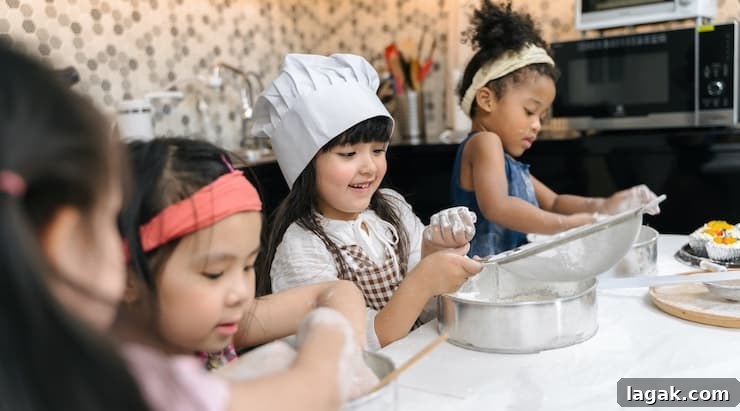
Just as I enjoyed imagining the laughter of kids packed around those giant snowballs, I love hearing children proclaim small kitchen victories: “Look, I cut that banana!” or “Taste this—I measured all the seasonings!” These moments are the real measure of success.
Once children have a few skills, they’re ready to explore recipes—but recipes should never be the ceiling of their potential. Children can and should eat the same food as adults; there’s no need to lower expectations with separate “kids’ meals.”
Thank you for supporting the idea that kids belong in the kitchen. Teaching skills one step at a time helps them grow into confident, creative cooks who can feed themselves and others for life.