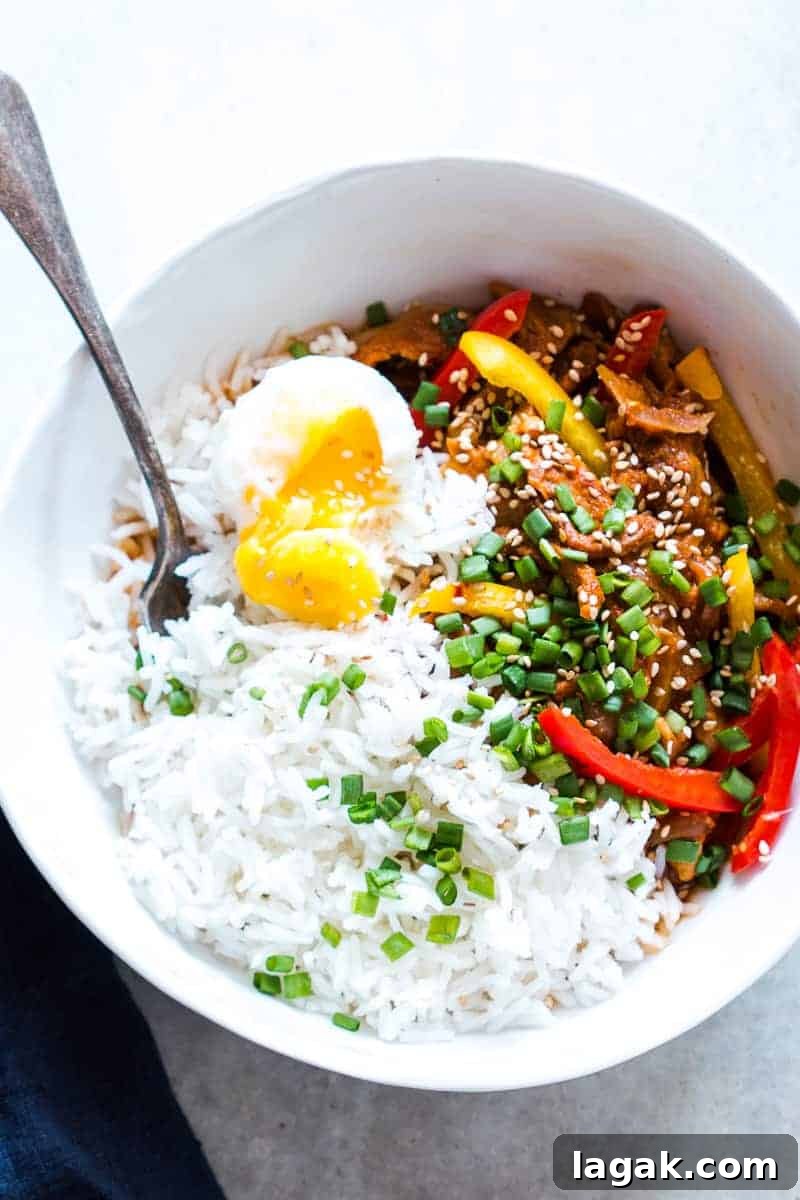
Slow Cooker Korean Pork Bulgogi with Gochujang is bold, flavorful, and one of my favorite slow cooker dishes. Add plenty of bell peppers for crunch and color, serve over rice, and you’ll have a satisfying meal everyone will love.
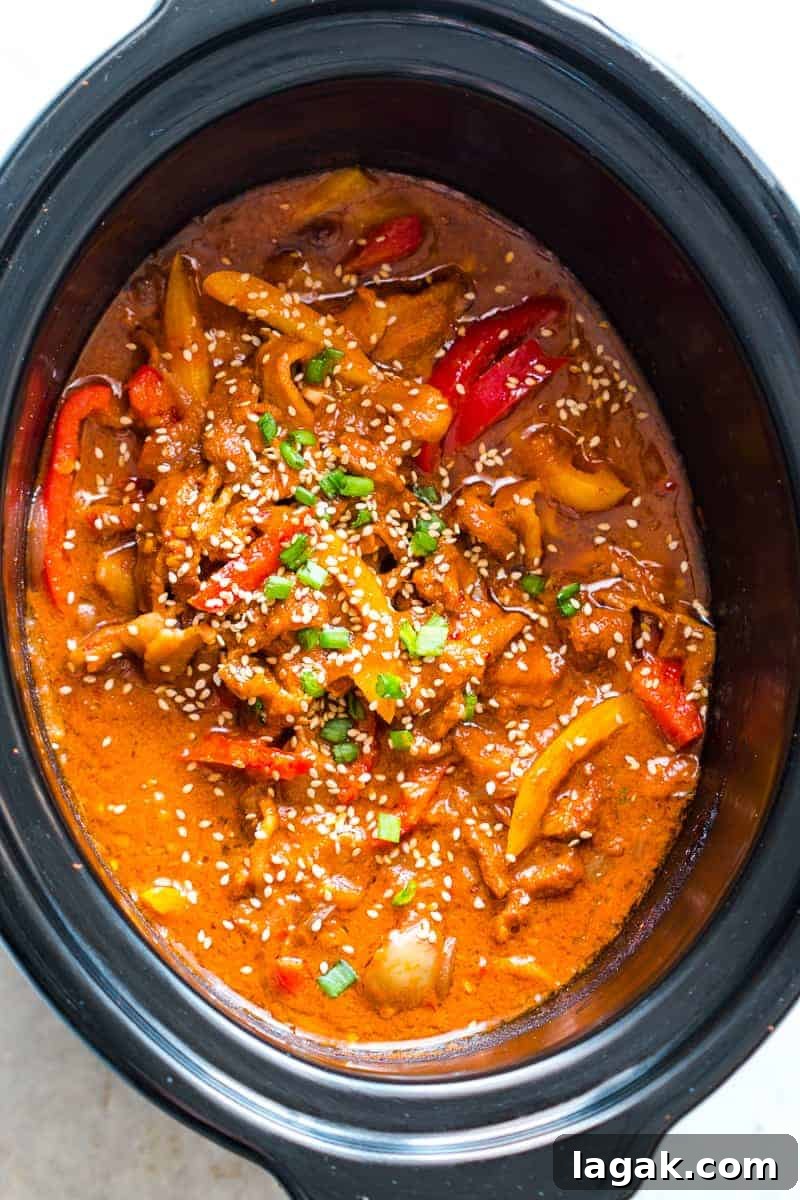
This Slow Cooker Korean Pork Bulgogi with Gochujang is inspired by classic bulgogi and a dish I recently enjoyed at a favorite local Korean restaurant. It’s become a weekly staple for us because it’s simple, spicy, and slow-cooked pork turns incredibly tender.
I’ve adapted the recipe to suit our preferences—especially by adding lots of colorful bell peppers at the end for extra texture and sweetness. If you enjoy bold, spicy meals like Korean chicken wings, you’ll appreciate the bright, savory-sweet flavor of this pork bulgogi.
Jump to section: Korean Pork Bulgogi
- About This Recipe
- Why Cook This In A Slow Cooker
- Frequently Asked Questions
- Richa’s Top Tips
- Serving Ideas
- More Asian Recipes You’ll Love
About This Recipe
This is not strictly traditional bulgogi, but it’s delicious and approachable. The slow cooker concentrates flavors and makes the pork incredibly tender. I recommend adding red, green, and yellow bell peppers near the end of cooking so they keep some crunch and add color and natural sweetness without turning mushy.
Why Cook This In A Slow Cooker
While a stovetop version works (and there are instructions below), the slow cooker is ideal for turning pork shoulder or belly into fork-tender, flavorful pieces. Low-and-slow cooking develops depth and yields meat that practically melts in your mouth.
Frequently Asked Questions
Pork shoulder or pork belly are best because they have enough fat to keep the meat tender during slow cooking. Boneless pork shoulder, thinly sliced, works particularly well and yields consistently tender results.
Apple helps tenderize the pork and adds a subtle sweetness that balances the spicy and savory flavors. Pear or kiwi are good alternatives if you prefer.
Yes. This dish keeps well in the refrigerator or freezer. Cool completely, then store in an airtight container. It will keep in the fridge for several days and freezes well for longer storage.
Richa’s Top Tips
- Swap proteins if needed: You can use beef or chicken instead of pork. Note that chicken cooks faster, so reduce cooking time accordingly.
- Adjust spice level: Traditional Korean pork bulgogi can be quite spicy; reduce the gochujang or chillies if you prefer milder heat.
- Substitutes for gochujang: If you can’t find gochujang, Sriracha offers a reasonable spicy alternative, though the flavor will differ.
Serving Ideas
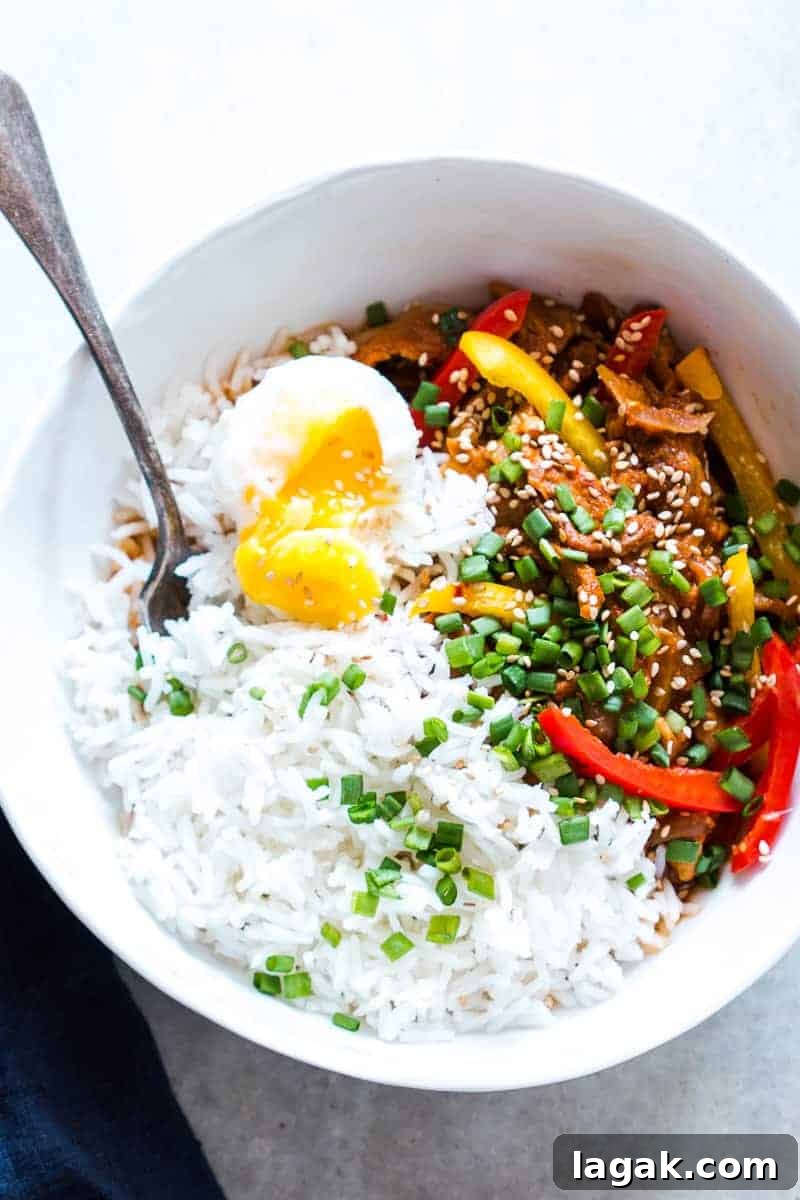
Serve this pork bulgogi over steamed rice with a soft-boiled or six-minute egg, toasted sesame seeds, and plenty of chopped green onions. The sauce should be saucy enough to coat the rice. Alternatively, use the pork in wraps, tacos, or burritos, or pair it with a simple cucumber salad for a bright contrast.
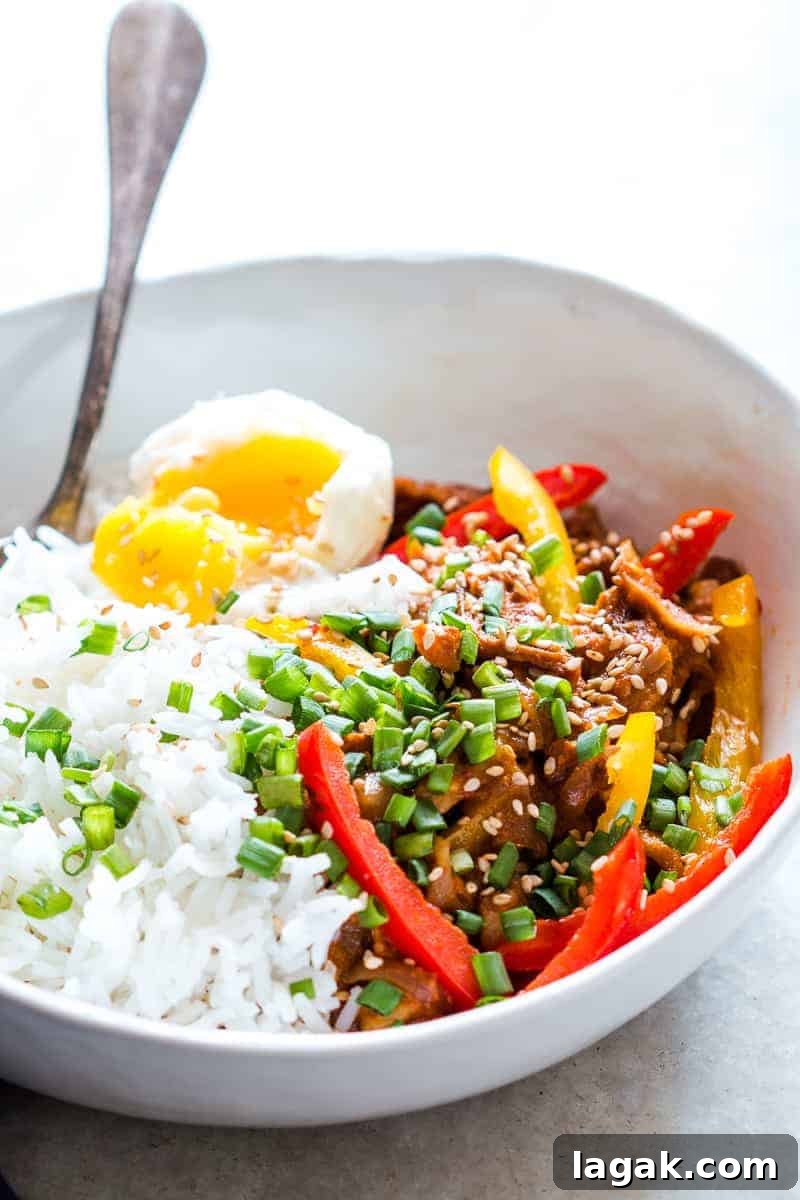
Leftovers are delicious, so consider making a double batch. The recipe is convenient, flavorful, and perfect for weeknight dinners or meal prep. If you make it, I’d love to see your version—tag the original creator on social media if you’re sharing.
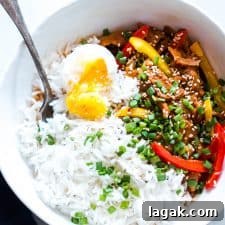
Slow Cooker Korean Pork Bulgogi with Gochujang
Print Recipe
Ingredients
- 1 Apple, diced
- 7-8 Garlic cloves
- 2 tablespoons Soy sauce
- 2 tablespoons Gochujang, or Sriracha
- 1 teaspoon Red chilli flakes
- 1 inch Ginger, peeled
- 1 tablespoon Honey
- 2 Onions, sliced
- 500 grams Pork, thinly sliced
- Salt, to taste
- 1 cup Sliced bell peppers, red, green, and/or yellow
- Toasted sesame seeds, for topping
- 1/4 cup Spring onions, chopped
Instructions
-
Marinade: In a food processor, combine the diced apple, garlic, soy sauce, gochujang, red chilli flakes, and ginger. Pulse until you have a smooth paste.
-
Slow Cooker Method: Place the sliced onions and pork in the slow cooker. Add the honey, salt, and the marinade. Cook on low for 7–8 hours or on high for 3–4 hours until the pork is tender. Skim excess fat from the surface, then stir in the sliced bell peppers and cook on high for 15–20 minutes so the peppers remain crisp-tender. Finish with toasted sesame seeds and chopped spring onions. Serve over rice with a soft-boiled or six-minute egg.
-
Stovetop Method: Marinate the pork in the paste for at least 2 hours or overnight. Heat 1 teaspoon vegetable oil in a wok, add the onions and stir-fry on high for a minute or two. Add the marinated pork with its marinade and cook on medium-high for 10–15 minutes until the meat is cooked through and begins to caramelize. Add the bell peppers and stir-fry 2–3 more minutes. Top with sesame seeds and spring onions and serve with rice and a soft-boiled egg.
Notes
- Cut the meat into thin strips to help it absorb the marinade more effectively.
- Bulgogi, meaning “fire meat,” is typically marinated in spicy, salty, and sweet flavors and finished quickly over high heat or grilled. This version adapts those flavors for slow cooking.
- Gochujang is a fermented Korean chili paste that provides savory heat and depth. If unavailable, Sriracha or a Thai red chili paste can be used as substitutes, though the flavor will vary.
This recipe was slightly adapted from Bon Appetit
Nutrition
More Asian Recipes You’ll Love
- Slow Cooker Teriyaki Meatballs with Pineapple
- Spicy Korean Chicken Thighs in Gochujang Sauce
- Korean Baked Gochujang Chicken Wings