A Costco run can solve more than one dinner. With a single Costco rotisserie chicken, you can eat right away or use the cooked meat to stock your fridge and freezer with ready-to-use protein for soups, tacos, casseroles, pastas, and quick wraps. The best part is how simple it is to prep and store.
Equipment (keep it simple)
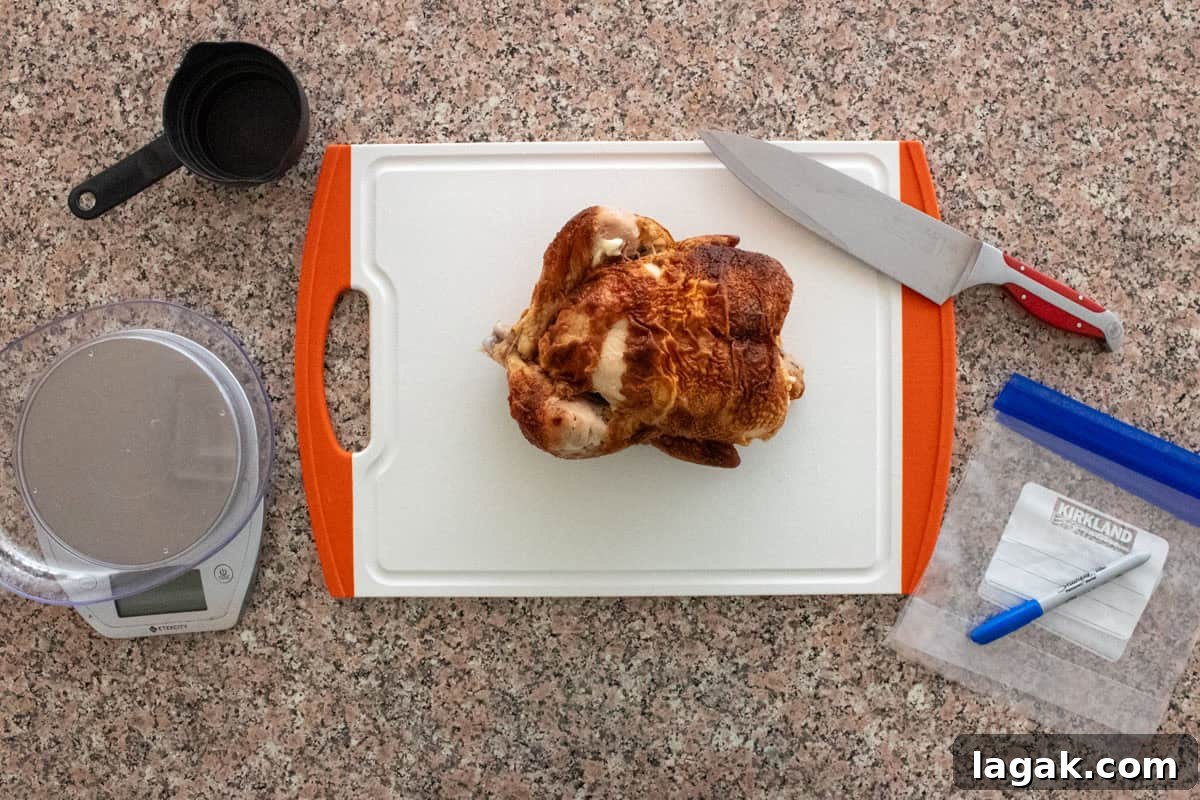
You don’t need fancy tools—just a basic setup:
- Cutting board large enough to hold the whole chicken
- Sharp knife (a carving or boning knife works well)
- Freezer bags (sturdy, resealable bags are ideal)
- Sharpie marker for labeling
- Optional: food scale for even portions
Why Costco rotisserie chicken is perfect for meal prep
Costco’s rotisserie chicken is famously affordable, and that low price makes it an excellent bargain for meal prep. Because it’s already cooked until tender, breaking it down is more about pulling meat apart than heavy cutting—your knife is mostly a guide.
Where it shines for busy households:
- Quick protein for soups, stews, casseroles, tacos, quesadillas, and pasta
- Easy to break into bite-size pieces for kid-friendly meals
- Shred once and skip cooking chicken on future weeknights
Short on time? Save this process for later by pinning it.
Timing tip: break it down when it’s warm, not hot
Rotisserie chicken is easiest to handle after it’s rested a little from the store but before it gets fully cold. A good routine is to unpack groceries first, then tackle the chicken while it’s still warm. That makes the meat pull from the bones more cleanly, keeps juices from gelatinizing in the bag, and avoids burning your fingers while not wrestling with chilled meat. The meat will usually be cool enough to freeze once you’re done.
Start here: open the bag and remove the butcher’s twine
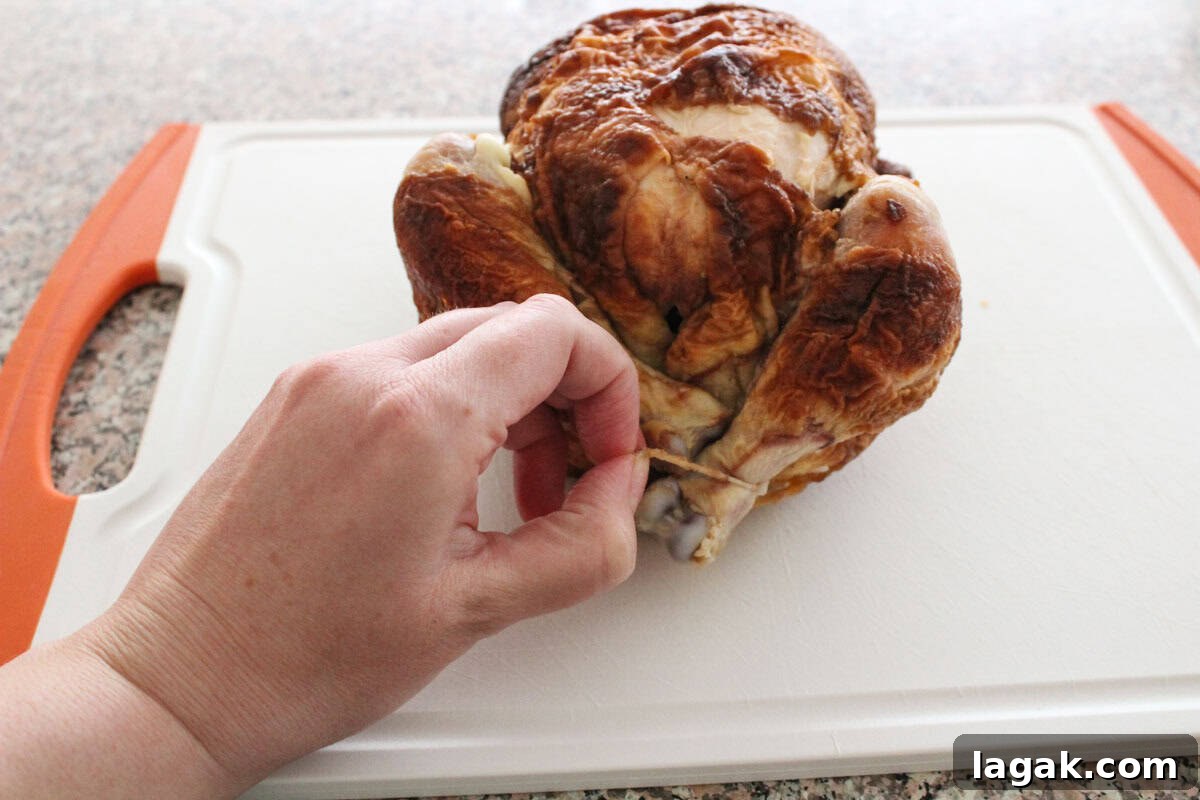
With clean hands, place the chicken on a cutting board and check for butcher’s twine. Some birds have it tucked underneath; if you don’t see it immediately, flip the chicken over and look near the bottom of the legs. Untie and remove the twine before proceeding.
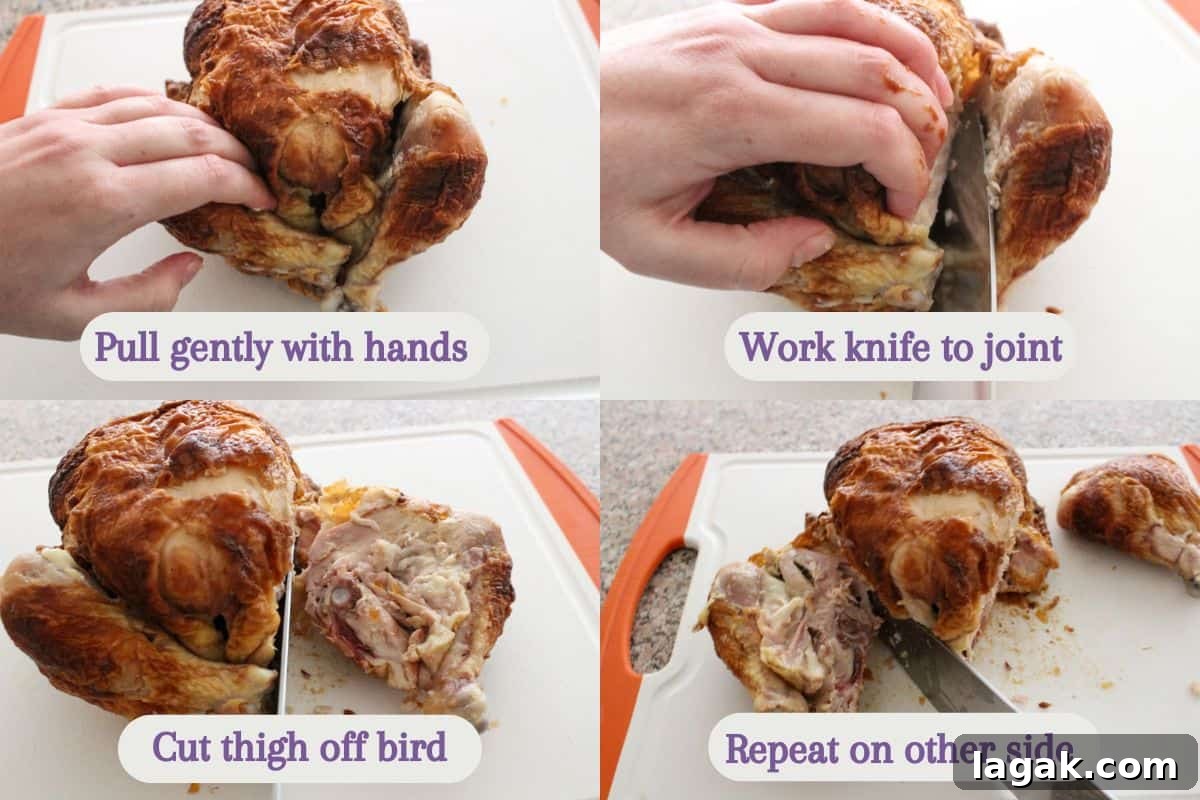
Removing the Thighs and Legs
This is the first major breakdown step and makes everything that follows easier. The drumstick and thigh quarters come off at the joints, and because the meat is tender, you won’t need to force it.
- Pull a drumstick down and away from the body to expose the hip joint.
- Make a shallow cut along the line where the leg meets the body—think tracing, not chopping.
- Find the joint and either cut or pull there; the leg quarter should separate with minimal effort.
- Repeat on the other side.
Pull off the wings (and optionally drums)
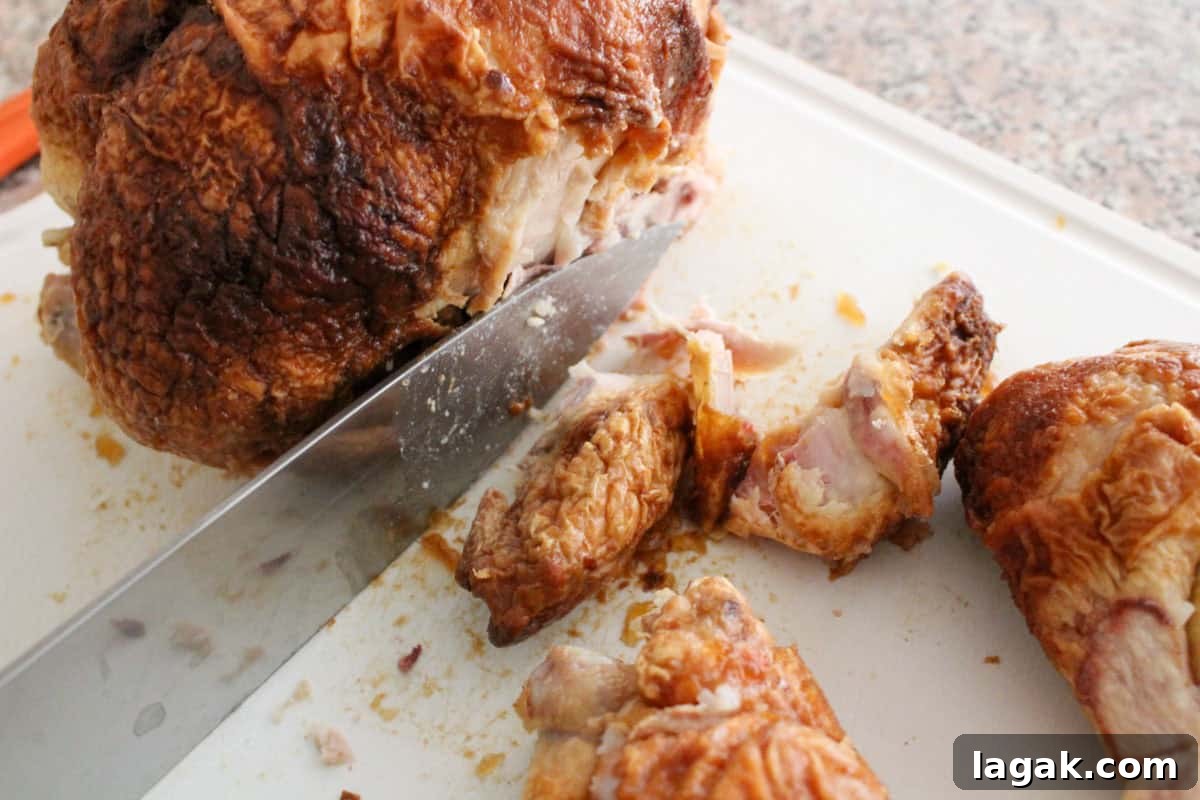
Next, grab a wing and pull it away from the body; wings usually separate at the joint with minimal cutting. If one side resists, guide it apart with the knife, then pull. You’ll pick wing meat later when you shred and portion. Drumettes may come off easily or remain snug; you can remove them now or wait until you reach the back meat.
Remove the breast meat (use the knife as a guide)
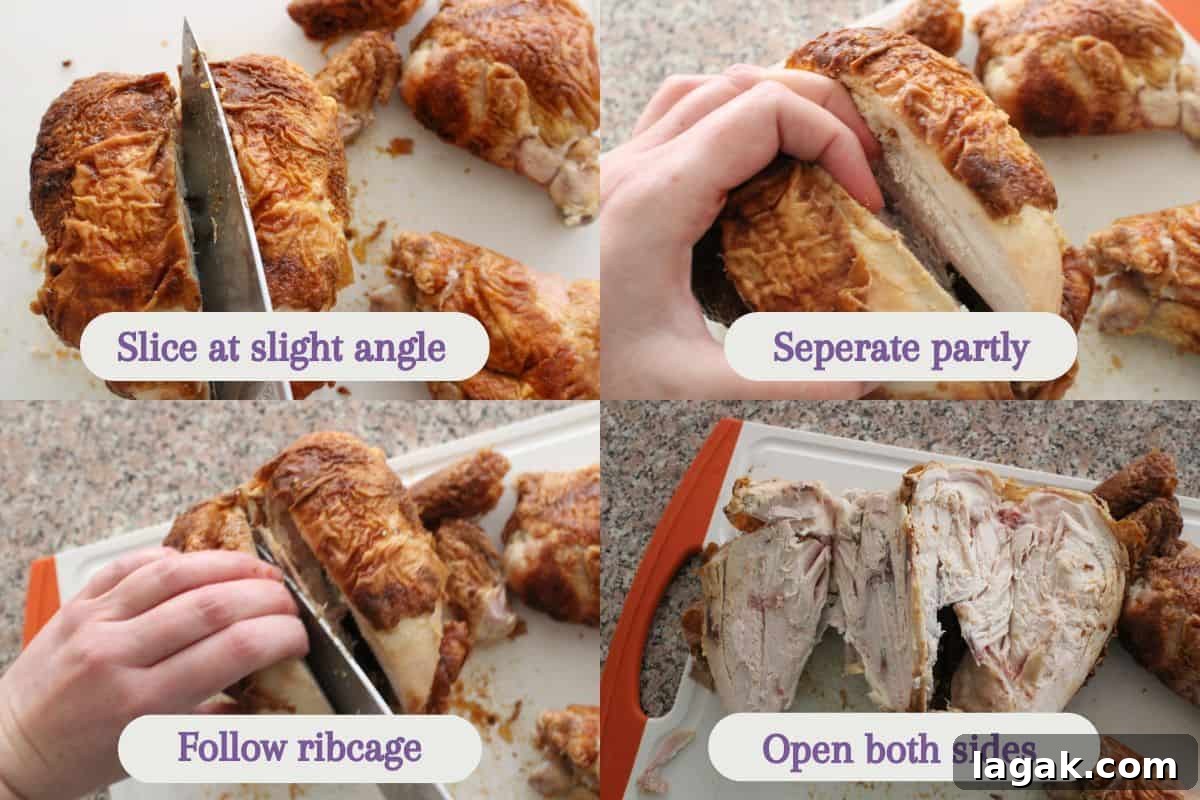
The breast yields large, clean pieces and is simple to separate with a sharp knife used as a guide.
Steps to remove the breast:
- Make a small guide slice along one side of the breastbone, working around the wishbone if you can.
- Angle the knife slightly and slide it along the breastbone to separate the breast from the ribcage.
- Repeat on the other side.
Think of the keel bone as a guide: slide the knife along it and loosen both sides before fully pulling either breast away for better balance. Once loosened, use your fingers to pull the meat off—hand removal often yields more meat than trying to cut perfectly. If serving right away, place the breast on a platter.
Skin and texture notes
- Keep the skin if you like it—personal preference matters.
- If the chicken is destined for soups, stews, or pasta, the skin won’t stay crisp, so removing it is fine.
Watch for a clear membrane between the breast and the tender; leaving it behind can improve texture. If it comes away with the meat, that’s okay, but if you notice it, try to avoid adding it to your portions.
Don’t forget the “extra” meat on the back
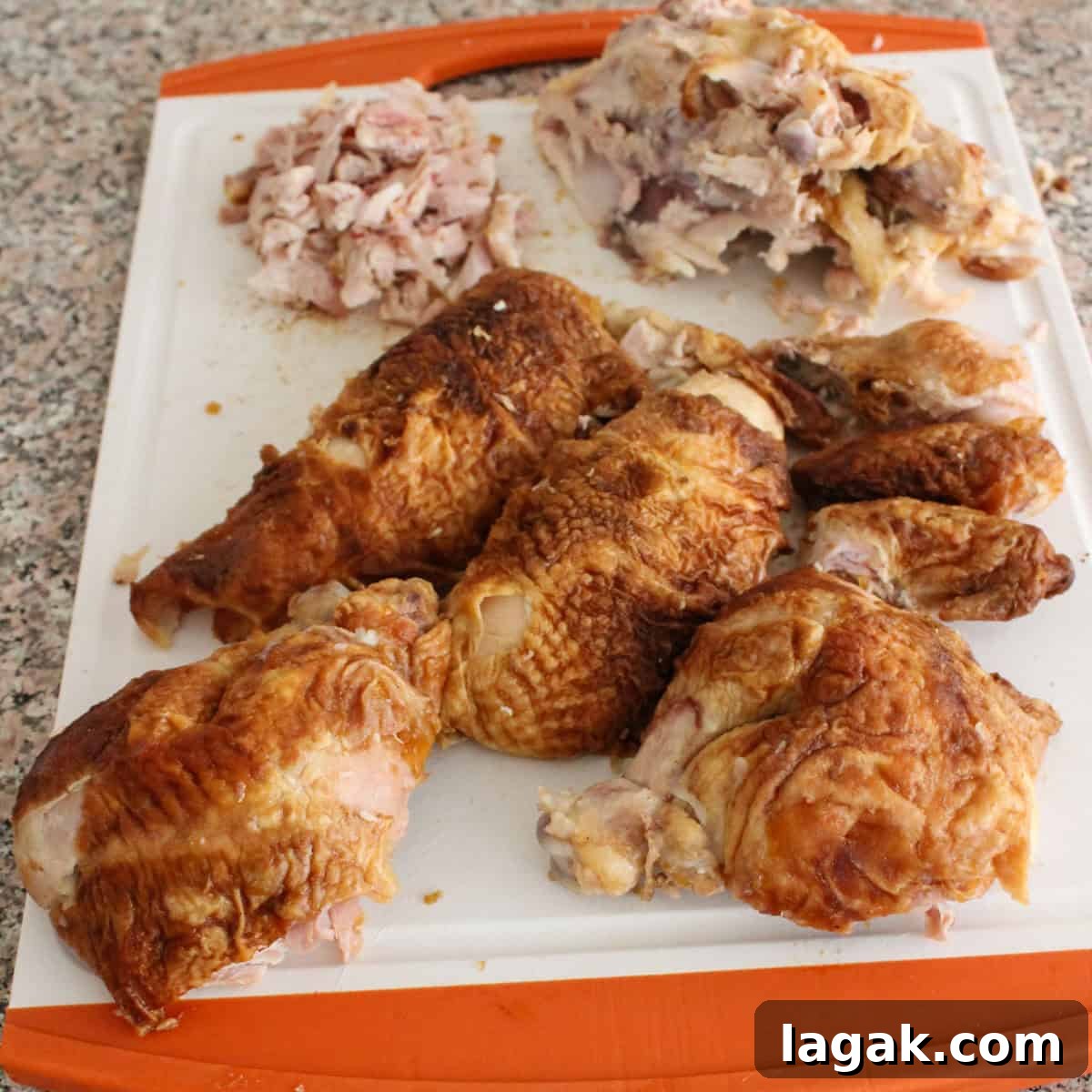
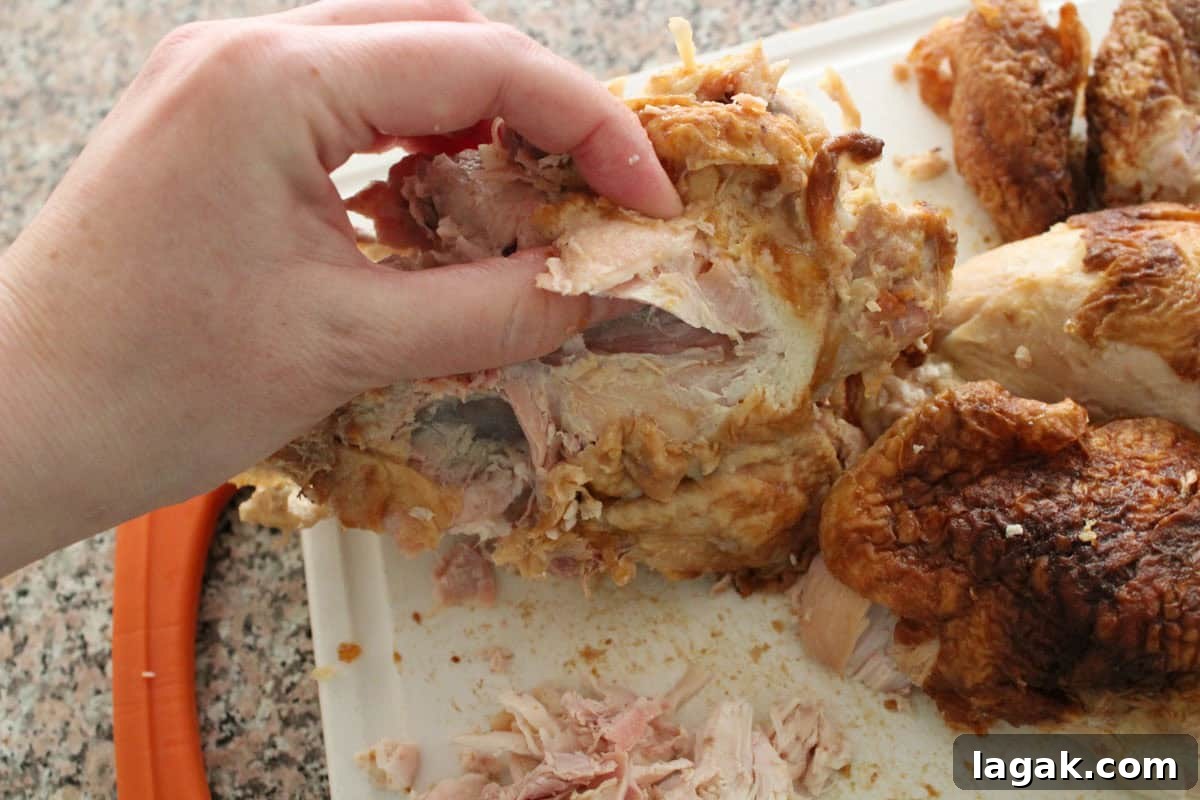
After removing the main pieces, there’s still good meat along the back and near the thighs. Using your fingers to pick these bits off will usually recover more meat than using a knife. At this point you’ll typically have a pile that includes:
- Breast meat (plus any bits recovered afterward)
- Two thigh and leg quarters
- Two wings
- Smaller pieces like the oyster and tail area meat
If you’re serving dinner now, you can stop here and slice or arrange the pieces for the table.
Bonus: save the carcass for simple chicken stock
Don’t toss the bones if you like homemade broth. Cover the carcass with water and simmer to make a basic chicken stock, or save several carcasses and combine them for one large batch. Simple additions like onion skins and vegetable scraps boost flavor. Remember to include wing and thigh bones when making stock.
Shred, chop, and portion for future meals
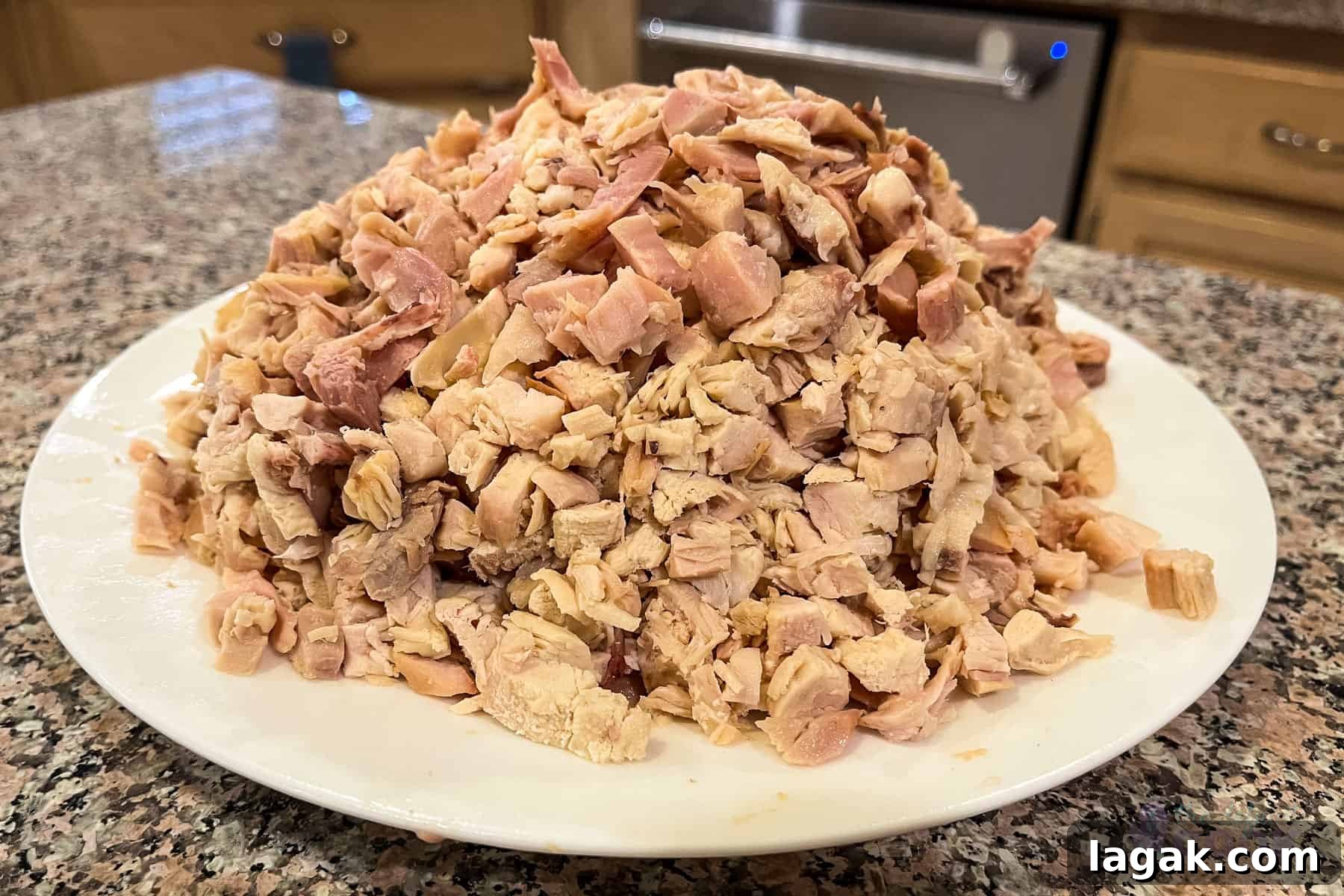
Rinse your hands quickly, then break larger pieces into the sizes you’ll use later. Separate thighs from drumsticks at the joint, then shred the meat. Remove skin as you go if you prefer. Shred into bite-size pieces for soups and casseroles, or slice for sandwiches and wraps—choose the texture that matches the dishes you plan to make.
Portion guide: cups and ounces
Eyeball portions, measure by cups, or use a food scale. A practical guideline: 1 cup of rotisserie chicken is about 4 to 5 ounces, depending on how tightly it’s packed. In the example video, the chicken is divided into three freezer bags of roughly 9 to 10 ounces each—about 2 packed cups per bag. Adjust to two bags if you prefer larger portions or fewer containers.
Label the bags before filling
Label each bag with:
- “Rotisserie chicken”
- The date
- Optional: weight
The contents and date are most important; weight is useful if you plan meals by ounces but not required.
How to use the chicken
Once portioned, the chicken makes fast work of meals like:
- Soups and stews
- Casseroles
- Tacos and quesadillas
- Pasta dishes
This prep pays off on nights when you’re tired, short on time, or need dinner on the table quickly.
Freezing notes
Press chicken into flatter bags or airtight containers and squeeze out as much air as possible. Freeze bags flat so they stack neatly, and then stand them up once they’re solid. Properly flattened bags save space and make thawing faster.
Enjoy!
One rotisserie chicken can cover several meals if you break it down and portion it in a way that fits your family. Start with clean hands, use the knife to guide your cuts, rely on your fingers to get the most meat off the bones, label the bags, and save the carcass if you want stock. A little prep now turns an inexpensive roasted chicken into reliable weeknight relief.