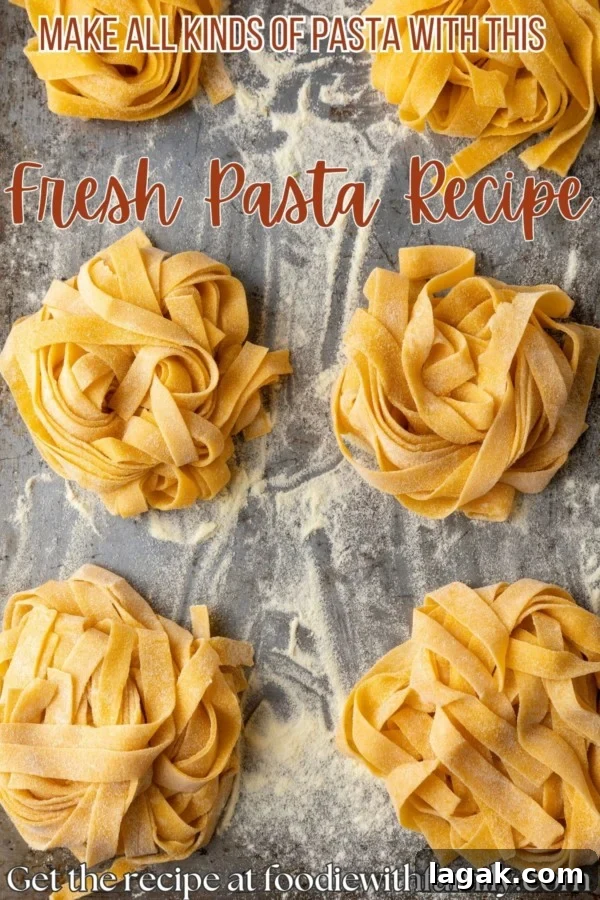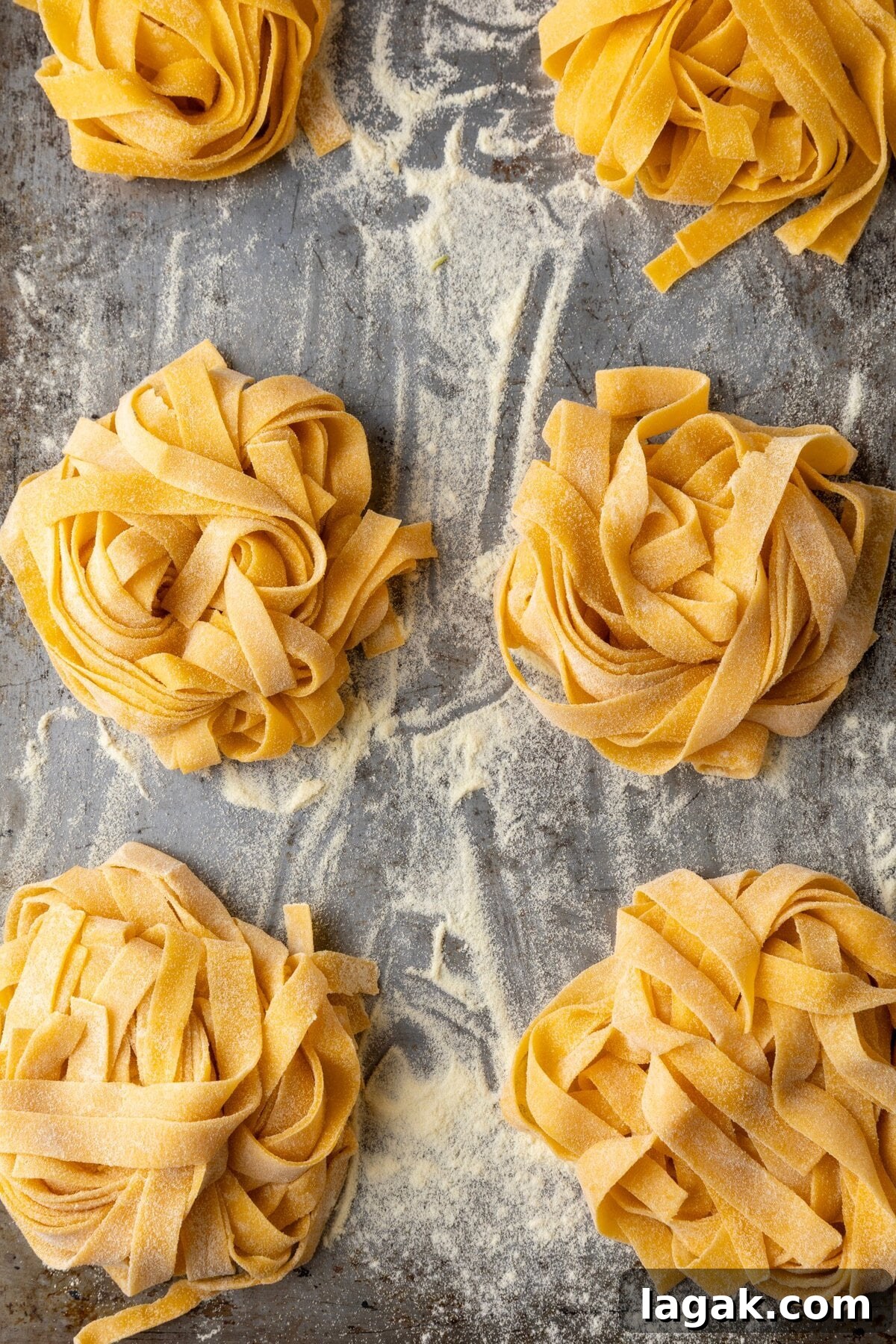
When you have a reliable fresh pasta dough recipe, nearly any pasta dish improves. Whether you plan to make lasagna sheets, hand-cut pappardelle, tagliatelle, spaghetti, pici, cavatelli, or another shape, learning to make pasta from scratch elevates your cooking with surprisingly little effort.
Fresh Pasta Dough Recipe
This classic pasta dough is simple and dependable, made with just three ingredients: semolina flour, all-purpose flour, and eggs. No oil or salt is added to the dough itself in this traditional approach.
Although the dough contains no salt, the finished pasta won’t be bland. Be sure to salt the boiling water generously—about as salty as the sea—when you cook the pasta. That is what seasons it best.
This old-school recipe has endured because it produces perfectly toothsome, al dente pasta that can be shaped in many ways and paired with a variety of sauces.
Pasta Recipe Basics
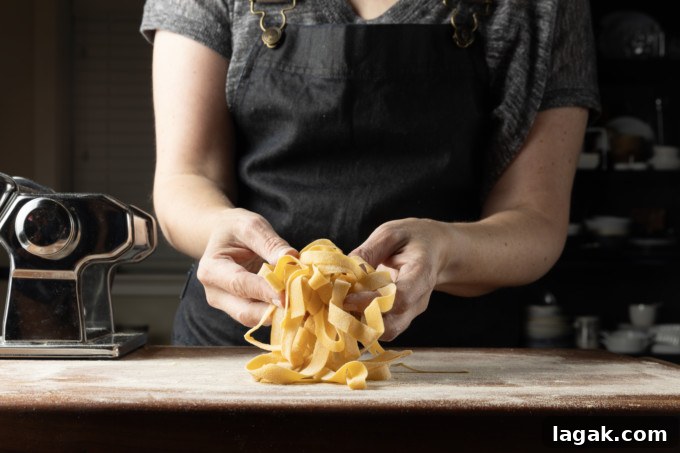
Making fresh pasta may seem intimidating at first, but it’s intuitive and forgiving. You can follow a traditional “Italian Grandma” method or use modern equipment—the end result is the same: great pasta.
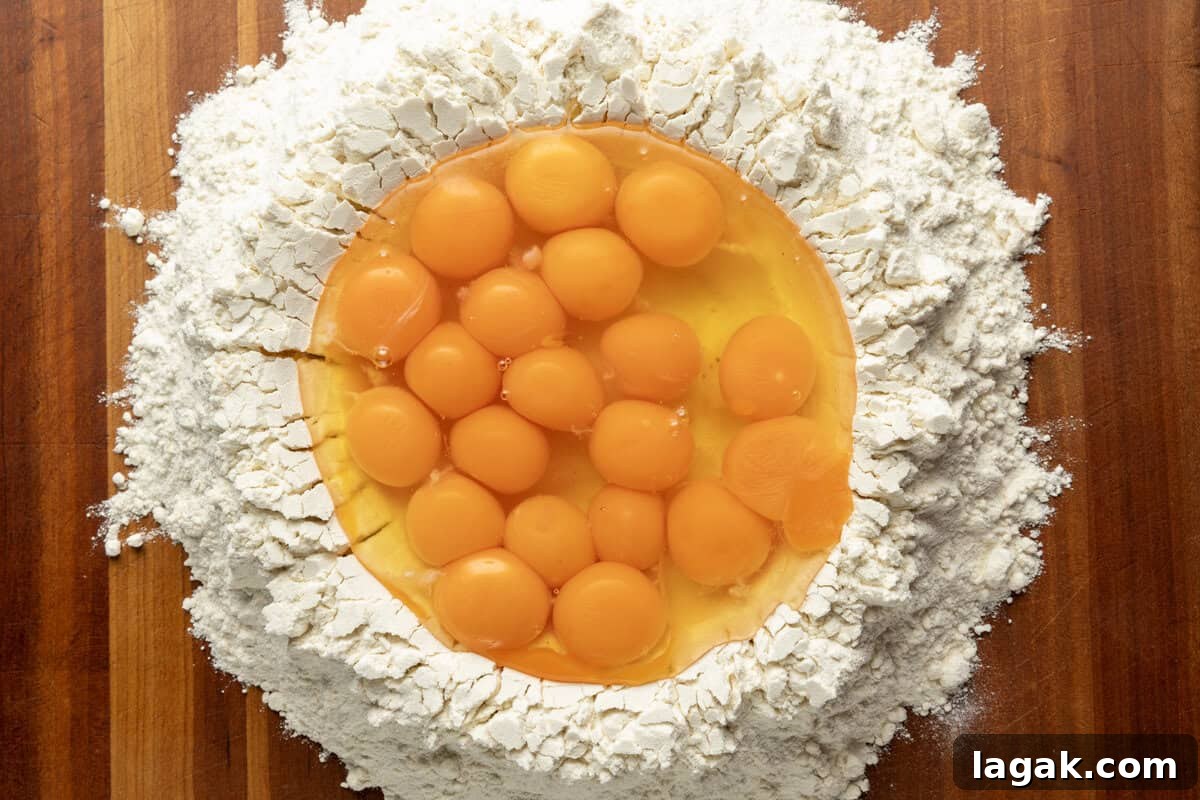
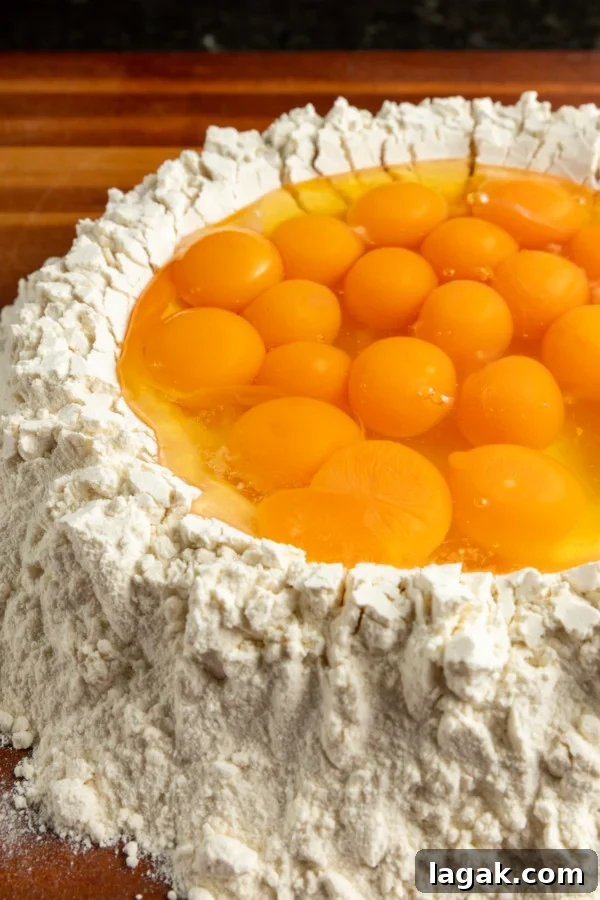
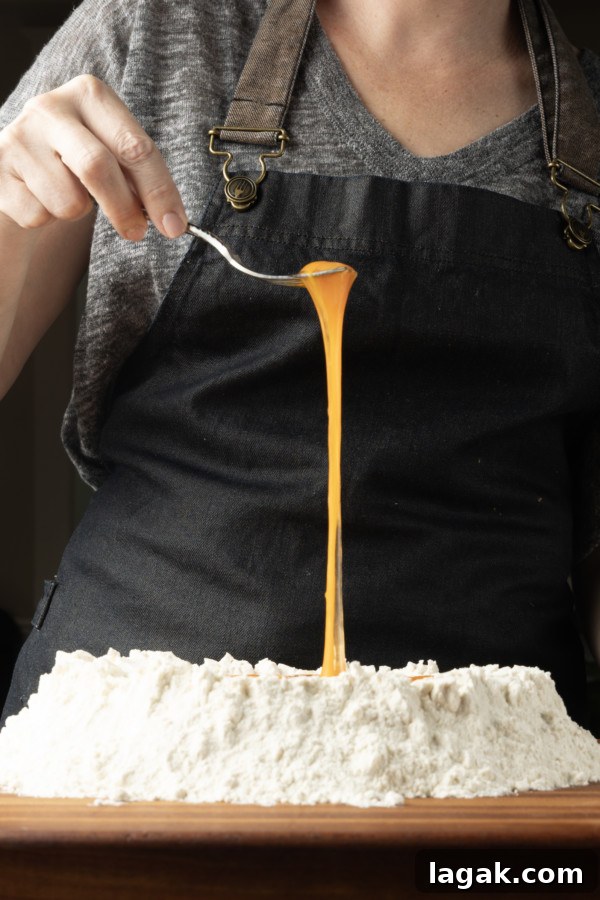
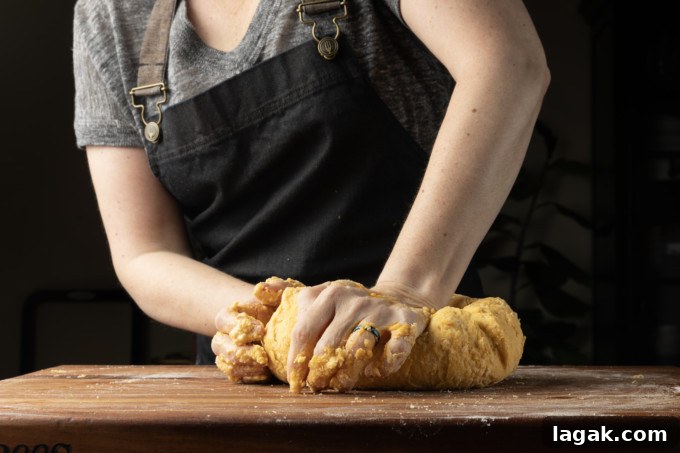
The traditional method starts by piling the flours on a clean counter or board and making a well in the center. Crack the eggs into a small bowl, pour them into the well, then begin incorporating the flour with a fork. When the mixture is mostly combined, switch to your hands to form a smooth dough. Wrap it, let it rest, then roll and cut.
If you prefer a less hands-on start, a stand mixer fitted with a dough hook works well. The mixer contains the eggs and blends flours efficiently, producing the same smooth dough with less fuss.
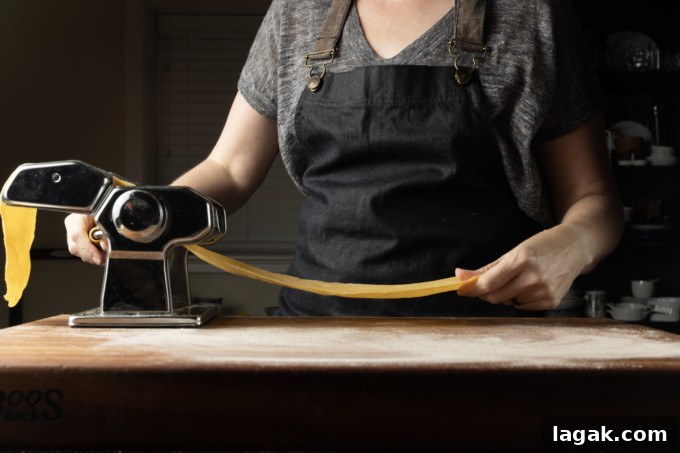
After making the dough, you can shape it by hand or pass it through a machine to achieve uniform thickness. Both approaches yield delicious results.
Making Homemade Pasta Without a Machine
Pasta rollers and hand-crank machines make it easy to get consistent thickness, but you can absolutely make excellent pasta by hand. Some shapes are particularly suited to hand-forming.
Pici is one of the simplest hand-shaped pastas: cut off a small knob of dough and roll it into a roughly 2-foot cord tapered at the ends. Place the finished strands on a semolina-dusted sheet pan in a single layer to dry slightly.
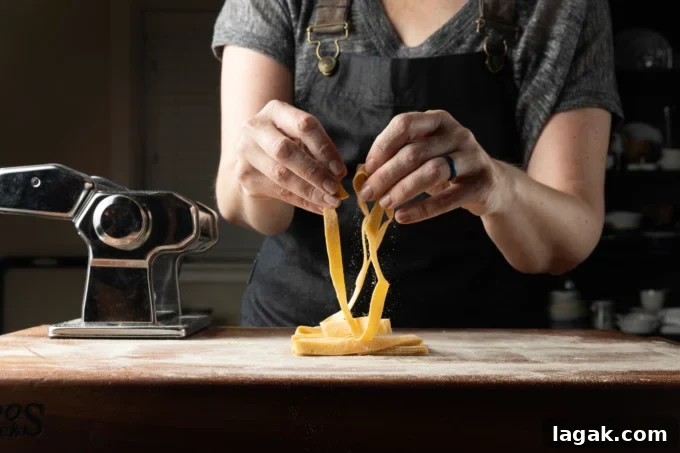
Other easy hand-shaped varieties include orecchiette and cavatelli. For tagliatelle or pappardelle, roll the dough as thinly as you can with a rolling pin, then fold and slice into ribbons. If you want more uniformity, use simple rolling-pin spacers to help keep the thickness consistent.
How to Store Homemade Pasta
Fresh pasta can be refrigerated for up to 24 hours before cooking, or frozen for longer storage. Proper dusting and handling preserve texture and prevent sticking.
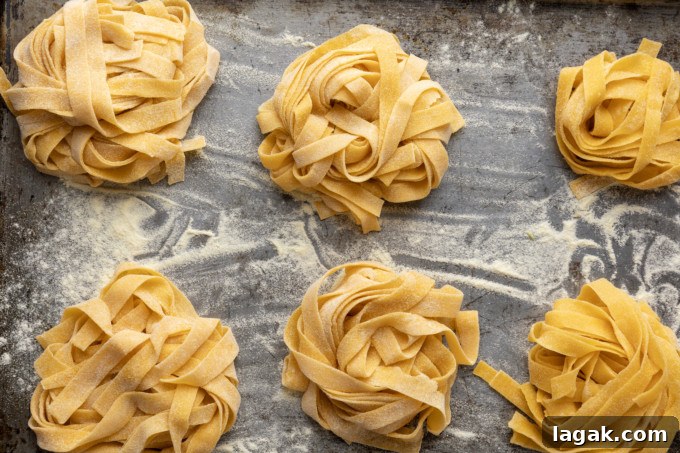
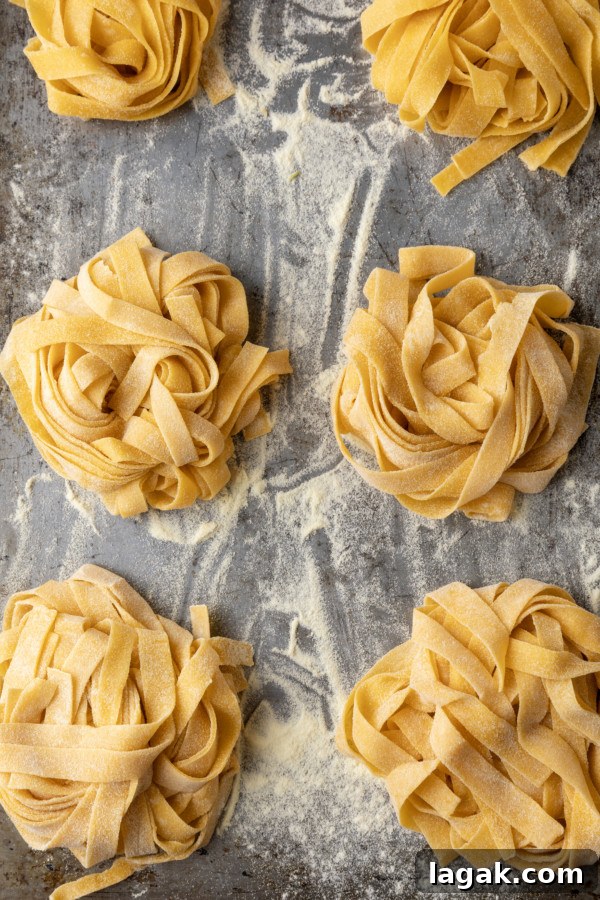
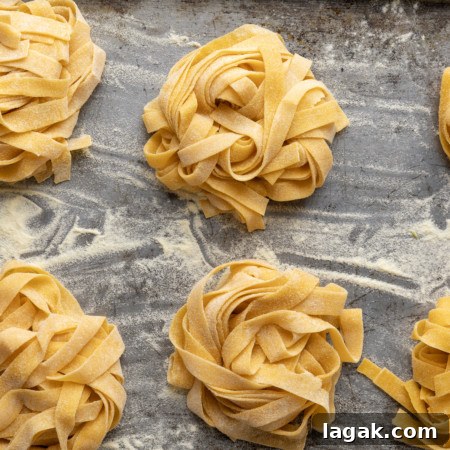
Generously dust fresh pasta with a dry flour to keep strands separate. Rice flour is an excellent choice because it resists absorbing moisture from the air; all-purpose flour can become gummy. For refrigerated storage, create small nests on a rice-flour-dusted tray, dust them again, then cover and refrigerate.
For freezing, arrange the dusted nests on a tray and freeze until solid (about two hours). Once frozen, transfer the nests to zipper bags or vacuum-sealed bags, remove as much air as possible, label with date and type, and store up to three months. Cook straight from frozen—no thawing required—adding about one minute to the cooking time.
Using Fresh Pasta
Fresh pasta cooks much faster than dried. Adjust cooking times to fit the shape and thickness: thin, long or flat pasta often needs around 2 minutes for al dente, while thicker shapes can take 3–5 minutes. Always test a piece for doneness to find the sweet spot.
Fresh pasta works in almost any recipe that calls for dried pasta. Classic pairings include slow-simmered tomato sauce, creamy sausage and spinach dishes, pasta salads, and simple preparations with olive oil, garlic, and freshly grated cheese.
Fresh Pasta Dough Recipe
Rebecca Lindamood
Equipment
-
1 pasta roller or rolling pin
-
kitchen scale or measuring cups
-
fork
Ingredients
- 7.65 ounces semolina flour 1 1/3 cups by volume
- 5.65 ounces all-purpose flour 1 1/3 cups by volume
- 4 eggs
Instructions
-
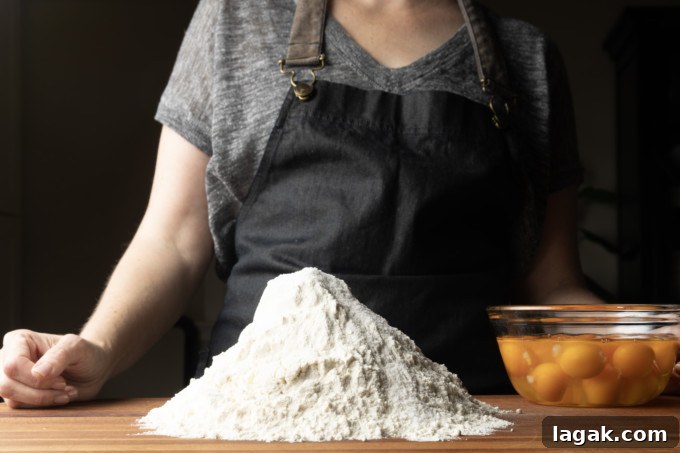
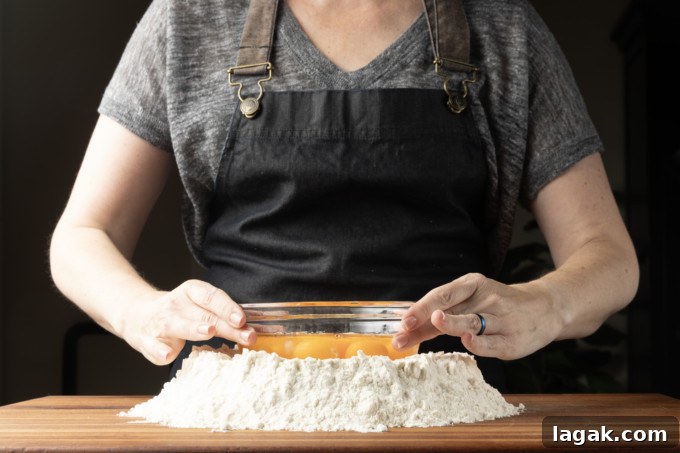
Pile the flour into a mound on a clean counter or cutting board. Crack the eggs into a bowl, use the bowl to create a well in the center of your mound of flour.
-
Use a fork to gently break up the yolks of the eggs. Continue using the fork to start incorporating flour from the inside edge of the well of flour to the eggs.
-
Once you are getting close to the walls of your flour mound being gone, switch to using your hand to bring the dough together. Knead until you get a smooth dough.
-
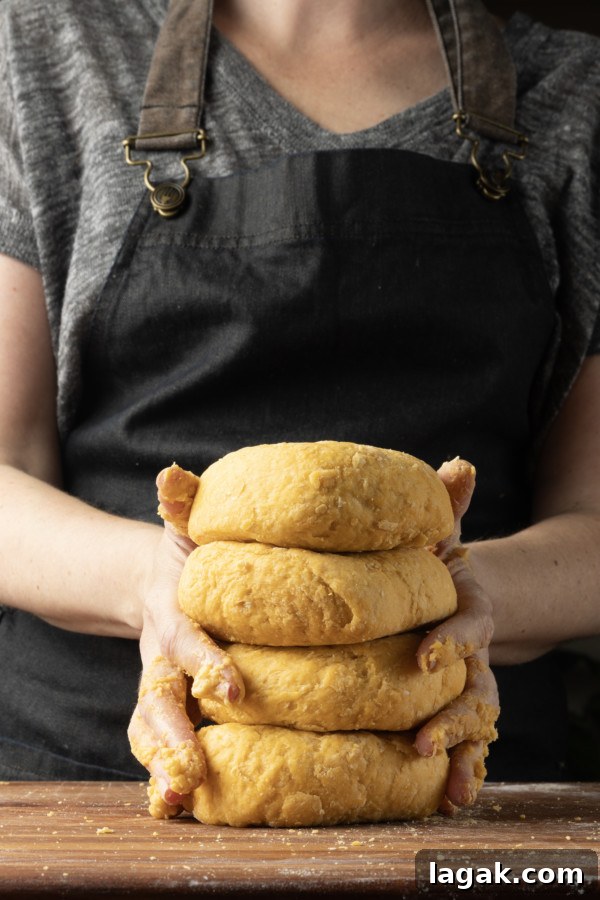
Form the dough into a ball then flatten slightly, and wrap tightly with plastic wrap. Set this aside and let it rest for 30 minutes.
To Roll the Pasta with a Machine:
-
Clamp your pasta machine firmly to a sturdy surface. Dust it and the work surface generously with semolina flour.
-
Divide the pasta dough into 4 roughly equal sized pieces. Roll these into balls and cover with a clean towel. Working with one piece of pasta at a time, roll the pasta through the widest setting on your machine (setting 1).
If at any point you feel it is becoming sticky, please dust with more flour.
-
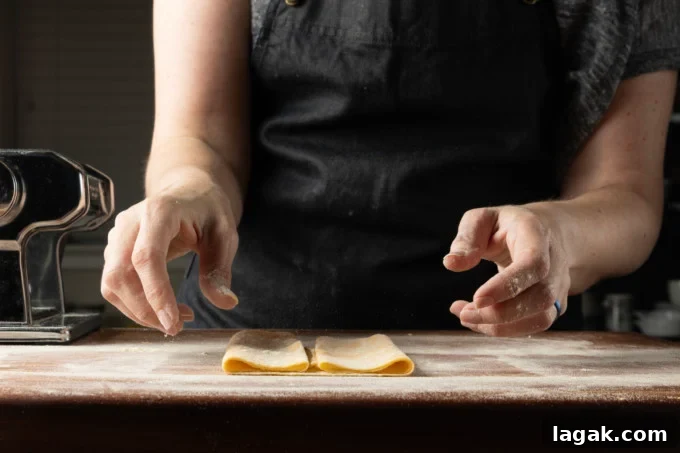
Fold the two ends of the pasta toward the center, having them meet, then fold that in half like a book. Feed this back through the pasta machine again, still on the widest setting.
Repeat this process about three times, dusting with additional flour if it gets sticky, or until your pasta is very smooth.
-
Take the prepared piece of dough and begin rolling it through your machine again. You’ll put it through the machine at progressively thinner settings 2 times each. For example, you’d put it through the roller twice at Setting 2, twice at Setting 3, twice at Setting 4, etc… until you reach about 1mm thickness.
For Lasagna Sheets:
-
Cut the sheets into roughly equal rectangular pieces.
-
Gently pass the lasagna sheets through boiling salted water for about 1 minute, then dry on towels before using in lasagna.
For Tagliatelle or Papparedelle:
-
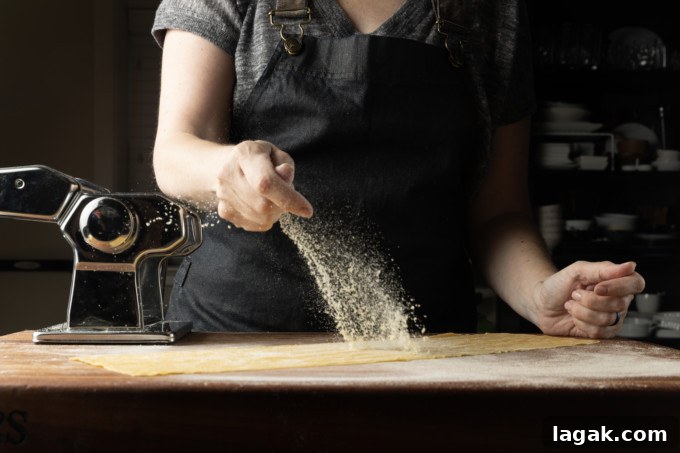
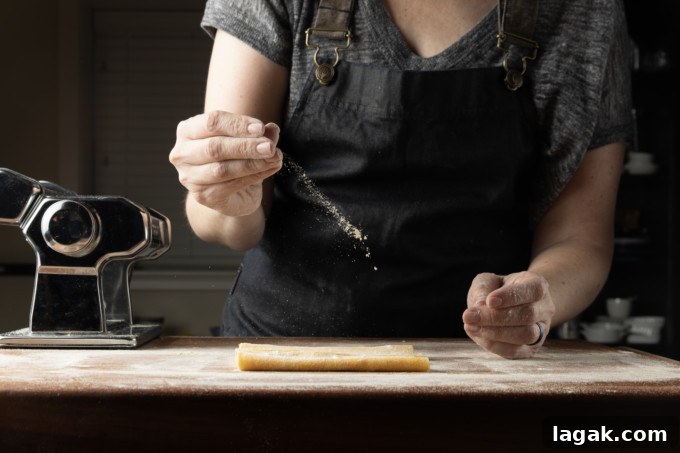
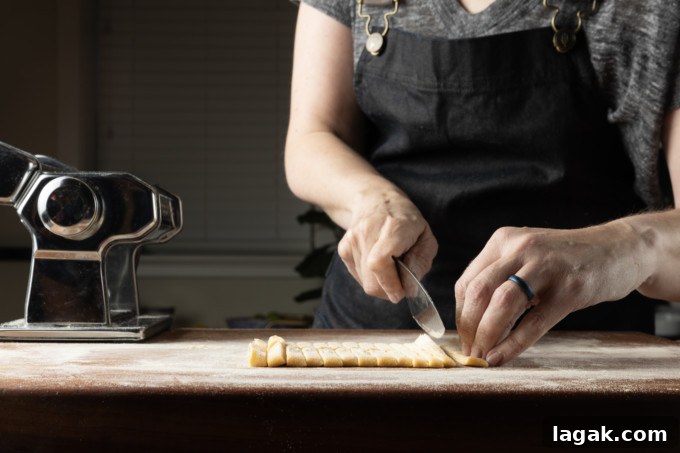
Either use cutters that come with your pasta machine to cut these OR dust generously with semolina flour, then fold the two ends of your dough toward the middle, having them meet at the center. Dust again, and fold the dough in half like a book. Use a sharp knife to cut into 1 cm thick strips for Papparedelle or about 2/3 of a cm thick for tagliatelle.
To Form Pici Without a Machine
-
Cut off a 1-inch knob of your fresh pasta dough recipe.
Roll it out until you have an approximately 2-foot long cord that’s tapered at the ends. Transfer it onto a semolina dusted sheet pan. Repeat until you’ve rolled out all of the dough, keeping the rolled pasta in a single layer.
To Cook Fresh Pasta
-
Bring a large pot of water to a boil. You want a minimum of one gallon of water.
When the water reaches a full, rolling boil, salt it generously. Use 1-2 tablespoons per 4 quarts of water.
The time it takes to boil fresh pasta depends on the thickness and length of the pasta shape. Longer, thin or flat pasta will take about 2 minutes for al dente pasta. Thicker, stubby, or chunky fresh pasta will take about 3 to 5 minutes. Just keep testing pieces to find the sweet spot!
If cooking homemade pasta that you’ve stored in the freezer DO NOT THAW first. Simply drop it straight from the freezer into the boiling water and add about 1 minute to the cooking time.
Nutrition
Nutritional information is an estimate and provided to you as a courtesy. You should calculate the nutritional information with the actual ingredients used in your recipe using your preferred nutrition calculator.
did you make this recipe?
Make sure to tag @foodiewithfam on Instagram and use #foodiewithfamily so the author can see your results.