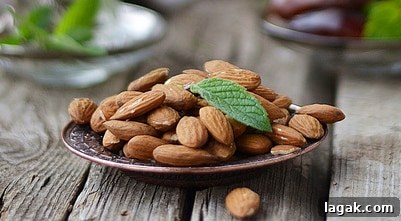
One of the most effective strategies for successful weight loss is simple: don’t let yourself get overly hungry. Smart snacking helps you stay satisfied between meals so you make better choices and avoid overeating. Research indicates that eating small, nutrient-dense portions more frequently can support appetite control and weight management—as long as you choose the right snacks.
Disclosure: this article was created in collaboration with a client, The Almond Board of California. All opinions are my own, and I recommend foods and recipes I enjoy and eat regularly.
The anatomy of an ideal weight-loss snack
Studies suggest that snacks around 200 calories or less that combine protein, fiber and healthy fats are most effective at curbing hunger and preventing overeating at the next meal. Those three components slow digestion and promote feelings of fullness, helping you stick to your calorie goals without feeling deprived.
Almonds are an excellent example of a snack that meets these criteria. A one-ounce serving of almonds provides about 4 grams of fiber and 6 grams of protein, along with heart-healthy fats. They’re portable, shelf-stable and versatile: enjoy them whole, sliced, slivered, as almond butter or incorporated into recipes using almond flour. Their texture and flavor make them easy to include in a wide variety of snacks and meals.
Evidence that almonds support appetite control and weight management
Several clinical studies have found that including almonds as a snack or part of a meal can reduce hunger and lead people to eat less at subsequent meals without consciously trying to cut calories.
In one controlled study, participants who ate 1.5 ounces of almonds daily—either as a morning or afternoon snack or alongside meals—experienced lower post-meal blood sugar and reported reduced hunger compared with those who did not eat almonds. Importantly, the almond group naturally ate less at meals, helping them avoid excess calorie intake.
Another short-term study evaluated healthy women over three days and found that consuming 1 or 1.5 ounces of almonds as a morning snack decreased hunger and led to lower calorie intake at lunch and dinner to compensate for the added snack calories.
Across these studies, adding about 1.5 ounces of almonds to the daily routine did not increase total daily calories and produced greater satiety—one of the keys to sustainable weight loss.
An additional point worth noting: recent analyses examining how many calories our bodies actually absorb from whole almonds found that almonds may provide fewer usable calories than indicated on nutrition labels. For example, a serving of about 23 almonds may contain roughly 129 calories based on measured absorption, compared with higher values listed on some Nutrition Facts panels.
Smart almond-based snack ideas
Here are two satisfying almond-forward snacks that fit the guidelines for smart snacking—each delivers protein, fiber and healthy fats to help curb hunger between meals.
_______________________________
Puffed Quinoa Almond Butter Squares
[photo credit: Almond Board of California]
These no-bake squares combine almond butter, puffed quinoa and a touch of dark chocolate for a portable, protein-rich snack. Compared with many commercial granola bars that are high in added sugars and oils, these squares provide a better balance of macronutrients that sustain energy and prevent the mid-afternoon crash that often drives snacking on sweets or refined carbs.
Swap a typical high-sugar bar for a homemade almond butter square and you’re more likely to stay satisfied and make better choices at your next meal.
________________________
Carrot Almond Low-Carb “Sushi”
[photo credit: Almond Board of California]
Traditional sushi made with white rice is high in simple carbohydrates and relatively low in fiber and protein, which can lead to quick rises in blood sugar and earlier return of hunger. This carrot and almond version replaces rice with a higher-protein, higher-fiber almond-based filling, yielding a low-carb, gluten-free alternative that keeps you fuller longer.
If you’re new to making sushi-style rolls, try hand rolls (a “sushi taco” approach) to simplify assembly. The recipe is quick and adaptable, making it a convenient snack or light meal option that supports appetite control.
Both of these almond-focused snacks are designed to help you stay satisfied between meals so you avoid overeating later. By prioritizing snacks that combine protein, fiber and healthy fats, you’ll be better equipped to manage portion sizes at mealtimes and move toward sustainable weight loss.
What snack helps you beat cravings and stay on track? Share your favorite—small changes and consistent habits add up over time.